Why aren’t Jews visiting Baghdad’s Jewish museum?
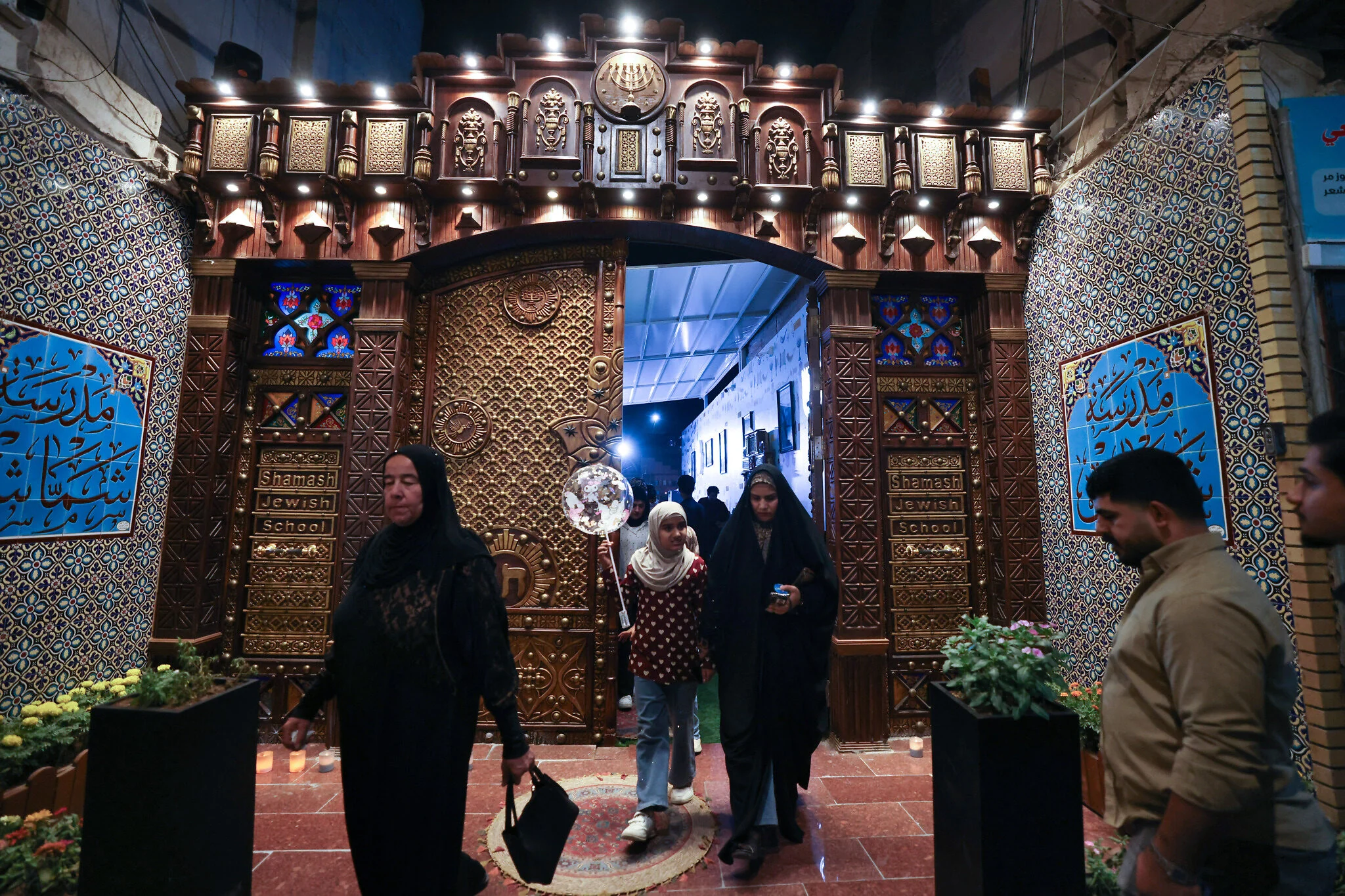
My parents fled Iraq in the 1950s following years of persecution. Today, I am a professor of urban planning and study heritage preservation and cultural policy in the Middle East. I have spent years examining how societies protect historic buildings, whose heritage they choose to preserve and whose interests are served in the process. So when I learned that Baghdad’s historic Shamash Jewish School had been restored and converted into a museum, I should have been delighted.
Instead, I was disturbed by much of the reporting surrounding its opening. In a recent article, Reuters celebrates Baghdad’s first Jewish museum and the growing interest among Iraqis in their country’s Jewish past. Visitors take in the building’s architecture and examine photographs, school certificates, religious objects and other documents belonging to a community that once made up a sizable share of Baghdad’s population.
Then comes an extraordinary observation from Reuters: no Jews have visited the museum so far. One wonders why.
Where exactly does Reuters expect these visitors to come from? From the Jewish neighborhood of Al-Bataween in Baghdad? From the Jewish families of Basra? From the descendants of the merchants, doctors, teachers, musicians and civil servants who helped build modern Iraq?
Most of those descendants now live in Israel, and Israeli citizens face substantial legal barriers to entering Iraq. Their parents and grandparents (including mine) were driven from the country whose newfound appreciation of their heritage is now being celebrated. The absence of Jewish visitors is hardly a footnote to this story. It is the story Reuters appears to ignore.
A school without its children
The Shamash School was founded in 1928. It was part of an extensive network of Jewish educational, religious and charitable institutions established over generations. It reflected the confidence of a community that regarded Iraq as its home and invested in its future.
Little more than two decades later, that community was being dismantled.

In June 1941, the Farhud pogrom brought mass violence, looting and terror to Baghdad’s Jewish population. In the years that followed, Jews experienced mounting discrimination. After the establishment of Israel in 1948, their political, economic and personal security deteriorated further. The prosecution and execution of Shafiq Ades, one of Iraq’s most prominent Jewish businessmen, in September 1948 sent a message that wealth, patriotism and connections to the Iraqi establishment could offer Jews little protection.
In 1950, Iraq enacted legislation allowing Jews to relinquish their citizenship to leave. In 1951, the government froze the assets of Jews who had done so. Families that had accumulated property over generations were separated from their homes, businesses and savings.
The overwhelming majority of Iraqi Jews departed within a few years. Iraqi officials proudly stamped their passports “leave without return.” Further persecution drove out nearly all those who remained.
This was the ethnic cleansing of one of the most ancient Jewish communities in the world. The circumstances and motivations of individual emigrants varied, but the coercive environment in which this mass departure occurred cannot be ignored.
Yet readers of the Reuters report learn remarkably little about these matters. The Farhud is not mentioned by name. Neither are the denaturalization laws, the freezing of Jewish assets or the execution of Jews by Iraqi governments and mobs.
Approximately 2,600 years of Jewish existence in Mesopotamia came to an abrupt end. Surely that warrants more than a few sentences about regional violence and subsequent emigration.
The convenience of Jewish absence
In her 2021 book People Love Dead Jews, Dara Horn examines the discrepancy between society’s fascination with Jewish history and its treatment of living Jews. Baghdad offers another variation on that theme: people love dispossessed Jews.
Our music can be celebrated. Our buildings can be restored. Our photographs can be exhibited. Our contributions to modern Iraq can be applauded. The Jewish finance minister Sassoon Heskel and the celebrated singer Salima Murad can be incorporated into a nostalgic account of a more diverse Iraq.
But what about our property? Our citizenship? Our right to visit the streets where our families once lived? What about the responsibility of the governments that stripped Jews of their rights and of those who participated in their persecution? These are apparently less appealing subjects for an arts and culture report.
There is something convenient about celebrating a minority once its members are no longer present in sufficient numbers to assert their rights, challenge historical narratives or demand restitution. Former Jewish citizens become historical exhibits. Their descendants in Israel (and elsewhere) become peripheral to the discussion of their own heritage.
Heritage preservation is no substitute for justice
I welcome the restoration of the Shamash School. I also commend the few remaining members of Iraq’s Jewish community who reportedly initiated and financed the project, particularly given the difficult circumstances under which Jewish life continues in Iraq.
Nor do I dismiss the genuine interest shown by Iraqi visitors. Some clearly wish to recover a history that has been largely inaccessible to them. One visitor interviewed by Reuters even expressed a desire for Jews to return and acknowledged their connection to Iraq.
There were also Iraqis who protected their Jewish neighbors. Their conduct deserves to be remembered alongside that of those who betrayed them.
Restoring a Jewish school does not restore confiscated property. Exhibiting a Jewish family’s photographs does not address how they lost their home, businesses, and yes, their Iraqi friends. Celebrating Jewish contributions to Iraq does not answer for the legislation that deprived Jews of their citizenship and wealth.
I would like to see Iraqi authorities acknowledge the injustices committed against their former Jewish citizens, open historical and property records, address outstanding restitution claims and enable descendants of Iraqi Jews to visit their ancestral homeland. Until then, the celebration of Jewish heritage will remain incomplete.
The museum that should not have been necessary
The Shamash School was built to educate children, not to commemorate their disappearance. Had Iraq protected its Jewish citizens, my parents included, their children and grandchildren might still be attending Jewish schools in Baghdad. Their synagogues might still be functioning as places of worship. Their businesses, institutions and cultural traditions might still form part of the everyday life of Iraqi cities.
Instead, Iraqis now visit a museum to discover a community that their country’s own policies helped remove.
By all means, celebrate the restoration of the Shamash School. Visit it. Learn about the Jews of Iraq, their history, their faith and their contributions to the country. But Reuters, please do not turn the destruction of Jewish communal life into a charming story about heritage tourism. And the next time a journalist reports that no Jews have visited Baghdad’s new Jewish museum, perhaps they should first ask what happened to the Jews of Baghdad.