Why Choose the Jews?
The most complex and colorful family in the Torah was undoubtedly that of Yaakov. Their family life was replete with tension, many of their life experiences were either troubling or traumatic. Yet Yaakov succeeded, where his father and grandfather had not: Avraham, had eight sons; only one was chosen to continue the unique covenant he had with God. Of Yitzhak’s twins, one was picked for this role, and one was shunned. In contrast, all of Yaakov’s twelve sons were chosen to form the Nation of Israel. Despite all the turmoil, they managed to break the cross generational pattern of selection and rejection.
The first Midrash on Sefer Shemot (Shemot Rabbah 1:1) might tell us why. It makes for a fascinating read, but seemingly has no apparent thematic connection to Shemot itself. It uses the first verse of Shemot, “וְאֵ֗לֶּה שְׁמוֹת֙ בְּנֵ֣י יִשְׂרָאֵ֔ל הַבָּאִ֖ים מִצְרָ֑יְמָה-These are the names of the children of Israel who came to Egypt” as a cryptic catalyst to give an interesting and compelling account of the virtues of parental discipline. It begins with a verse from Sefer Mishlei:
חוֹשֵׂ֣ךְ שִׁ֭בְטוֹ שׂוֹנֵ֣א בְנ֑וֹ וְ֝אֹהֲב֗וֹ שִֽׁחֲר֥וֹ מוּסָֽר (משלי יג:כד)
He who spares the rod hates his son, and he who loves him disciplines him in the morning (Proverbs 13:24).
The Midrash proceeds to give a long list of characters throughout the Bible whose parents never rebuked them and another list, notably shorter, of those whose parents did see the need to discipline their children from time to time. Unsurprisingly, the list of the undisciplined comprises many of the less savory biblical characters, whereas the disciplined are some of its heroes. The crux of the Midrash and its conclusion are that Yaakov disciplined all of his sons, which is why all his children were chosen to form the Jewish People. Yaakov’s family managed to escape the rejection-selection model that so haunted previous generations.
The theme of this Midrash is even more striking if we simply look at the stories of the Torah throughout the whole of Sefer Bereishit. Yaakov is the first and only person to give his children a telling off. He rebukes Reuven, Shimon, Levi, and even Yosef. He strongly hints to Yehuda that he is aware of his shortcomings, and he rebukes all the brothers for acting unwisely during their dealings with the mysterious viceroy of Egypt. No other biblical character in has done so until now. God frequently rebukes people throughout Sefer Bereishit. Yaakov was the first to copy Him and rebuke his children.
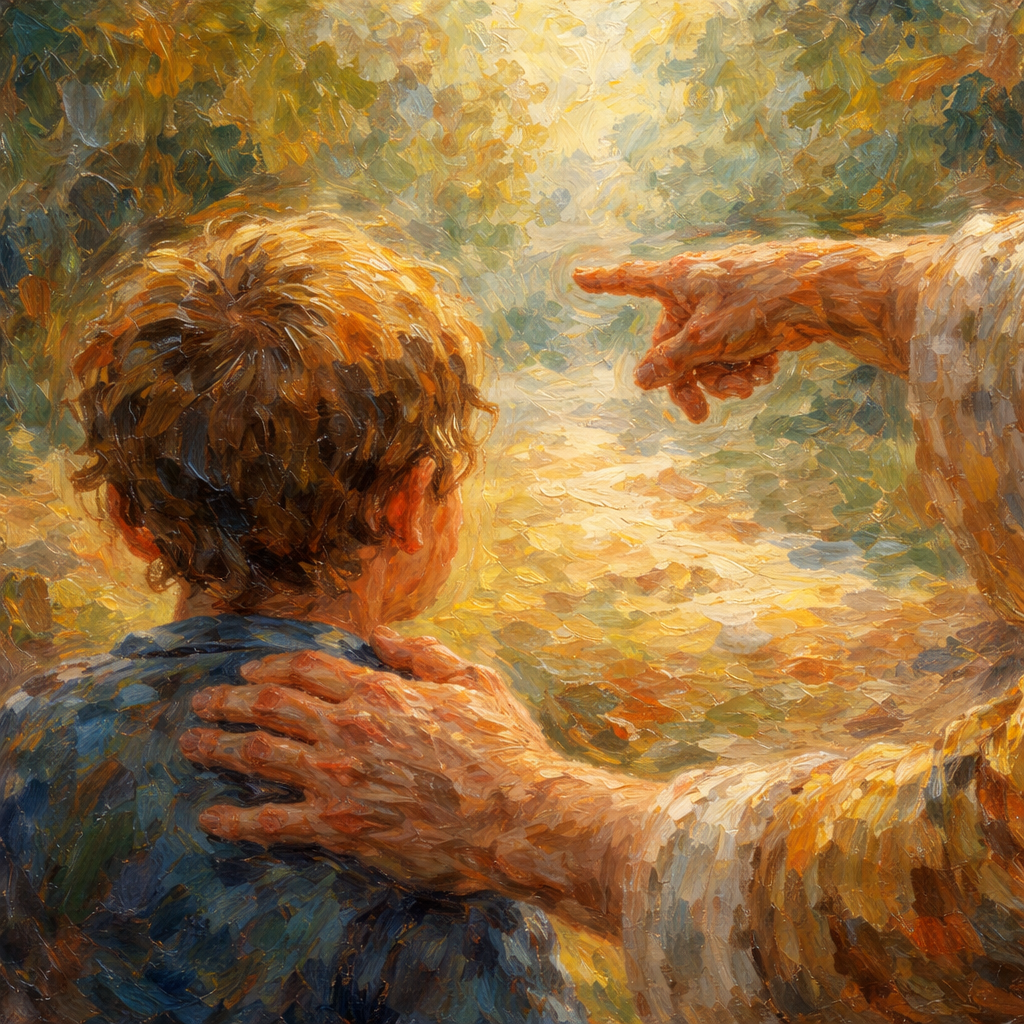
Why? Because telling a child off should not be an act of anger, but one of love. One does not rebuke their children despite their love for them, but because they love them. The verse aforementioned emphasizes this: “ואֹהֲב֗וֹ שִֽׁחֲר֥וֹ מוּסָֽר-he who loves him disciplines him in the morning.” A parent needs to discipline his or her children because true discipline is the art of giving direction, not simply voicing disappointment. Life is not easy. How could it not be? We have never lived before, to know by experience what to do. People are flawed and therefore can get lost within themselves. The world is complex, and one can lose oneself within it. Without discipline, or, to be more precise, without direction, we can be lost despite our better nature.
This concept is subtly alluded to in the same verse. The word “שחרו” can come from the word “שחר-daybreak”. If so, the verse reads, “and he who loves him disciplines him in the morning.” Contextually: training a child to wake up early and be disciplined is a display of parental love. However, there is a second possible translation of this word: “שחרו” can also come from the word “שחרור-liberation”. Put in context: “he who loves him, frees him through discipline.” By guiding children, they can be liberated from the trappings of the human condition. They become what they are able to be.
Yaakov’s parenthood was one of the hardest imaginable. The majority of his children (Reuven, Shimon, Levi, Yehuda, Yosef, Binyamin, and Dinah) each had their own individual dramas, each of which brought anguish and distress that no parent should have to experience. He realized through his own life and through the lives of his children that people are not perfect, they have faults. But faults are there to be fixed, and perfection, or even something close to it, is not something that you are, but something that you journey towards. Yaakov knew his children were not perfect, but, more importantly, he knew they could be better.
All of this can be seen through one other unique aspect of Yaakov’s parenthood. For all his readiness to criticize his children, at the end of his life he also makes sure to bless all and each of them. This was not a balancing act, but a double act. One doesn’t bless one’s children to counterbalance their criticism of them. Rather, the double act of rebuke and blessing enhances both. The blessing allows the child to understand that their parent is rebuking them because they love them. The rebuke allows the child to understand that their parent’s love for them is even greater than if they had only blessed them. The child realizes: “despite my parents being aware of my shortcomings, they love me regardless.”
If Yaakov pioneered parental rebuke, then it is impossible to turn a blind eye to another ‘first’ in Sefer Bereishit. His children also pioneered something: they were the first people to admit that they did something wrong. Never before, in the text of the Torah, do we find anyone giving a wholehearted, unqualified admission of guilt. Whilst briefly imprisoned in Egypt, the brothers, express their regret for, what they had done decades earlier to Yoseph. They say to each other:
וַיֹּאמְר֞וּ אִ֣ישׁ אֶל־אָחִ֗יו אֲבָל֘ אֲשֵׁמִ֣ים׀ אֲנַחְנוּ֘ עַל־אָחִינוּ֒ אֲשֶׁ֨ר רָאִ֜ינוּ צָרַ֥ת נַפְשׁ֛וֹ בְּהִתְחַֽנְנ֥וֹ אֵלֵ֖ינוּ וְלֹ֣א שָׁמָ֑עְנוּ עַל־כֵּן֙ בָּ֣אָה אֵלֵ֔ינוּ הַצָּרָ֖ה הַזֹּֽאת (בראשית מב:כא)
And each said to his brother, “but we are guilty because of our brother, for we saw his deep distress when he pleaded with us, and we didn’t listen to him. That is why all this anguish has befallen us.” (Bereishit 42:21)
Where did this rough band of brothers learn to accept responsibility for their own actions?
Acceptance of guilt, responsibility, and the desire to repent are also forms of rebuke: self-rebuke. Children who are taught to take responsibility turn into adults who teach themselves to take responsibility. Thus, at the conclusion of Bereishit and the beginning of Shemot, we have an unlikely result: the twelve tribes, some of the most colorful characters in Sefer Bereishit, are all chosen to form the Nation of Israel. They were chosen not because they were perfect, but because they realized that they were not.
If people are inherently good, there is no need to rebuke them; if people are inherently bad, there is no point. The central foundation of Judaism is that people can choose what they will be. If they can choose, they can change.