Why Do Holocaust Trips Only Go to Poland?
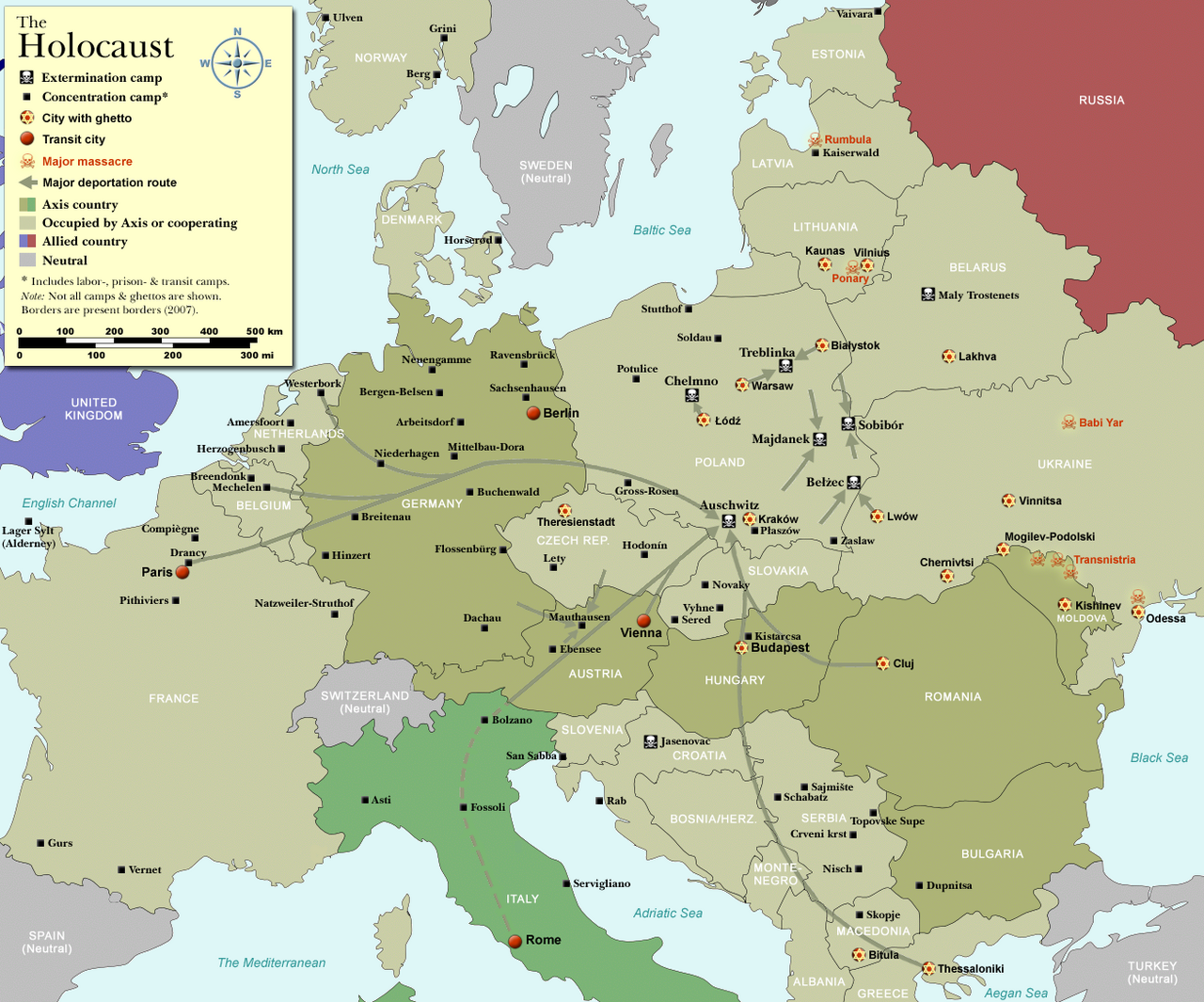
For Israeli teenagers in high school, it’s a common rite of passage to go on a school-organized educational trip to one of the Holocaust death camps operated by the Nazis in Poland. One of the lessons of the trip, whether explicitly stated or just implied, is that if the Jewish State had existed a decade earlier, much of the Holocaust would not have happened. The Jews of Eastern Europe would have simply made aliyah and been saved or somehow the IDF would have come to the rescue.
‘Polish death camps’ and other distortions
Quite a lot of things are forgotten in this re-telling of recent world history and some unfortunate distortions enter the narrative along the way. For example, the rebranding of the Nazi-run death camps on Polish territory as “Polish death camps,” even though they were not run by Poles and many non-Jewish Poles died in them as well.
Moreover, not only was Poland far from being the only location where Jews suffered and were murdered during the Holocaust, it wasn’t the sole location of fascist death camps. Croatia also shares that distinction, with Jasenovac, sometimes called the Auschwitz of the Balkans, located on its territory and run independent of Nazi administration by the fascist Ustasha regime.
The forgotten Holocaust of the Balkans
Mainstream Holocaust history has a tendency to forget the Balkans portion of the Holocaust experience, where up to 90% of local Jewish populations were decimated, and hundreds of thousands of Serbs and tens of thousands of Roma were killed as well.
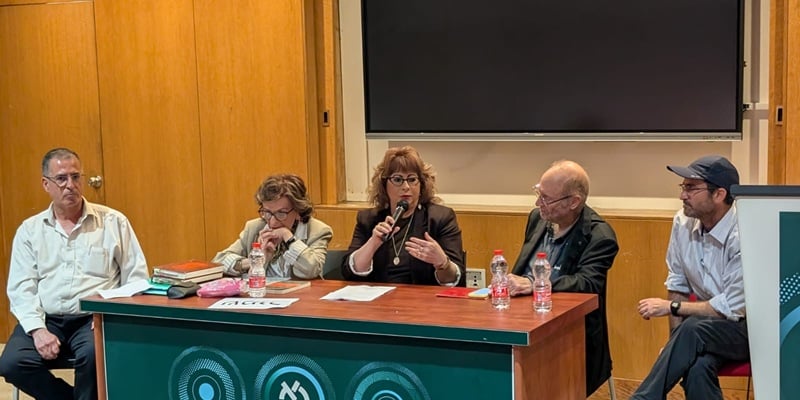
This issue was addressed at length during the discussion panel held after the screening last Wednesday of the film “The Jasenovac Oath Kept” at Bar Ilan University. The film is centered on the experiences of the family of the grandmother of the protagonist, Barak Gabor, in prewar and Holocaust-era Croatia. Gabor’s great-grandparents perished in Jasenovac, while his grandmother, Shoshana Adler, miraculously escaped the same fate and survived the war as an orphan until eventually immigrating to the State of Israel.
The movie represents the fulfilment of Gabor’s promise to commemorate the experiences of his grandmother’s family during the Holocaust and ensure they are remembered into the future.
“People do not know about the Holocaust of Yugoslavian Jewry,” said post-screening panel member Prof. Lea Ganor, founder and director of the Mashmaut Center dedicated to Holocaust heritage and remembrance. “It’s been pushed to the margins of collective memory.”
The reasons why Poland, but not Croatia
The panel, which included Prof. Ganor, Prof. Miriam David, Prof. Nissan Sharifi and Prof. Gideon Greif alongside Barak Gabor, largely agreed that historical remembrance is a political act, where choices must be made regarding what and who to emphasize and who remains overlooked.
“Israel does not like to talk about Jasenovac in order to preserve relations with Croatia,” said Ganor – a belief that was shared by some of the other panel members. During the audience Q&A segment of the event, attendees pushed harder on the need to broaden the Holocaust narrative.
Why aren’t there Shoah trips to the Balkans and other locations outside of Poland, asked Rachel Shelly Levy-Drummer, a native of North Macedonia who works to foster greater academic cooperation and heritage ties between Israel and the Balkans. Levy-Drummer suggested either varying the annual Shoah trips destinations by year or determining them by the heritage ties of the local communities from which the trips originate.
Beyond the specific issue of Israel-Croatia ties, more general reasons may lie behind the overwhelming emphasis on Poland. For example, the predominance in the American Jewish community of Ashkenazi Jews with family ties to Poland, as compared to the much smaller, predominantly Sephardic Jewish communities of the Balkans. This perhaps made the focus on Poland the natural first stop during early efforts to learn more about and commemorate the Holocaust. But while it may make sense as the first stop for many seeking to understand the Holocaust, it should not be the one and only.
It’s time to broaden the narrative.