Why I Keep Going Back to Israel
When people learned I was traveling to Israel this summer, the question came almost every time, gently but persistently: Aren’t you afraid? We are, after all, still living in the post-October 7, 2023, landscape, a period that has reshaped so much of how the world and how Israelis themselves move through daily life.
My answer never wavered. No, I am not afraid. If anything, I feel more called to be there now than ever before. Israel has never been about headlines or politics. It’s about connection – to people, to culture, to history and to a place that has held my heart for as long as I can remember. Fear was never going to keep me away.
One of the most meaningful moments of the trip came when I had the honor of serving as a guest speaker at Hebrew University for Dr. Danny Brom, director of the Metiv Center for the Treatment of Psychotrauma in Jerusalem. Brom is more than a colleague; he’s a mentor and a dear friend. And his organization received a generous mental health grant from the Jewish Federation of Greater Houston in the aftermath of October 7.
When he invited me to address his international class of trauma therapists, I immediately felt the weight and privilege of that invitation.
Standing in front of that room, I spoke about grief – the kind that unfolds in stages, the kind that rolls back in when you think you’ve moved past it and the kind that lingers without resolution, what we call ambiguous grief. I drew on years of clinical work in Houston, but also on everything I’ve witnessed and absorbed in Israel itself. Speaking to therapists who are on the front lines of this collective trauma, who carry their communities through unimaginable loss every single day, was humbling.
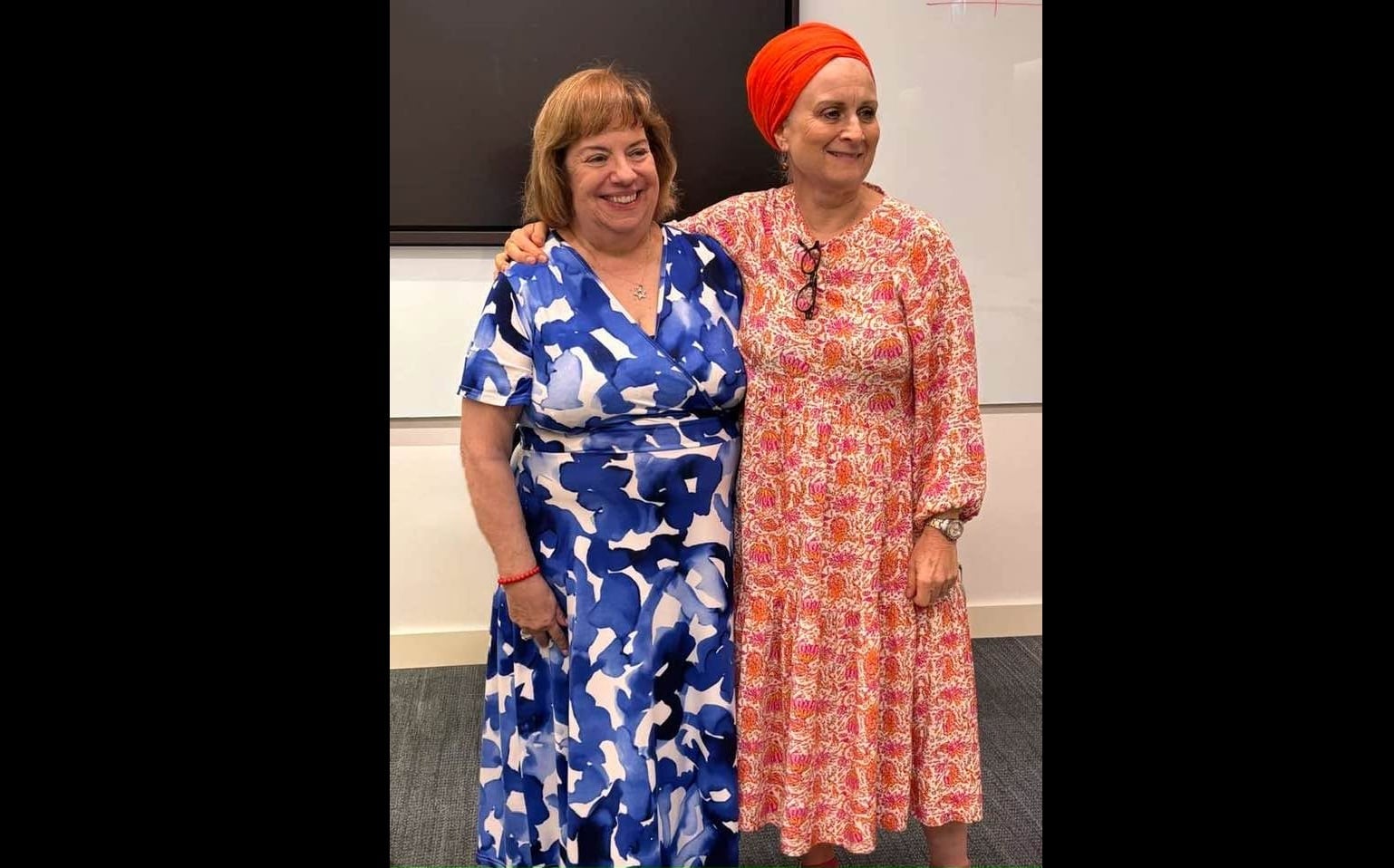
That same commitment to healing carried me into the second highlight of my trip, one that lives in a very different register – quieter, heavier and every bit as important. I had the privilege of organizing a presentation on trauma, grief and my work with soldiers through Tikva by Keep Olim, a volunteer organization close to my heart, directed by my friend and colleague Susan Cohen. Working alongside Cohen and our colleague Yehuda Kaplan, we coordinated an event at the Museum of Tolerance in Jerusalem.
Spending time immersed in Tikva’s work only deepened my admiration for what Cohen and her team have built. Tikva is a comprehensive mental health program supporting olim (immigrants), lone soldiers, returning Israelis and Jewish communities worldwide during times of emotional crisis. They help those coping with war, the loneliness of aliyah, military service, antisemitism or simply a personal crisis. At the center of it all is the Tikva Line, the only 24/7 English Emotional Support Line in Israel, with its 110 trained volunteer professionals across Israel and the world.
When appropriate, callers are connected to a wider network of therapists for ongoing care. Tikva also provides accessible, low-cost therapy for olim and free therapy and advocacy for lone soldiers before, during and after their service. Its chaplaincy and spiritual care service, offering support from certified chaplains and rabbis across the spectrum of Jewish practice, is one of the only resources of its kind anywhere.
Standing beside Cohen, I understood in a new way that no one – not a soldier, not a new immigrant, not a grieving parent – should ever have to face a crisis alone. That conviction is the whole reason Tikva exists and it is the same conviction that pulls me back to Israel every time.
I don’t know that I was fully prepared for our day at the Museum of Tolerance in Jerusalem. The central exhibit, “06:29 – Darkness to Light,” is unlike anything I’ve experienced. Interactive holograms. Haunting, deliberate photography. Architecture that feels almost impossibly modern set against content that is almost impossible to absorb. It is, in every sense of the word, mind-boggling – a space designed to make you feel the enormity of that morning in ways that facts and figures alone never could.
We brought together a group of mental health professionals from across Israel for a private tour led by Yehuda Kaplan, followed by a lecture and debrief that I had the honor of leading. There is something sacred about sitting with people who hold so much of their community’s pain and giving them a space to simply feel it together before returning to the work of caring for others.
People ask me why I keep going back to Israel, especially now. The truth is, this is exactly why. It’s in these rooms – a classroom at Hebrew University, a museum built to hold unbearable memory, a circle of therapists steadying themselves before they go steady others.
Israel doesn’t need visitors who are afraid to show up. It needs people who show up anyway, with open hearts and open hands, ready to sit in the hard places and help carry the weight, just as Cohen and Tikva do every single day of the year.
“Great things are done by a series of small things brought together” (Vincent Van Gogh).
I will keep going back. Every single time.
Susan Cohen contributed to this column.
This piece first appeared in the Jewish Herald-Voice, July 23, 2026. It is reprinted with permission.