Why Should Jews Care About the Vulnerable?
In studying Abraham Heschel’s The Prophets, I am reminded that many people are heartened by the prophets’ call to care for the poor, widows, orphans, and other vulnerable people. But I worry that the prophets’ message is sometimes incorrectly universalized. In understanding why the prophets so often focus on the vulnerable, we must first answer a more fundamental question.
What Is Religion?
Many people see a fundamental similarity among religions: Jews, Christians, Muslims, Buddhists, Hindus, and others are all appreciating the oneness of God in their own way. But this formulation sounds suspiciously like Carl Jung’s collective unconscious: there is some underlying reality that binds humanity together, and different religions are simply different ways of accessing it. It can also become perennialist, in the sense associated with thinkers such as René Guénon, when one focuses on supposed esoteric truths shared by the world’s ancient faiths.
But this fundamentally misunderstands religion.
I am greatly influenced by Hussain Mansour Abubakr, a writer and deep thinker on the Abrahamic faiths. For him, religion is primarily a truth claim about fundamental reality, and religions sharply differ on these fundamental truth claims. Did God reveal Himself to Moses and Israel at Sinai or not? Did God become incarnate in Jesus and sacrifice Himself to save humanity from its sins or not? Did Muhammad receive the final prophecy from God or not?
These are not merely different cultural expressions of the same underlying religious truth. They are competing claims about reality.
Judaism’s fundamental truth claims therefore conflict with those of every other religion. While Christianity, Islam, Buddhism, Hinduism, and other faiths contain many things that are beautiful, profound, and worthy of respect, I believe that Judaism is true.
Moving back to the prophets, I can therefore only understand the Hebrew prophets within the context of Judaism’s fundamental truth claims. Their words are not simply a collection of timeless ethical wisdom that can be detached from Judaism and transplanted into whatever moral framework we happen to prefer.
They are speaking to Israel.
The Main Characters
We usually view the main characters of history through leadership. But if we are looking for the figures whose primary function is to interpret Israel’s relationship with God, the prophets may be the Tanakh’s most important recurring characters.
Before Moses, the spirit of prophecy fell upon many of the major figures of Israel’s early history. God then revealed Himself to Moses and Israel at Sinai, placing Moses in the extraordinary position of both prophet and leader of the Jewish people. According to the rabbinic tradition, only a small number of prophets similarly combined prophecy with national leadership.
Most of the prophets, however, were not kings or political leaders. Their authority came from somewhere else.
They spoke in the name of God.
And if we look across the prophets, a remarkable theme emerges: they repeatedly call Israel back to its covenant with God.
This changes how we should understand their message.
The prophets are not simply saying to their fellow Jews:
“Be good to the poor, widows, and orphans because it is a nice thing to do.”
They are saying something much more demanding:
“Be good to the poor, widows, and orphans because this is what God demands of us in our covenant.”
The distinction matters.
The prophets’ concern for the vulnerable is not a freestanding political philosophy. It is an expression of Israel’s relationship with God.
The Limits of Our Own Morality
Without a covenantal source of obligation, human beings can construct competing rational accounts of justice.
Nationalists may say: help the vulnerable, unless doing so harms the nation.
Communists may say: help the vulnerable, unless doing so harms the proletariat.
Progressivists may say: help the vulnerable, unless doing so conflicts with their conception of justice.
These positions can each contain internally coherent moral reasoning. But none of them has the authority to define Jewish morality.
Judaism begins somewhere else.
We do not ultimately ask, “What does our ideology permit us to do?”
We ask, “What has God commanded us to do?”
That does not mean Jewish law has no complexity. Judaism has an elaborate system for determining how competing obligations interact and how commandments are applied in particular circumstances. But the ultimate source of the obligation is not our political philosophy or our changing moral consensus.
It is the covenant.
This is why the prophets’ condemnation of the mistreatment of the poor, widows, orphans, and strangers cannot simply be extracted from the Jewish tradition and presented as generic humanitarianism. Their message is inseparable from the God of Israel and His covenant with Israel.
Remember Who You Are
This is also why I think our daily prayers are so important.
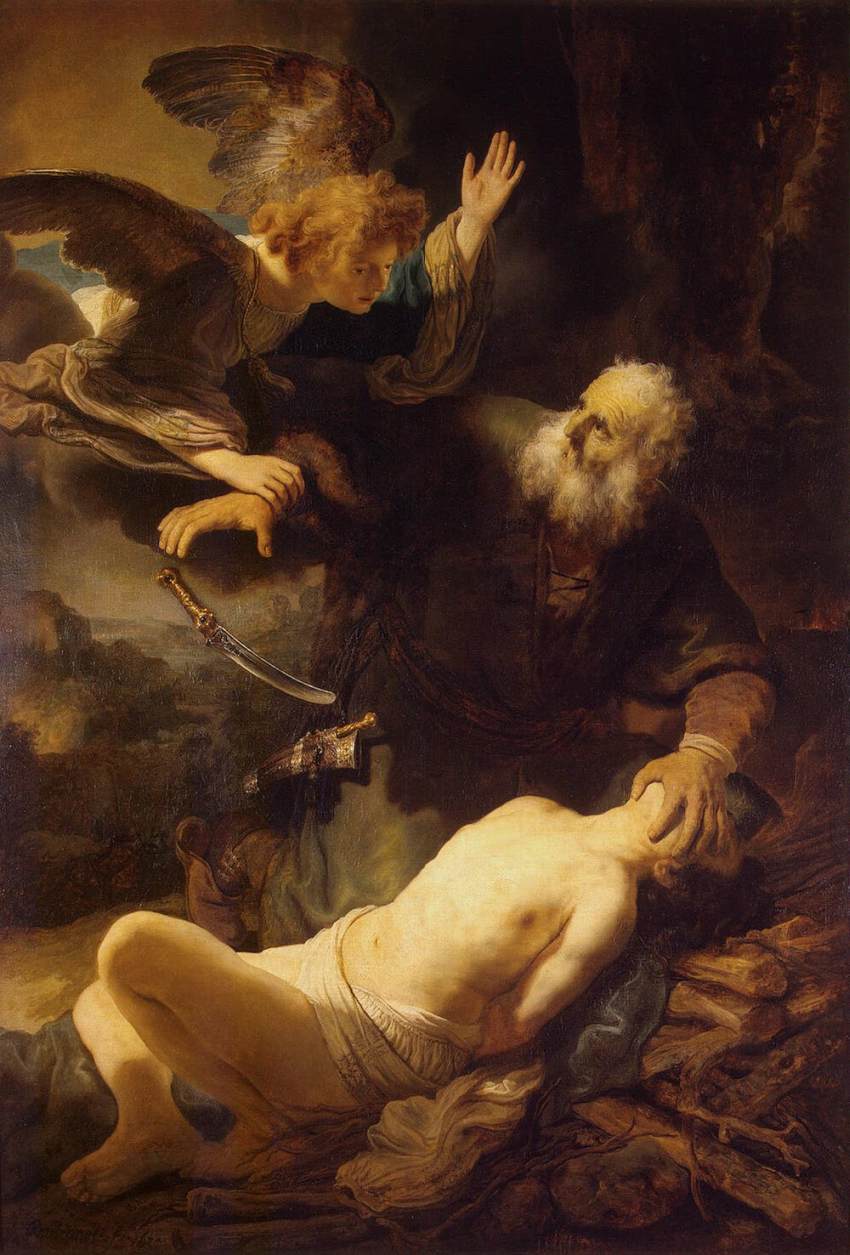
Every morning, we encounter the foundational stories of our people. We recall the Akedah. We recall the Exodus from Egypt. We repeatedly place the history of our covenant before ourselves.
For many modern people, this can seem strange, even excessive.
Why tell the same stories every day?
For an answer, I look to Disney’s The Lion King.
Mufasa is presented as the ideal father: strong, wise, and compassionate. As Simba continues his idle and wayward adventures, a vision of his father returns to him and commands him: “Remember who you are.”
As a command, this sounds almost ludicrous. “I’m Simba, duh,” would be a perfectly logical literal response.
But Mufasa isn’t reminding Simba of his name.
He is reminding Simba of his identity, inheritance, and obligations.
The human mind is powerful, but it also has an extraordinary capacity to forget fundamental truths. Simba has not forgotten what he is called. He has forgotten who he is.
And I think something similar happens to us.
Judaism is not merely a set of propositions that we learn once and then permanently retain. We are human beings. We forget. We become distracted. We absorb the assumptions of the societies around us. We can forget what it means to belong to Israel.
This is one reason I think our liturgy repeatedly places the foundational events of Jewish history before us.
We recall the Akedah and the faithfulness of our ancestors. We recall the Exodus and God’s redemption of Israel from Egypt. These are not merely stories from our past. They remind us that our identity is rooted in a historical relationship between God and Israel.
We are not simply people who happen to believe certain things.
We are a people with a covenant.
The spirit of prophecy eventually departed from Israel. Chazal teach that prophecy ceased with Haggai, Zechariah, and Malachi. We therefore no longer have prophets standing before us like Mufasa before Simba, directly calling us back to our identity.
So we have to remember.
And the prophets themselves spent their lives trying to make Israel remember.
God spoke through Isaiah with extraordinary visions. He spoke through Jeremiah with powerful words. He spoke through Ezekiel through dramatic symbolic actions. The methods differed, but the underlying purpose was remarkably consistent: Israel had forgotten who it was.
The prophet came to remind them.
Remember the covenant.
Remember what God commanded.
Remember who you are.
Remembering Has Consequences
And this is why I think the prophets’ concern for the vulnerable is so important. They were not merely offering an ancient version of modern humanitarianism. They were reminding Israel that the way we treat the vulnerable is part of what it means to be God’s covenantal people.
The orphan, the widow, the poor, and the stranger are not merely abstract categories in a universal moral philosophy. They are people whom God specifically commands Israel to protect.
The prophets therefore force us to ask not merely:
What kind of society do I want to create?
but:
What kind of people did God command us to be?
That is a much more demanding question.
And perhaps that is why we need to hear the prophets again and again.
Because the greatest danger is not that we do not know who we are.
It is that we forget.
We are God’s chosen people. We are a people bound to Him through covenant. We inherit a story that began with Abraham, was forged through the Exodus and Sinai, and continues through every generation of Israel.
May we remember who we are.
And through that remembering, may we merit the coming of the Messiah, the Messianic Era, and the World to Come.