
Middle East Forum Fellow/North Africa Risk Consultant
Why the America-Morocco Phosphate Nexus Defines Global Stability
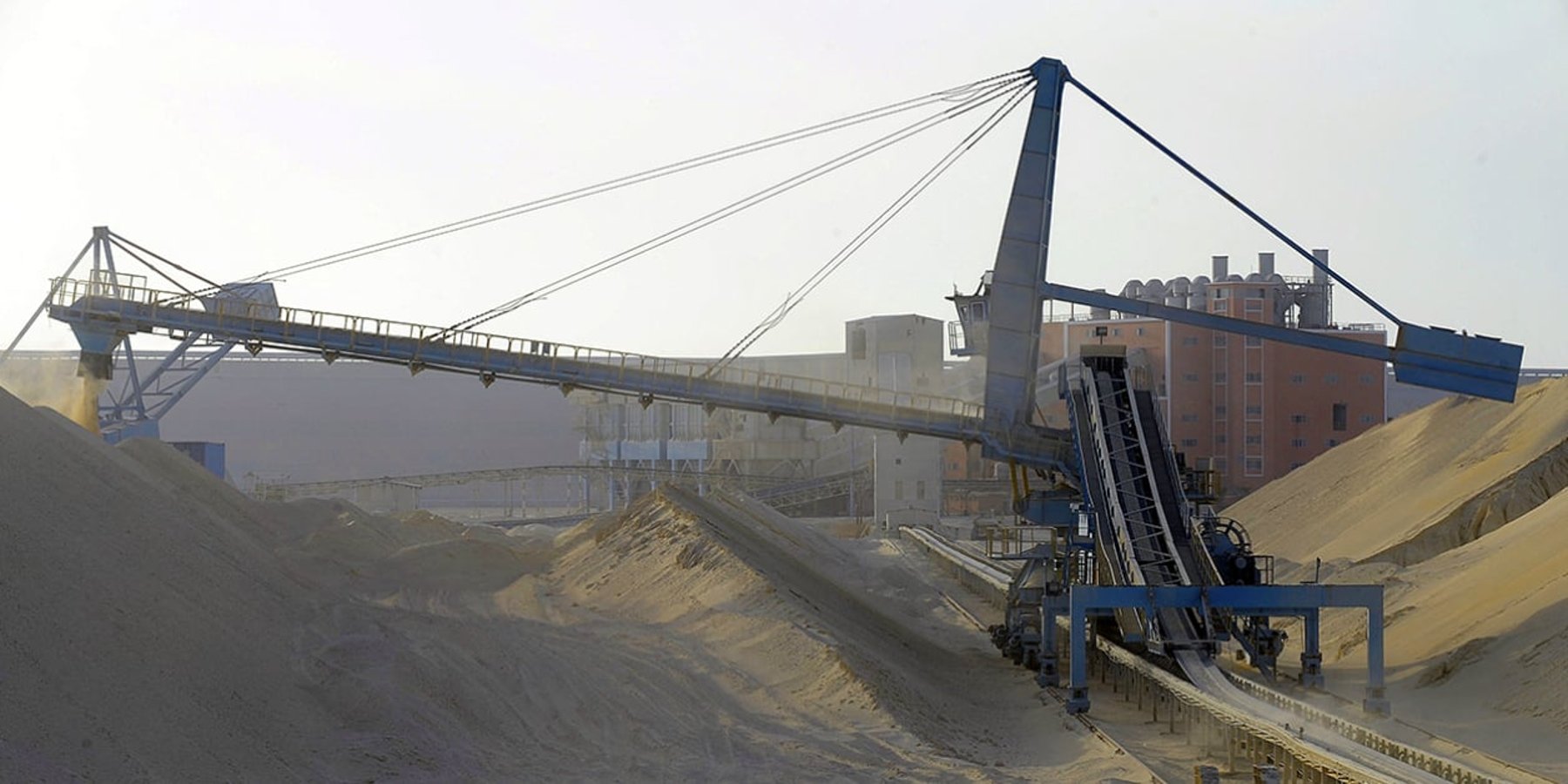
Credit: via AFP
The recent elevation of phosphate to the US Critical Minerals List is not a celebration of a resource; it is a forced reckoning with an unavoidable geopolitical reality. The mineral that underpins global food production and fuels the emerging battery economy is concentrated overwhelmingly in one nation: the Kingdom of Morocco. For both Washington and Rabat, this structural dependency demands a strategic alliance defined by cold, hard pragmatism, not diplomatic rhetoric.
The global fertilizer market is intrinsically unstable, prone to manipulation by dominant, politically adversarial producers who have historically weaponized exports to serve their own domestic interests, exporting scarcity and inflation to the world. The only counterweight to this perpetual instability is Morocco’s geologic dominance. Commanding over 70% of the world’s known phosphate rock reserves, Morocco holds the single most critical supply assurance for centuries, a structural monopoly that cannot be diversified away. This concentration of power is both a strategic advantage for Morocco and an acute source of risk for every dependent consumer market.
For the United States, the challenge lies in reconciling competing policy objectives. On one hand, the “Critical Mineral” designation demands securing stable, long-term supply from reliable allies. On the other hand, the impulse toward domestic protectionism has historically driven policies that destabilize the key supply partner. The imposition of high countervailing duties on Moroccan phosphate fertilizers years ago created the very supply shock the critical designation is meant to prevent, validating the vulnerability it aimed to correct. The subsequent, necessary reduction of these tariffs tacitly admitted a policy failure: national security imperatives must override narrow domestic industrial protectionism when dealing with an essential resource from a proven strategic ally.
Morocco’s industrial strategy, executed through its state-owned OCP Group, is moving beyond simple extraction. The pivot toward processing high-value products like phosphoric acid and finished fertilizers transforms Morocco into the undeniable gatekeeper of global food supply chains. Furthermore, its rapid embrace of the Lithium Iron Phosphate (LFP) battery market—which uses phosphate as a core component—is fundamentally reshaping its role from agricultural supplier to future energy partner.
This shift presents a material challenge to the US In the race to establish LFP supply chains mandated by its own clean energy policies, the US is currently playing catch-up. Heavy investment from rival global industrial players is rapidly consolidating control over Morocco’s LFP chemical processing infrastructure, threatening to divert the necessary feedstock away from Western manufacturers. The structural reality of Morocco’s reserves, coupled with the rapid industrial engagement of its competitors, demands that Washington move beyond policy reaction to active, targeted investment in the Moroccan value chain.
Crucially, Morocco’s commitment to sustainability is a matter of both necessity and competitive advantage. The billions invested in massive renewable energy projects and water desalination systems serve two functions: they mitigate the high operational risks posed by regional water scarcity, and they create a premium, environmentally compliant supply source that differentiates Morocco from less regulated, less responsible global producers. This strategic commitment effectively raises the environmental bar for the entire industry, creating compliance pressure on international partners.
The alliance between America and Morocco cannot rest on history or sentiment. It must be institutionalized as a cold, pragmatic mechanism for shared risk management. Both nations must leverage their existing trade frameworks to guarantee uninterrupted supply, secure logistics, and align investment in the green, LFP-focused future.
The stability of the global food system and the resilience of the clean energy transition hinge entirely on this single resource nexus. The Critical Minerals designation has forced the confrontation; now, the US and Morocco must forge a durable, strategically rational alliance that manages the concentrated risks of Morocco’s monopoly for the benefit of global stability.
Related Topics
Related Posts