
CEO of Time to Stand Up for Israel
Why the Gaza Flotilla Can’t Just ‘Bring Aid’
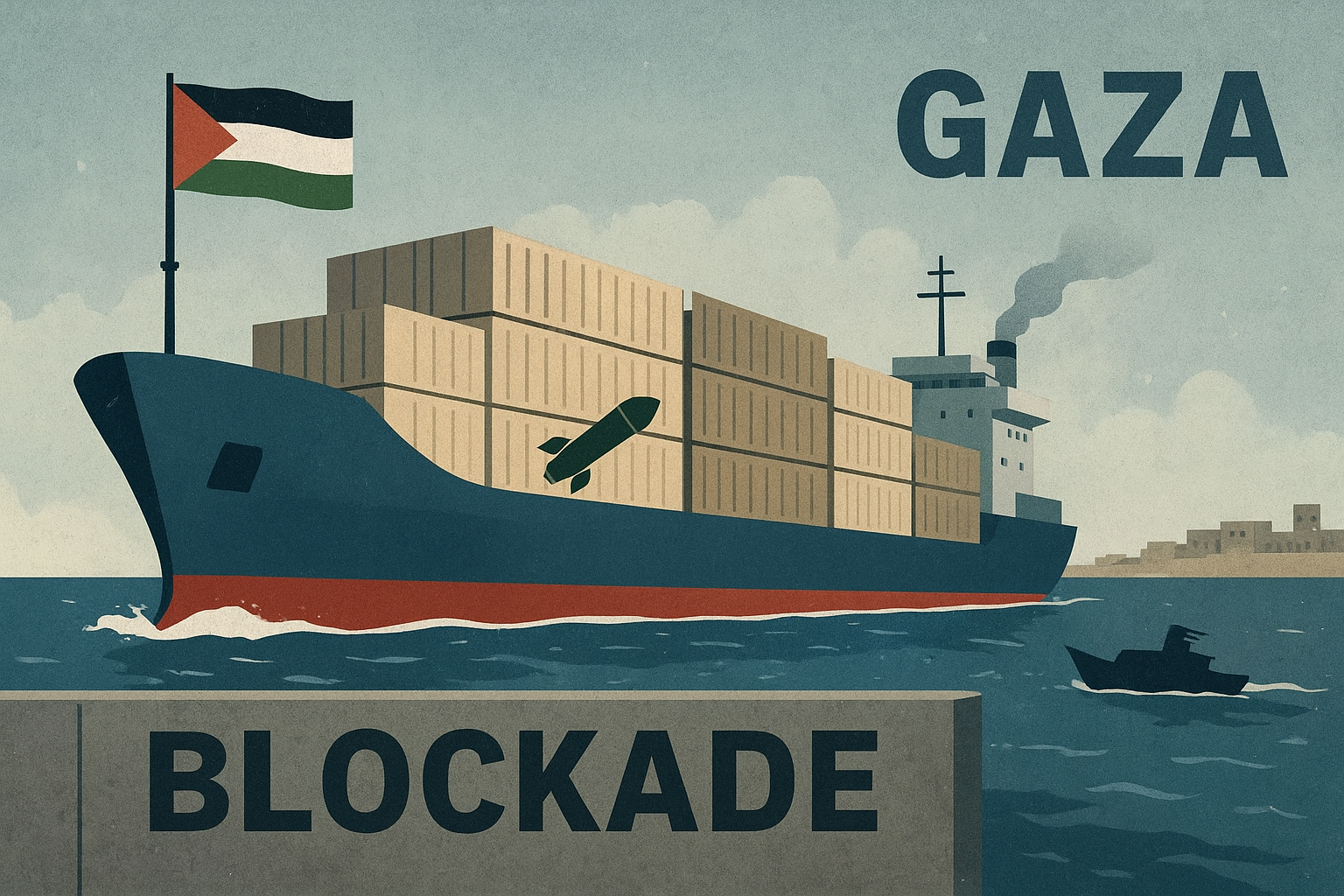
Photo Credits: Sabine Sterk (AI)
Why the Gaza Flotilla Can’t Just ‘Bring Aid’
Every time a flotilla sails toward Gaza, the same question echoes: Why not just let them in? Why does Israel insist on inspecting every crate, every sack, every shipment? To many, it looks like unnecessary cruelty. But in reality, it isn’t politics, but it’s mathematics. It’s security. And it’s history that nobody wants to face.
The Karine A: When Oslo Was Betrayed
On January 14, 2002, a ship called the Karine A set out from Iran under the Palestinian flag. On the surface, it looked like any other cargo vessel. But hidden inside were fifty tons of Katyusha rockets, RPGs, mortars, and grenades, all bound for Gaza.
At that time, the Oslo Accords were still supposed to symbolize a fragile hope for peace between Israelis and Palestinians. Yasser Arafat swore the Karine A had nothing to do with him, just paperwork, he claimed. But Israeli naval commandos stormed the ship in the Red Sea without firing a shot, uncovering the deadly arsenal.
The truth was undeniable: this wasn’t aid, this wasn’t peace, it was preparation for mass murder. The Karine A wasn’t just a weapons shipment; it was the death certificate of Oslo’s promises. Israel learned a lesson it could never forget: let one ship slip through unchecked, and tomorrow civilians would be dodging rockets in Tel Aviv.
The Pattern Repeats: Victory 5 and Francop
The years that followed only confirmed this grim equation.
- March 22, 2009: The Victory 5 left Sudan carrying sniper scopes and anti-tank weapons for Islamic Jihad, en route to Gaza. Once again, Israel intercepted the vessel, another Iranian-sponsored arms delivery disguised as harmless cargo.
- November 4, 2009: The Francop, sailing under a Cypriot flag, departed Syria with another fifty tons of Iranian rockets, cleverly hidden in containers that looked legitimate. Israel seized the ship off Cyprus, exposing the ruse.
The message was clear. “Humanitarian aid” was a cover story, a code word. Behind the flour sacks and the rice bags were weapons meant for Hamas and Islamic Jihad.
The Trojan Horse Strategy
The blockade on Gaza is often described by critics as cruel or inhumane. But history shows it is neither. It is not revenge. It is not punishment. It is preventive math.
Every crate that enters unchecked carries the risk of another Karine A. Every “aid” flotilla could be the Trojan horse that delivers rockets instead of rice. And when Hamas took control of Gaza in 2007, this risk only multiplied. Hamas’s charter openly calls for Israel’s destruction. Their strategy has always been clear: use every tunnel, every truck, every boat to smuggle the next weapon closer to Israeli cities.
That is why every shipment to Gaza is inspected in Ashdod before being transferred into the Strip. Israel has allowed countless tons of humanitarian supplies into Gaza, always under the principle of trust, but verify. Because without verification, civilians die.
October 7: The Deadly Reminder
The horrors of October 7, 2023 drove this truth home in the bloodiest way. Hamas’s terror attack was not a spontaneous outburst. It was the result of years of smuggling and stockpiling: paragliders, RPGs, grenades, drones, explosives, weapons carried by land, by tunnels, by sea, by air.
It was the Karine A strategy, perfected and unleashed on an unprecedented scale. And it killed more than 1,200 Israelis in a single day.
If Israel had let flotillas pass unchecked in the years leading up to it, October 7 would not have been a one-time massacre. It would have been a monthly reality.
What Could Have Been
The tragedy is not just in the weapons smuggled but in the opportunities lost. Imagine if Palestinian leaders had invested in building an economy instead of importing mortars. Imagine if the billions of aid dollars funneled to the Palestinian Authority had built schools, power stations, and infrastructure, instead of buying Katyusha rockets.
Gaza could have been a thriving coastal hub, with jobs, passports, and ports. Instead, it became a fortress of terror. And the blockade became the only barrier between Israeli civilians and mass graves.
Security Above Sentiment
Critics call the blockade collective punishment. But the record is unambiguous: unchecked ships mean dead civilians. Letting a single “aid” flotilla pass without inspection could mean rockets in Ashkelon, drones over Tel Aviv, or grenades in kindergartens.
The blockade is not war. It is not vengeance. It is the lid that prevents October 7 from happening every month.
History has already answered the question: why not let the flotillas through? Because Gaza’s leaders have turned every lifeline into a weapon. And Israel has no choice but to scan, inspect, and block until the day someone in Gaza chooses peace over rockets.
Am Yisrael Chai
Related Topics
Related Posts