
Why the Saudi-Pakistan pact wasn’t about Israel’s attack in Qatar
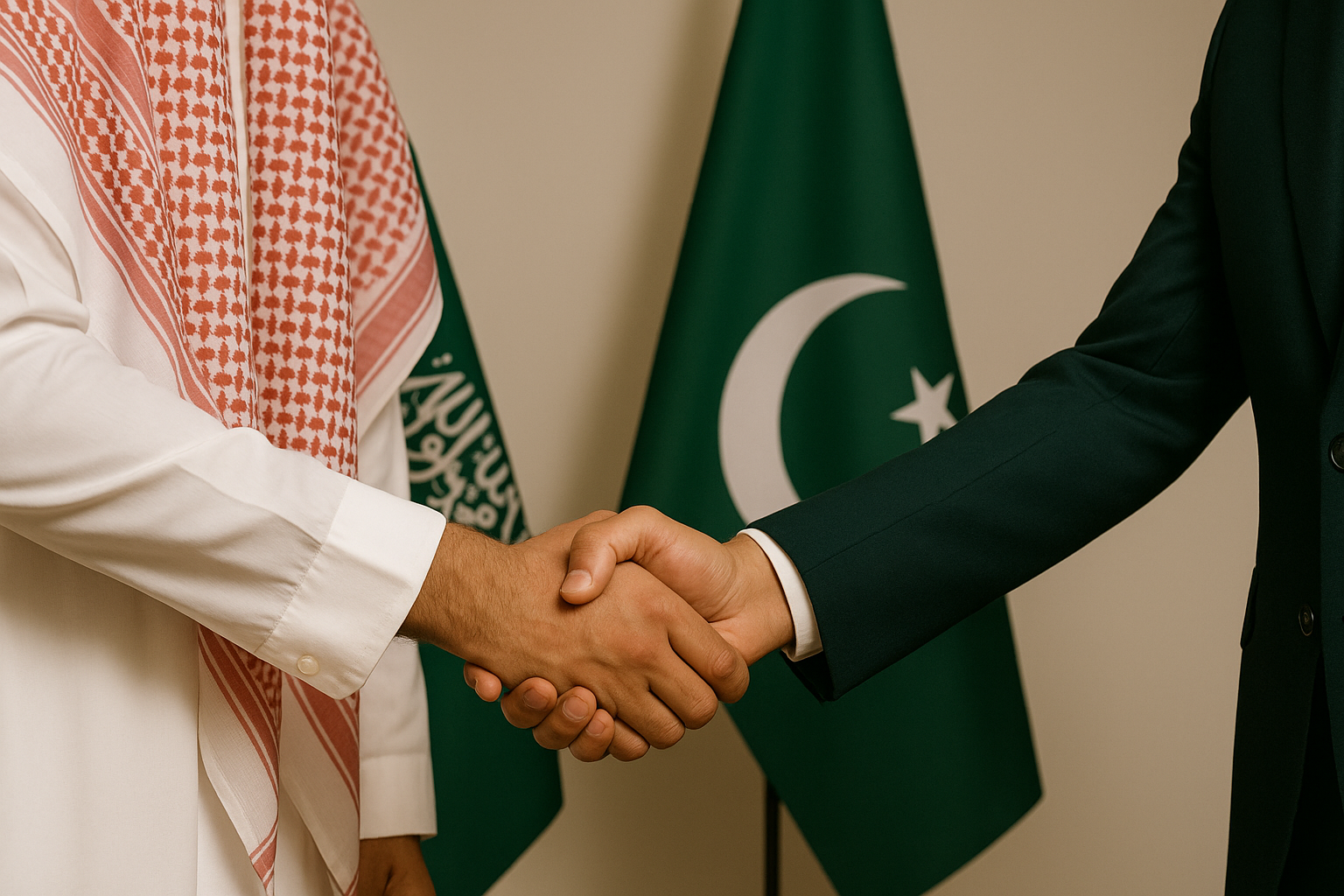
Observers rushed to connect Israel’s strike in Qatar with Saudi Arabia’s new defense pact with Pakistan. In reality, the two events share timing, not causation
The story seems simple: on September 9, Israel strikes Hamas leaders in Doha, and a week later Saudi Arabia signs a mutual defense pact with Pakistan. Cause and effect, like billiard balls colliding. But reality resists neatness. Reuters reported the deal was the “culmination of years of discussions.” Brookings described it as a formalization, Chatham House as an upgrade. Riyadh and Islamabad’s defense cooperation stretches back decades, from Saudi funding of Pakistani deployments during the 1980s to joint training exercises in the 2000s. The Doha strike explains timing, not substance. The agreement was coming anyway.
Biden’s rupture with Riyadh
The deeper story lies in Washington. When Joe Biden took office in 2021, he pledged to make Mohammed bin Salman a “pariah” over the murder of Jamal Khashoggi. His administration froze certain weapons sales, suspended support for Saudi offensive operations in Yemen, and even withdrew Patriot missile batteries at a time when Saudi oil facilities were under near-weekly drone and missile attack. Arms packages worth billions, routine under Trump, were delayed or downsized. For Riyadh, this wasn’t a values-driven reset. It was a signal that Washington might no longer be reliable.
The Iran dimension
Saudi officials also watched Washington’s Iran policy closely. Biden revived nuclear diplomacy with Tehran in 2021 and tolerated China’s mediation of the Saudi-Iran détente in 2023. To American eyes, these were compartmentalized issues. To Riyadh, they formed a pattern: U.S. willingness to deal with Iran without guaranteeing Saudi security. For Gulf monarchies, early perceptions harden into strategic truths.
Riyadh turns toward Islamabad
Hedging became the natural response. Pakistan has always been a latent partner, supplying trainers, stationed troops, and quiet reassurances. The subtext is nuclear. Saudi money combined with a Pakistani military that developed its own deterrent power casts a long shadow. Neither side will say it openly, but the symbolism matters. For Tehran, it is a warning. For Washington, a reminder: Riyadh has options.
Pakistan, for its part, gains both prestige and financial ballast. Its economy, battered by debt crises and IMF negotiations, has long depended on Gulf assistance. A defense pact institutionalizes that dependency while elevating Pakistan as more than just a recipient of Saudi largesse – it becomes a partner shaping Gulf security.
The cost of restraint
Biden’s defenders argue these moves were principled: ending U.S. complicity in Yemen’s humanitarian disaster, recalibrating arms sales to uphold human rights, and signaling that Washington would not be beholden to Riyadh. Yet the unintended effect was the opposite. By clipping Saudi wings, Washington pushed Riyadh to deepen ties outside the U.S. orbit. The timing was especially awkward. When Russia invaded Ukraine in 2022, Washington leaned on Riyadh to pump more oil and stabilize global prices. The Saudis refused. U.S. officials called it spite; Riyadh called it sovereignty. Either way, Biden’s early posture had consequences in both defense and energy.
Too little, too late
The White House eventually recalibrated. Biden’s July 2022 visit to Jeddah symbolized a thaw. Defense packages resumed; U.S. coordination with Gulf states intensified after October 7. Yet reputations in the Gulf are sticky. For monarchies accustomed to reading signals carefully, the early rupture lingered longer than later repairs. The Saudi-Pakistan pact, signed in 2025, is less about breaking with America than about insuring against America.
The Doha distraction
That returns us to Doha. Israel’s strike on Hamas leaders was extraordinary, shaking Gulf capitals and raising questions about sovereignty and security. Signing a pact days later gave Riyadh a convenient political message: solidarity with Qatar. But confusing correlation with causation misses the deeper point. This deal was already in the drawer. Doha gave it resonance, not rationale. It was the cymbal crash after a long symphony.
Washington’s shrinking anchor role
The broader implication is sobering for U.S. policymakers. The United States under Biden was no longer seen as the unshakable guarantor in the Gulf. Instead, it is one player among several — still vital, but not singular. Saudi Arabia now cultivates a portfolio: Pakistan for manpower, China for mediation and investment, America for technology and high-end defense systems. The pact with Islamabad is not anti-American, but post-American.
A cautionary tale
For Biden’s critics, this is an object lesson in how early restraint can backfire. By seeking to pressure allies into moderation, Washington drove them toward diversification. For Biden’s defenders, it underscores the impossible bind: how to balance values with interests, human rights with security. But both sides can agree on the outcome. Riyadh hedges more aggressively, and the U.S. role as anchor erodes.
That is the real story — less dramatic than a single Israeli strike, but more consequential.