
An Aging Jewish Feminist
Wife Beating and Parshat Balak
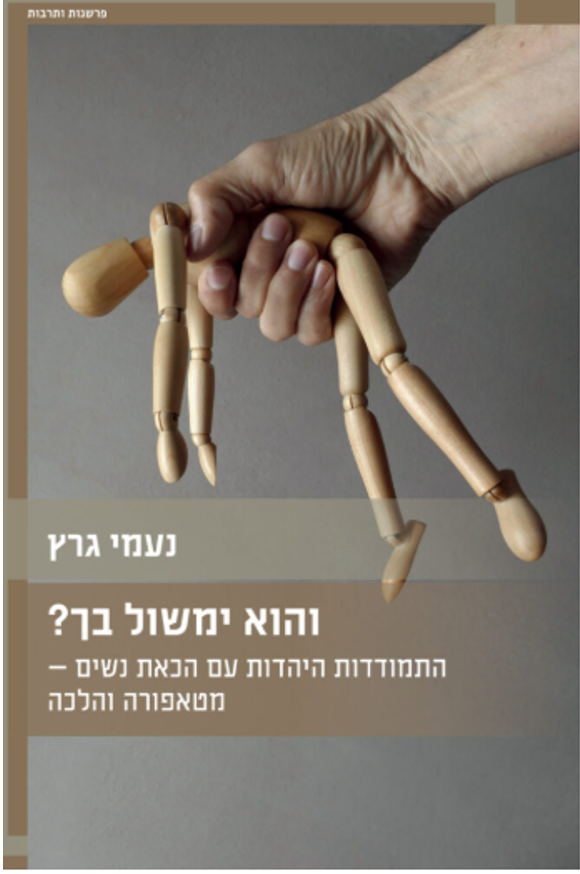
This week’s parsha coincides with the release of the newly translated edition of my 1998 book, Silence is Deadly: Judaism Confronts Wifebeating. Timed for Shavua HaSefer (Book Week)—though this year’s events are limited to Tel Aviv and Jerusalem—it marks the end of nearly five years of work with the translator and Carmel Press. I haven’t yet received my copy, but I’m thrilled. Fittingly, the Torah portion is Parshat Balak, which includes a troubling episode I’ve long linked to the issue of wife beating. And this week, the Dinah Project (here) reminded the world that rape was once again used as a weapon of war—this time by Hamas on October 7, 2023. Violence and sexual assault remain brutal tools of warfare, meant to terrorize, humiliate, and dehumanize. And of course, the parsha ends with another act of violence, this time by Aaron’s grandson, Pinchas, who will receive the berit shalom, the equivalent of the Nobel Peace Award, for his action in saving the people from God’s wrath.
PARSHAT BALAK
Balak, King of Moab, perceives Israel as a threat and hires the famous prophet Balaam to curse the nation. Though Balaam appears to be God-fearing, God repeatedly intervenes, blocking his path. The first obstruction occurs when Balaam rises early to saddle his donkey—echoing Abraham’s dawn preparations. But in this case, the donkey is a she, a female (aton, אתון).
As the story unfolds, the donkey sees an angel standing in the way, sword drawn. Three times she tries to protect Balaam: swerving into a field, pressing his foot against a wall, and finally lying down. Each time, Balaam beats her. Finally, God opens her mouth and the she-ass speaks:
“What have I done to you that you have beaten me these three times?”
Balaam, humiliated, replies:
“You have made a mockery of me! If I had a sword, I’d kill you!”
She calmly responds:
“Look, I am the ass you’ve ridden all along. Have I ever acted this way before?”
And Balaam admits: “No.”
Then God opens Balaam’s eyes. He sees the angel and falls prostrate. The angel rebukes him: had the donkey not turned aside, Balaam would have been killed. She saved his life—he just couldn’t see it.
A DONKEY, A WIFE, A VICTIM
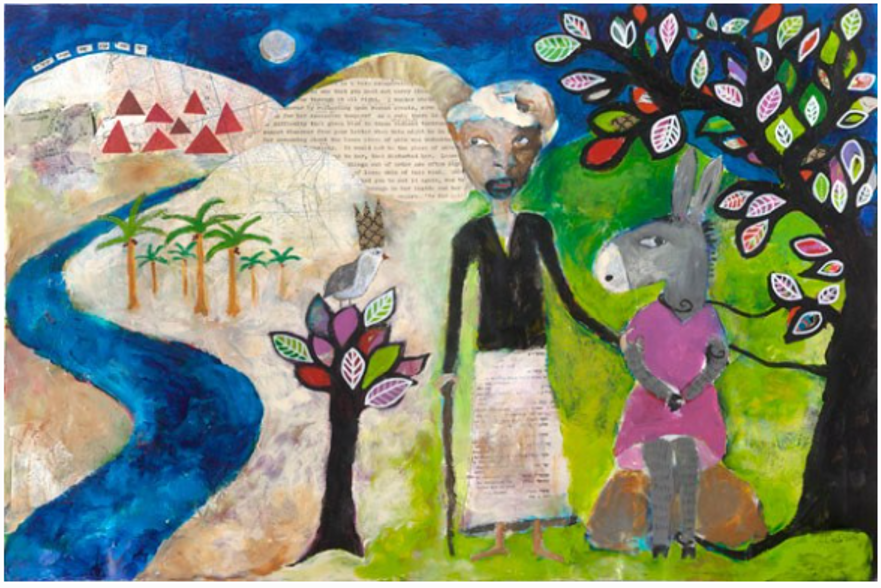
According to a midrash, this talking she-ass was created by God in the last hours of creation, along with other miraculous phenomena like Miriam’s well (Pirkei Avot 5:6,2). The biblical text emphasizes her gender—aton, not chamor. The relationship between Balaam and his donkey resembles that of a long-married couple. She has carried him loyally for years, and the moment she disobeys, he beats her.
Why a female donkey? Is the Torah suggesting that women are expected to bear heavy loads, like beasts of burden, without protest? Like many abusers, Balaam sees his companion as property: he is ba’al—both “husband” and “owner.” The she-ass only protests after the third beating, similar to many abused women who remain silent until the violence escalates.
Unlike most women in abusive relationships, this she-ass has a divine advocate. God not only opens her mouth but confirms her testimony. She showed loyalty, foresight, and courage—yet she was beaten for it.
So here we have a rare happy ending for the abused donkey, something that should never be taken for granted. Unlike so many abused women, she stands up and shows agency. Fortunately for her, there is a God who sees, intervenes, and protects.
THE CONNECTION BETWEEN MY BOOK AND THIS WEEK’S PARSHA
There’s a classic rabbinic question: מה ענין שמיטה אצל הר סיני — “What do the laws of the sabbatical year have to do with Mount Sinai?” This phrase has become shorthand for any surprising or tenuous connection between two seemingly unrelated things. I’m exploiting the phrase to ask, “What’s the connection between Parshat Balak and my book on wifebeating?”
First, why a female donkey? Is the Torah implying that women are like beasts of burden—or highlighting how easily men relate to their “wives” as objects? Balaam lashes out at his donkey, failing to appreciate her attempts to protect him. He is ba’al, husband and master of the animal/wife. And, like many women, the donkey carries a literal and symbolic burden: picture a woman with a child on her back and a bucket of water on her head (think Hagar—Genesis 21:14).
And then, after being brutalized three times by this habitual beater, Balaam’s donkey finally speaks. In fear for her life, she pleads: “What have I done to you that you have beaten me these three times?” And like so many abusers, Balaam blames her for his humiliation: “You have made a mockery of me! If I had a sword, I’d kill you.”
A COMIC SCENE—OR SOMETHING DARKER?
This episode is often interpreted as comic relief. A prophet who cannot see, while his donkey perceives the divine. A talking animal is funny—but violence against women is not. The story’s humor is deeply ironic: the “seer” is blind, while his donkey displays insight, loyalty, and moral courage. Seen from another angle, the donkey becomes a proto-feminist: she speaks up, resists, and exposes male hypocrisy.
In his Or HaChaim commentary, Chaim ben Atar (1696–1743), as translated by Eliyahu Munk, suggests something even more disturbing: that Balaam’s relationship with his donkey was not only violent but sexual. Munk translates the Hebrew to mean that Balaam “used his she-ass as one uses a wife”—implying perverse intimacy:
שאדם גדול כבלעם היתה לו אתונו לאשה שוכבת חיקו. The Hebrew literally says that “a great man like Balaam had his she-ass as a wife lying in his bosom.” Munk’s interpretation adds that he beat her as one “uses a wife”—suggesting that beatings are often a part of marital relationships (Or HaChaim on Numbers 22:23).
The Talmud goes even further. When Balaam is challenged about not riding horses, he claims they’re off grazing. The donkey contradicts him:
“Am I not your donkey?… Have I not been your faithful mount all your life?”
And then comes the shocking line:
“Moreover, I perform a conjugal act for you” (Sanhedrin 105a–b).
The rabbis are not just mocking him—they’re depicting him as depraved. The donkey is cast as a long-suffering partner in a twisted relationship built on domination and denial. She endures in silence—until she is finally, miraculously, heard.
And yet, what makes this story especially painful is God’s delay. Balaam strikes the donkey three times before God steps in. Why wait? This too mirrors the lived experience of many battered women. Authorities often ignore warning signs and fail to act until the abuse becomes life-threatening. Justice, when it comes, is too late.
FROM BEATINGS TO BLESSINGS
And then, from the same mouth that cursed his donkey, Balaam delivers one of Judaism’s most beloved blessings: מַה־טֹּ֥בוּ אֹהָלֶ֖יךָ יַעֲקֹ֑ב מִשְׁכְּנֹתֶ֖יךָ יִשְׂרָאֵֽל
“How goodly are your tents, Jacob; your dwellings, Israel” (Numbers 24:5). This verse is recited in our daily morning prayers.
But how do we reconcile Balaam the abuser with Balaam the poet/prophet? Perhaps in the same way we excuse abusive religious figures, leaders, artists, athletes, or intellectuals—separating their charisma or creativity from their cruelty. I’m not suggesting we stop singing Ma Tovu in three-part harmony. But we should pause and reflect on the paradox that beauty and violence often coexist. And far too often, society turns a blind eye to abuse when it comes wrapped in talent and power.
A VIOLENT END TO OUR PARSHA
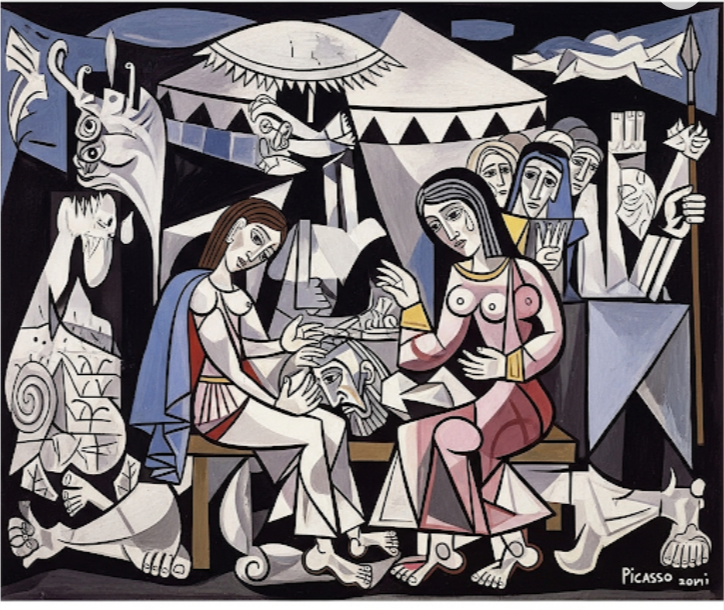
The parsha ends with a chilling episode, which rightly should be the beginning of next week’s parsha which is about Pinchas. Balaam has already gone home and meanwhile, the menfolk of Israel were busy whoring around with Moabite women who tempted them to sacrifice to their God. Of course God was angry and tells Moses to impale the ringleaders in public. Moses delegates the job to Israel’s officials, but before they can do anything about this, matters escalate:
“A certain Israelite man came and brought a Midianite woman over to his companions, in the sight of Moses and of the whole Israelite community who were weeping at the entrance of the Tent of Meeting. When Phinehas, son of Eleazar son of Aaron the priest, saw this, he left the assembly and, taking a spear in his hand,he followed the Israelite man into the chamber and stabbed both of them, the Israelite man and the woman, through the belly. Then the plague against the Israelites was checked.Those who died of the plague numbered twenty-four thousand (Numbers 25: 1-9).
One wonders why this episode was appended here, rather than in Parshat Pinchas. The horror of Pinchas’s violent act in this week’s parsha seems at odds with God’s reward: a covenant of peace, granted to him and his descendants as an eternal priestly pact (Numbers 25:13). By including only the first nine verses of Chapter 25 in this parsha, the text avoids directly linking his zealous violence with the berit shalom he receives. No doubt, something similar will happen again in the future—when history is written to glorify present-day acts of passion and violence on both sides as heroic.
A NOTE ABOUT THE PICTURES
The three pictures accompanying this blog are as follows:
- The artist Susie Lubell depicts the female donkey in a pink dress, standing up on her own two feet, walking with Balaam. It is part of a collection of artwork done by women on all the parashot of the Torah. You can see them all here. Lubell’s artwork is available at www.susielubell.com.
- The cover of my book is in stark contrast to the original English edition, which appeared entirely in black and white. I selected the cover image from seven options suggested to me by the publisher.
- I used the Gemini application to generate this image by entering the biblical passage and requesting an illustration of the scene in the style of Picasso.
Related Topics
Related Posts