Words Can Light Fires The Greater Somalia Debate and Somaliland’s Hard-Won Peace
Why confrontational rhetoric about unity threatens one of the region’s few stable success stories.
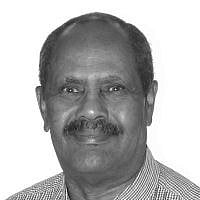
Political analysts and regional observers have raised concerns about public statements by Kenyan MP Farah Maalim (also spelled Moallin) on Somaliland, Somalia, and their neighbors. Critics argue that escalatory rhetoric from a sitting foreign lawmaker carries real diplomatic, security, and humanitarian risks.
Why a Kenyan MP’s Words Matter
Maalim, the MP for Dadaab and a former Deputy Speaker of Kenya’s National Assembly, represents Kenyan constituents, not Somali or Somaliland authorities. When a legislator takes an aggressive stance on a neighbor’s sovereignty dispute, analysts say, it complicates official diplomacy and undermines de-escalation. Kenya has long balanced hosting Somali refugees with engaging Mogadishu and IGAD, and inflammatory commentary risks straining that balance.
The stakes are also practical. The region already faces Al-Shabaab and cross-border clashes such as the Moyale conflict. Encouraging confrontation between Somaliland and the Federal Government of Somalia would open another front that militants could exploit. Any major war would send new waves of refugees into Kenya, straining border areas like Dadaab, which Maalim himself represents.
In interviews with Dhaanka TV and Dhab TV, Maalim has framed his views as a defense of Somali sovereignty against outside interference, accusing Ethiopia of a long campaign to destabilize Somalia. You can hear his arguments in The Horn of Africa at a Crossroads: Somalia, Ethiopia, Eritrea & Somaliland.
The Greater Somalia Contradiction
Greater Somalia emerged in the mid-20th century as an anti-colonial dream of uniting five Somali-inhabited territories: British Somaliland, Italian Somaliland, Djibouti, Ethiopia’s Somali Region, and Kenya’s Northern Frontier District. It resonated in the 1960s, but history moved on.
- A failed project: Analyst Abdi Ali Barkhad, writing in Borkena, calls it unworkable. Djibouti chose independence in 1977, Somali regions in Ethiopia and Kenya are part of sovereign states, and Somalia itself collapsed in 1991.
- A double standard: As commentator Mosisa Aga notes, it is hard to defend championing one community’s aspirations while dismissing another’s, especially from a lawmaker who serves under Kenya’s constitution.
What Somaliland Sacrificed
Somaliland gave up its newly won independence from Britain in 1960 to join Italian Somaliland. Instead of equal partnership, it faced marginalization and, in the late 1980s, brutal repression under Siad Barre, whose forces devastated Hargeisa and Burao. After 1991 it reclaimed its sovereignty and built a peaceful democracy with its own currency, security forces, and regular elections, without the heavy international intervention seen in the south. An entire generation has now grown up under a separate, functioning government, and treating that reality as disposable breeds resentment, not unity.
How Somaliland Built Peace
Somaliland’s model was bottom-up, locally funded, and hybrid, fusing clan governance with modern institutions. Its lack of recognition forced elders, leaders, and merchants to rely on one another. Four pillars stand out:
- Grassroots reconciliation: Communities and the diaspora funded clan conferences (shir) themselves, so elders could negotiate for months without donor deadlines. Former rivals agreed to mutual forgiveness, xalay-dhalay, or “born last night.”
- Elders in the state: The Guurti (House of Elders) became the upper chamber of parliament, giving traditional mediators a formal role in security.
- Business-backed demobilization: Merchants who needed safe roads and the Berbera port lent to the government in exchange for stability. President Mohamed Haji Ibrahim Egal used the revenue to launch the Somaliland shilling and absorb militias into a national army and police.
- Democracy by design: The 2001 constitution caps national parties at three, which must win support across regions, pushing politicians toward cross-clan coalitions.
Key Milestones
- May 1991, Burao: The SNM and elders agree a ceasefire and restore Somaliland’s 1960 sovereignty.
- 1993, Borama: A locally funded conference of over 2,000 delegates produces the Peace Charter and an interim constitution, and elects Egal.
- 1994-1997: Fighting over power and port revenue is resolved by elders and diaspora mediators without foreign troops.
- May 2001: Voters approve a constitution enshrining multiparty democracy.
- 2002-2005: Municipal, presidential, and parliamentary elections follow. In 2003, Dahir Riyale Kahin won by just eighty votes and his opponent conceded peacefully.
| Somaliland’s success was not achieved despite the absence of international recognition. Many scholars argue it succeeded because of it. |
Speech Carries Responsibility
Politicians’ words cross borders. In sensitive areas like Moyale or the contested Somaliland-Somalia frontier, inflammatory speech can turn local disputes into violent clashes and box leaders into zero-sum positions, making trade, counterterrorism, and infrastructure cooperation harder.
Constructive leadership means engaging with the region as it is today and respecting the rights and histories of all communities, whether in Somaliland, Somalia, Ethiopia, or Kenya. Dialogue and mutual respect, not nostalgia or intimidation, are the foundation for lasting peace.