World Jewry’s voice was heard at the Zionist Congress
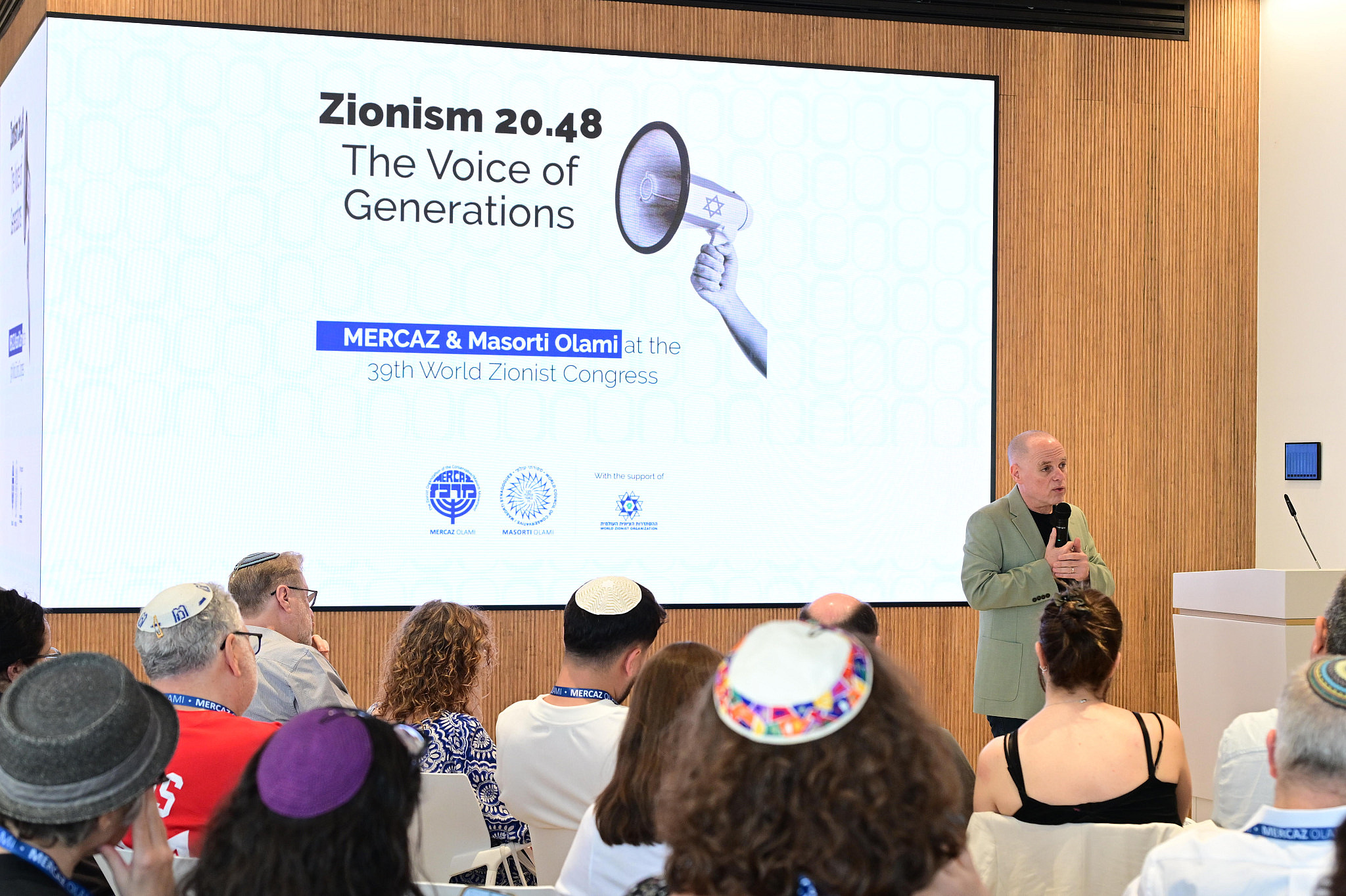
The recent World Zionist Congress was indeed a raucous one, marked by at times fierce debates and difficult political machinations. When all was said and done, however, the outcome was clear: when the Jewish world in Israel and the Diaspora comes together, the decisions adopted are overwhelmingly liberal and pluralistic. This was reflected in decisions adopted by wide margins supporting the formation of a State Commission of Inquiry into the failures of October 7th, demanding equal access and infrastructure at the Egalitarian Kotel, and backing a truly equal enlistment law in Israel.
The various factions in the Zionist Congress also reached a unifying, responsible agreement that will shape the work of the WZO and our other national institutions – KKL, the Jewish Agency, and Keren Hayesod – over the next five years. An agreement where various Jewish denominations and ideologies have a seat at our shared decision-making table, without the presence of provocateurs like Itamar Ben Gvir and Yair Netanyahu who actively seek to divide us and undermine the core values upon which Herzl shaped the Zionist vision. An agreement that empowers Jews of all streams and from all countries around the world to engage with Israel, Zionism, and one another as equals. An agreement that equips the only democratic institutions that serve Jews in Israel and around the world to take on the immense challenges we all face.
While this Congress and negotiations process left much to learn and to be desired, it is important to note that in the bigger picture, the intensive democracy and politics we saw in action in recent weeks are not a bug – they are indeed a feature of Zionism and the Zionist movement as democratic institutions from their very beginnings. And that bigger picture can and should be something to be proud of. Herzl made sure from the First Zionist Congress in 1897 and onward that democracy and democratic principles were deeply ingrained in our movement. Indeed, even the fierce political disagreements and machinations aren’t new. At the Fourth Zionist Congress, Chaim Weizmann and his faction deserted the proceedings to prevent reaching a quorum for voting on key decisions.
In recent weeks, together, we have navigated the challenging, multidimensional politics of Israel and the Jewish world today and reached outcomes that are not only a result of our democratic Zionist values being put into action, but in many ways, a reflection of them. I am glad that I will have the privilege of continuing to serve as Vice Chairman of the WZO with expanded responsibilities and to promote the notion of Jewish Peoplehood here in Israel and across the Jewish world. Facing immense challenges in the aftermath of October 7th and the longest war in Israel’s history, we will continue working at WZO and the national institutions to promote real Jewish unity through embracing true pluralism, to combat antisemitism, and to strengthen Israel’s future as a Jewish and democratic state that’s a welcoming home for every Jew.