

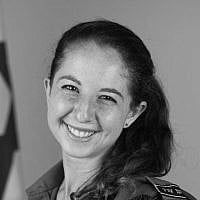
World Mental Health Day: A Letter From An IDF Reservist
Today is World Mental Health Day, and I want to talk about how October 7 affected me. I’ve never talked about this on a public platform before, but I think it’s important for me to do so specifically because I always thought PTSD could never happen to me.
I had a desk job, I never went to Gaza, I never fought terrorists, so how could it?
I’m Rachel Lester, and, I served in the IDF Spokesperson’s Unit running the IDF’s international social media from 2018-2022, and immediately went back for reserve duty after October 7. I begged my commander to call me in as soon as I saw what was going on on the news. I wanted to be helpful so badly, and for me, being helpful meant making videos to show the world what was going on.
So already, on the afternoon of the 7th, I started searching Hamas’ Telegram channels for footage that they were filming and posting of the invasion and massacre. I saved and labeled every horrifying photo and video I found, not just of terrorists shooting people and throwing grenades into shelters but also footage taken by Israeli first responders of the burned bodies.
My biggest priority when I got to reserve duty was to create a Youtube compilation of the raw footage, because I knew one day in the very near future, people would forget, or worse, deny what Hamas did. I felt like it was our responsibility as the IDF to make this footage publicly available and easy to find.
So every day for awhile, I would start my days by scouring Telegram for more footage that I could add to my archive, which meant reliving October 7 over and over and over again. I remember insisting on doing this myself because I wanted to save the younger soldiers from having to see the worst of this stuff. I felt 100% sure that I could handle it, that I could separate the emotional aspect of what I was seeing from the professional. It took 13 days before I started having nightmares that I myself was trapped in Gaza.
Over the course of the 6 months that I stayed in reserves the first time, my mental health got very bad very quickly. I was having suicidal thoughts every hour of every day. I cannot believe I’m putting this in writing publicly, but I want to help normalize talking about this, so I’m writing it.
Anyway, it wasn’t just watching the footage of the massacre that affected me. If anything, I still do believe I’m able to separate the emotions and the professional aspect in that regard. But it was the twelve-hour shifts of being in constant stress mode, as my fellow reservists know I’m not good at taking breaks. It was being on the receiving end of hatred from everyone in the world, and most of all, it was the total isolation from normalcy. (There were also other private things going on in my life for awhile that are a whole other conversation — I don’t want you to think my mental health problems started on October 7.)
Six months later, I finished reserve duty and went back to my regular civilian job, which had nothing to do with Israel. I quickly realized that I was somehow not able to do my job the way I once was. I couldn’t get out of bed in the mornings, so I was usually late to the office. The quality of my work deteriorated, and I didn’t have the energy to do anything about it, and eventually I was fired for the very first time in my life. All throughout this time, I was adamant that I was fine. I couldn’t possibly have PTSD, because I’d only had a desk job. I refused to get help. Although I had spent most of my service advocating for mental healthcare for lone soldiers, I was unwilling to do anything myself but lay in bed and sleep and cry.
Soon, my mom — the best mom in the universe — came to Israel to take care of me. She dragged me, basically against my will, to a bunch of different types of therapies that she had spent every waking moment researching. She held me while I cried for hours everyday. At one point, I checked myself in to an in-patient facility that my mom had gotten me a spot in. It was really that bad.
Eventually, my mom learned about ketamine treatment for PTSD. I recommend looking it up if you haven’t heard of it. After months and months of bureaucracy, I started a ten-week ketamine-assisted therapy program with Shaarei Tzedek Hospital in Jerusalem. I finished that in August.
I am so, so, so, so, thankful and grateful to say that the ketamine completely changed my brain — I’m a totally different person now than I was before. I’m doing really really well now. Ketamine, along with the first good therapist I’ve ever had, truly changed my life and probably saved my life.
I decided to write this article not to encourage people like me to seek help — although you should — because I know that there isn’t a video in the world that would have convinced me to do anything when I was at the bottom of my pit.
Instead, I want to encourage you to be like my mom. If you have a loved one whose mental health is suffering, become their advocate. Research options for them in their area. Go with them to appointments. Make sure they write things down and ask the right questions. Use tough love. Don’t let them be alone. You don’t have to fix their problems, not at all, but just be there to hug them when they cry. Don’t give up on them, and don’t let them give up on themselves.
I’m endlessly, infinitely grateful to my mom for not letting me give up on myself. I’m not at 100% yet, but I’m grateful to be doing as well as I am. More importantly, I’m excited and hopeful about the future.
You and your loved ones deserve to feel that way too.
Thank you for reading my story.