
Seeking honest leadership, and new narratives.
Would Things Be Different If October 7th Didn’t Happen?
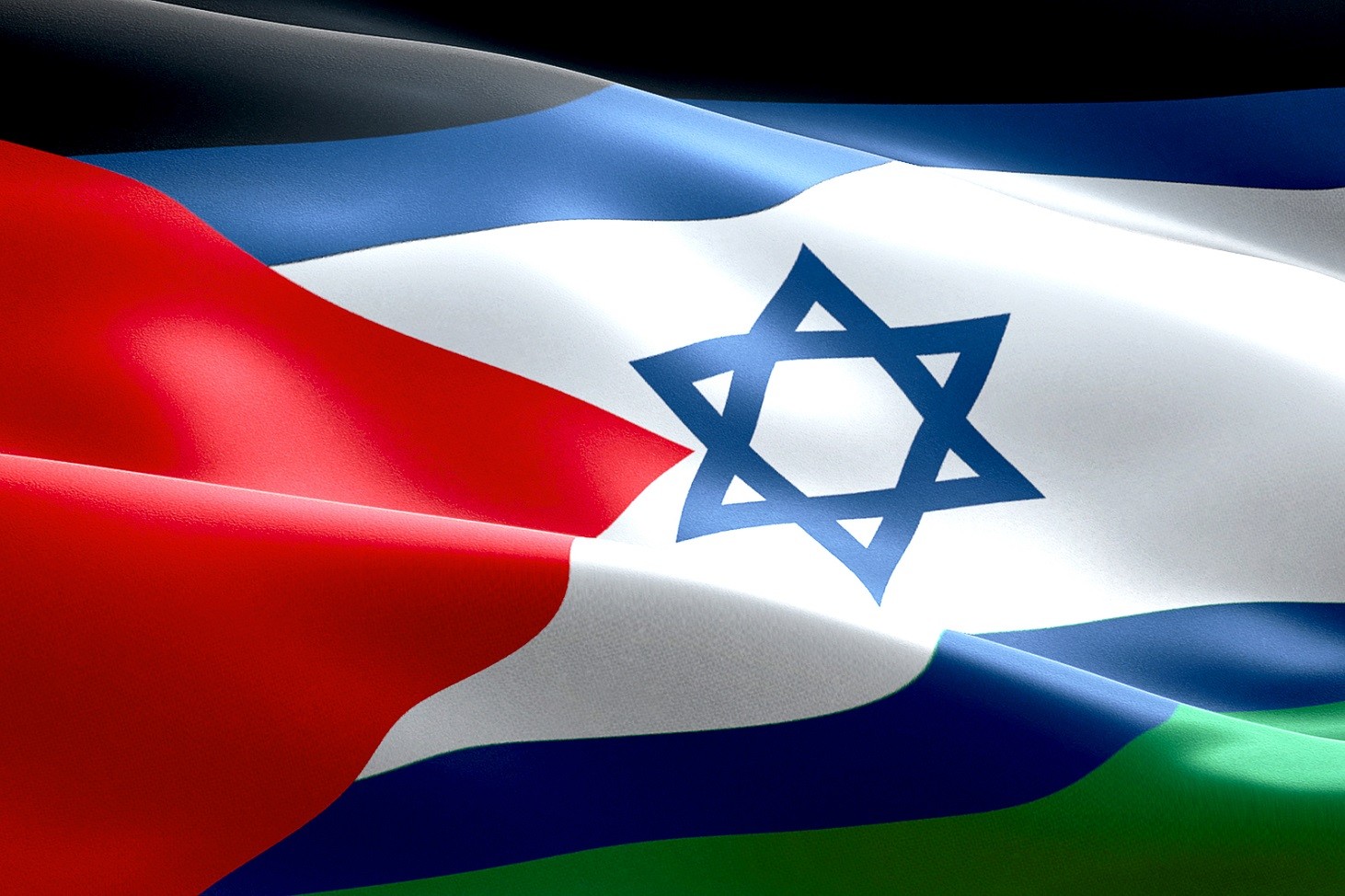
israel flag inside of palestine flag gaza strip waving texture fabric background crisis of israel and islam palestine union peace concept
Since October 7th, 2023, Israel has been engulfed in the deadliest and most transformative conflict it has faced in decades. Thousands of lives have been lost, domestic politics have been upended, and Israel’s global image has taken a deep and complex hit. But let’s play a little game called “what if.” “What if” Hamas had not launched its brutal assault on that day? Would Israel be in the same place—militarily, diplomatically, socially, and politically? The answer is more complicated than it seems.
The Pre-October 7th Trajectory: Crisis Without War
Even before the attack, Israel was mired in deep internal strife. The government’s judicial overhaul sparked mass protests across the country. For 39 straight weeks, Israelis flooded the streets—the country was on the verge of a constitutional crisis. Israel’s social contract was fraying.
Had October 7th not happened, this internal conflict may have escalated further. But it would have remained largely domestic. Israel would still be facing profound questions about its democratic character, rule of law, and the nature of its governing coalition—just without the fog of war.
Security Dynamics: A False Sense of Stability
Without the attack, Israel’s strategic posture might have appeared strong—but it would have been an illusion. The deterrence that Israel believed it had over Gaza and Hezbollah in Lebanon, was already eroding.
In the absence of October 7th, Hamas would still be there, continuing to arm itself, train, and burrow deeper under Gaza. The northern front with Hezbollah would remain volatile. Iran’s influence would still grow. Israel would likely have continued its status quo policy: deterrence without resolution.
The International Arena: Mounting Pressure Without Sympathy
Even before October 7th, Israel’s global image was deteriorating. A series of high-profile events and long-term trends had placed the country in an increasingly defensive diplomatic position. Support among traditional allies was eroding—because of Israeli policies and political rhetoric and the rise of the most far-right coalition in Israeli history.
A 2023 Pew Research study found that Democratic voters in the US, especially younger ones, were shifting significantly in their perceptions of Israel. For the first time, more Democrats expressed sympathy for the Palestinians than for Israelis.
Gaza and the Palestinian Issue: Managed Conflict, Not Resolution
Without war, Gaza would remain under a pressure cooker. But then again so would the West Bank. With no political horizon, both were a ticking time bomb.
The Israeli government showed little appetite for diplomacy. Netanyahu’s coalition had no political will for a discussion on a two-state solution. But without the war, the illusion of stability could have limped on. There would be no forced reckoning vis-à-vis the relationship with its Palestinian neighbors, leaving only the continued management of an unsustainable status quo.
The Illusion of Peace? The Abraham Accords
In the years leading to October 7th, the Abraham Accords were hailed as a diplomatic breakthrough, normalizing relations between Israel and several Arab states including the UAE, Bahrain, Morocco, and Sudan. Supporters celebrated this as a sign that the Middle East was entering a new era — one where shared economic interest, security concerns about Iran, and regional stability could override the long-standing conflict over Palestine.
But this optimism masked a dangerous misconception: that peace could be achieved without addressing the core of the Israeli-Palestinian conflict. Instead of engaging in meaningful efforts to resolve it, many assumed that bypassing Palestinians entirely was a sustainable path forward.
October 7th shattered that illusion. It served as a brutal reminder that peace built on selective engagement — is fragile at best.
While the Abraham Accords may have shifted regional dynamics, they did not resolve the conflict. If anything, by marginalizing the Palestinians, they may have emboldened those, like Hamas, who reject negotiation and thrive on chaos. A durable peace in the region will require not just new alliances, but a renewed commitment to justice and dignity for all — for Israelis and for Palestinians.
What the War Changed—For Better and Worse
October 7th shattered illusions—about Israeli deterrence, security, national unity, and regional cooperation. It exposed gaping holes in Israel’s intelligence and military doctrine. It awakened global attention to the conflict but also reignited antisemitism worldwide.
In its wake, Israel rallied around its kidnapped, wounded, its dead and its soldiers. It reasserted its need for security and self-defense. But the war also deepened Israel’s isolation and strained its relationship with long term global allies.
Would any of that have happened without the war? I leave this question open to debate.
Where Do We Go From Here?
The October 7th attack and the war that followed did not occur in a vacuum. They are the consequence of decades of unresolved conflict, political stagnation, and the erosion of hope. If there is any silver lining to be found in the rubble, it is hard to find in today’s climate. Capturing the opportunity will require courage on all sides, a commodity not in abundance in a post-October 7th Middle East.
But if Israelis and Palestinians do decide to move forward, they must confront painful truths and make difficult sacrifices. It is questionable whether they have the courage to undertake such steps.
What Israel Must Confront and Change
Deterrence as Policy: October 7th demonstrated that in the Middle East, deterrence is synonymous with regional stability. Israel’s neighbors must understand that military dominance as a national strategy is a basic principle that Israel will execute, a doctrine which will be in place for decades to come. However, deterrence must be followed in parallel with political resolve.
Political Courage: The current Israeli leadership has proven more adept at surviving than solving. A new generation of leaders must step forward and be willing to revisit diplomatic options, even with the associated risks.
Addressing Palestinian Aspirations: Peace cannot come by ignoring the national and civil rights of millions. A serious path towards a two-state solution, or any equitable alternative, must be put back on the table. This idea is a very hard pill for Israelis to swallow in a post-October 7th world, as trust of the other side has eroded to record lows. Foundations laid today will take generations to reach their desired goals.
Humanizing the Other: The war has hardened attitudes and fueled dehumanization. Civil society must play a role in rebuilding empathy, especially toward Palestinians who reject violence and yearn for dignity.
What the Palestinians Must Acknowledge and Abandon
Rejecting Terror as Resistance and Fully Accepting the State of Israel: October 7th proved, once again, that atrocities committed in the name of liberation destroy any moral legitimacy. The Palestinian cause must disentangle itself completely from armed resistance and groups like Hamas and Islamic Jihad. The Arab world must take a leadership position in helping Palestinians achieve this goal, primarily by expansion of the Abraham Accords. The message this sends is that the State of Israel is an integral part of the Middle East and will not be driven out to sea or elsewhere.
Internal Reform: Palestinian governance—whether in the West Bank or Gaza—must undergo a reckoning. It is not possible to have two Palestinian entities with opposing agendas rule over a future Palestine. Furthermore, corruption, infighting, and authoritarianism have stifled hope and progress and those must be squashed.
Rebuilding Trust: Trust starts at home. Palestinians need to educated their own to trust the other side. That starts in kindergartens and schools. Dialogue is impossible without some shared baseline of trust. And, the Palestinian leadership must begin the hard work of engaging not just the international community but also the Israeli public in a shared vision of peace.
What the Region and the World Must Do
Is Bypassing the Core Conflict The Answer? The Abraham Accords showed that deals can be struck without resolving the Israeli-Palestinian issue. But lasting peace requires confronting—not avoiding—the core conflict. Recognizing a Palestinian State, which most of the world has already done, has to be more than just a diplomatic gesture, but a tool that forces the Palestinian leadership to understand that the price to pay for recognition is the cession of the armed struggle and recognizing Israel’s right to exist.
International Accountability: The international community must support peace not just with money and statements, but with conditional diplomacy that holds both sides accountable to maintain and sustain a peace process.
Invest in People, Not Just Politics: Peace is not made by governments alone. Investment in education, infrastructure, cross-border dialogue, and economic cooperation is essential to create the conditions for reconciliation.
So, Would Israel Be in the Same Place?
The trajectory might have been headed toward crisis, but October 7th was a violent rupture. It did not just accelerate trends—it redefined them.
The war forced Israel into a long-term military campaign with no easy off-ramp. It hardened Israeli public opinion toward Hamas, but also toward the broader Palestinian society.
It reshaped the regional balance and altered Israel’s alliances—both formal and informal. And most importantly, it placed Israel at a moral crossroads: how to fight terror without losing its soul; how to protect itself without alienating the world.
Without October 7th, Israel would still be facing immense existential challenges. However, the war changed the conversation. The “what if” is haunting—but perhaps less important than the “what now.” Because whether Israel would be in the same place without October 7th, the road ahead will be shaped by how it chooses to emerge from it.
Related Topics
Related Posts