YCT at 25: An Interview with Rabbi Benjamin Berger
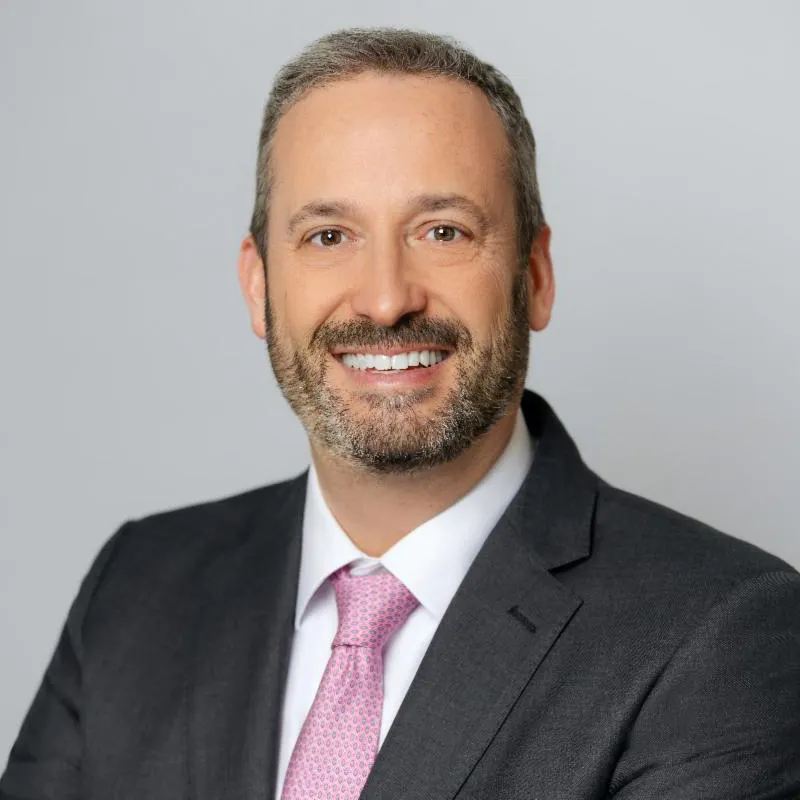
This year, Yeshivat Chovevei Torah (YCT) is celebrating its 25th anniversary year, and it recently hired Rabbi Benjamin Berger—himself a graduate of YCT—as its new president.
I had the opportunity to ask Rabbi Berger about the yeshiva’s past accomplishments, some old and new challenges, and what he sees for the future of the institution.
Below is the complete transcript:
Yeshivat Chovevei Torah recently celebrated 25 years. That’s quite a milestone. Can you share some noteworthy accomplishments the yeshiva has made during this time?
Twenty-five years in, YCT has, thank God, many rabbis serving the Jewish people, and I think it is fair to say that we have changed the contemporary face of the Orthodox rabbinate. Our graduates are leading communities, teaching Torah, sitting with people in moments of crisis, and building institutions.
Our graduates lead synagogues, teach children and adults, run day schools, work with college students, serve as chaplains, lead communal institutions, and create new kinds of Jewish community. Their jobs can look very different, but the rabbinic work underneath them is often very similar: bringing Torah into people’s lives, being there in moments of joy and crisis, building welcoming communities that also challenge people to grow, and feeling responsible for the broader Jewish people.
The scale of that impact is significant. YCT has trained more than 200 rabbis whose work reaches hundreds of thousands of people each year in the United States, Israel, and communities around the world. They serve in major Modern Orthodox synagogues and in smaller communities that otherwise might not have a Modern Orthodox option. They lead on campuses, in schools, hospitals, prisons, the Israeli and American militaries, camps, community centers, senior residences, and in new ventures. That breadth matters because it shows that the yeshiva’s contribution has never been confined to producing rabbis for synagogue pulpits. It has helped develop Torah-grounded leaders for Jewish life.
YCT also helped change rabbinic education itself. Pastoral care, leadership development, professional training, immersive fieldwork, and mentored internships are now taken far more seriously across the rabbinical-school landscape. I believe that is due in meaningful part to both the example YCT set and the constructive pressure it placed on the broader system.
And the institution itself has grown well beyond a single degree program. YCT now supports Torah learning and practical psak for rabbis and communities, advanced training for poskim, education programs, and programs in Israel that train rabbis and rabbaniyot in religious leadership and pastoral care. Through its Torah library, public teaching, podcasts, responsa, and direct guidance to rabbis in the field, the yeshiva’s Torah reaches far beyond the walls of the beit midrash. That expansion is an important part of the 25-year story.
We have also helped create a more joyful, intellectually open, and inclusive Orthodoxy. The opportunities for women’s Torah learning and religious leadership have expanded dramatically. Our rabbis have helped build communities that welcome people whose backgrounds and lives were not always embraced. We have shown that serious Torah, halakha, pastoral sensitivity, intellectual openness, and responsibility for the whole Jewish people can strengthen one another.
None of that would have happened without Rabbi Avi Weiss’s founding vision or Rabbi Dov Linzer’s extraordinary leadership. Rabbi Linzer has been the yeshiva’s Rosh HaYeshiva since its founding. He is a world-class talmid chacham and posek who has anchored YCT’s vibrancy in deep Torah and rigorous halakhic thinking. He shaped the curriculum and culture, taught and mentored generations of students, guided our rabbis in the field, and then stepped into the presidency at a moment when the institution needed him. Under his leadership, YCT grew from a semikha-only institution into a broader center of Torah and rabbinic education in the United States and Israel. The institution I am inheriting reflects an enormous debt to both Rav Avi and Rabbi Linzer.
What was distinctive about YCT’s founding vision, and how has that vision developed over 25 years?
Rabbi Weiss had a broad sense of what a rabbi should be. A rabbi had to be an educator, a pastor, a community builder, and sometimes an activist—someone who felt responsible for the whole Jewish people. Long before he founded YCT, he was mentoring and developing rabbis at the Hebrew Institute of Riverdale. He saw that if we wanted the kinds of rabbis the Jewish community needed, it was not enough to give them a strong Torah education. They also needed to learn how to lead, teach, care for people, and build community. Along with Rabbi Linzer, he built the faculty to be able to fulfill that vision with Dr. Michelle Friedman who developed our distinctive pastoral counseling program, Rabbi Ysoscher Katz, who has led our talmud department, and many others.
I can answer personally because I was a student at YCT in its early years. That vital sense of mission is what drew me there. I wanted to serve the Jewish people from within a serious Torah environment—one deeply committed to halakha and also fully engaged with other Jews, broader society, and the moral questions of the day. I did not see those commitments as being in conflict, and neither did YCT.
At different moments, the phrase “Open Orthodoxy” helped name that vision. Labels can describe something important, but they can also become shorthand for ideological battles and obscure the richer religious life underneath. Today, I am less interested in defending a label than in being clear about the values behind it. The important question is whether we are producing rabbis and helping build an Orthodoxy that takes Torah seriously, is not afraid of complexity, and feels responsible for the Jewish people in all their diversity.
The vision has also broadened as Jewish life has changed. Many of the most important encounters Jews have with rabbis now happen outside a synagogue—in schools, on college campuses, in hospitals, in communal organizations, and wherever Jewish life is taking shape. That is not a departure from Rabbi Weiss’s original vision. It is an extension of it. If the question is, “How do we train rabbis to serve the Jewish people?” then we must look honestly at where Jewish people are and where rabbis can make the greatest difference.
Can you give a few examples of the impact YCT graduates are making in the Jewish community and beyond?
There are many models: our graduates lead major and emerging synagogues, day schools, Hillels, hospitals, camps, and communal organizations. That includes significant synagogue rabbinic leadership: We have five rabbis in the DC/Maryland area alone, including Rabbi Nissan Antine at Beth Sholom in Potomac and my own rabbi, Rabbi David Wolkenfeld, at Ohev Sholom in Washington, DC; and across the country we have Rabbi Yonatan Cohen, who has led the Modern Orthodox Congregation Beth Israel in Berkeley for 20 years and many in between. We have rabbis leading congregations throughout the United States and in Australia, Japan, France, and Israel.
The same is true in Orthodox and community day schools; Rabbi Jordan Soffer, for example, is the new head of Bi-Cultural Hebrew Academy. Two of our alumni (musmakhim), Rabbis Ari Weiss and Seth Winberg, are leading two of the most successful Hillels right now, each building a multimillion-dollar new Hillel center. Two YCT students helped found Base while still in rabbinical school, building a model in which rabbinic couples open their homes to people seeking Jewish community, learning, and belonging. I could go on and on, but what connects these various models is a belief that Torah creates responsibility—and that being a rabbi means being willing to lead wherever the Jewish people need you.
Rabbi Weiss’s activism—on behalf of Soviet Jewry, interfaith dialogue, and moral causes—has been a defining feature of his rabbinate. Can you share a few specific examples of graduates who embody this model—rabbis who are actively engaging in political, moral, or societal issues in ways that reflect Rav Avi’s vision?
Several musmakhim (graduates) immediately come to mind. To name just three: Rabbi Ari Hart, Rabbi Shmuly Yanklowitz, and Rabbi Avidan Freedman. They are very different rabbis, which is why they are such good examples.
Ari is a synagogue rabbi in Chicago who has built partnerships beyond the Jewish community, worked to address gun violence, and brought his community into public responses to hatred and antisemitism. His community recently launched Hersh’s Fridge, a 24/7 kosher food pantry named in memory of Hersh Goldberg-Polin z”l. He demonstrates how a deeply rooted Orthodox synagogue can also feel responsible for what is happening beyond its walls.
Shmuly has built his rabbinate around the belief that Torah has something to say about the major moral questions of our time. He founded Uri L’Tzedek and has created initiatives around foster care and adoption, animal welfare, refugees, and other issues. Activism is not an addition to his rabbinate. It is an expression of it.
Avidan has brought that same religious and moral seriousness to hard questions facing Israeli society. He founded Yanshoof to challenge Israeli arms sales to regimes accused of serious human-rights abuses. After October 7, he went on a hunger strike calling for the International Red Cross to gain access to the Israeli hostages in Gaza.
I look at each with real pride seeing the ways that they stand with moral courage and take Torah into the public square.
The rabbinate has changed dramatically since YCT opened its doors. What do today’s young rabbis need that may not have been as important 25 years ago?
Today’s rabbis must lead in a world that is faster, more fragmented, and less institutionally anchored. The boundaries between public and private leadership have largely disappeared. A sermon, email, or social-media post can travel far beyond its intended audience within minutes. Rabbis need the judgment to communicate clearly without becoming reactive or allowing every controversy to dictate their agenda.
They also need to lead communities through profound disagreement. Political polarization, debates about Israel, and the aftermath of October 7 have placed enormous pressure on Jewish communities. Rabbis must articulate strong commitments—including commitments to Israel and the Jewish people—while creating space for people who are struggling, questioning, or experiencing the moment differently. That requires courage, humility, emotional intelligence, and the ability to listen.
Since October 7, we have also seen a profound spiritual thirst. I saw it firsthand at Hillel: Jews who felt unmoored were searching for meaning, an anchor, and a deeper connection to Am Yisrael. That same longing has also called forth a new generation of Jewish leaders—people moved by this moment to step into the breach and take responsibility for the Jewish people.
Rabbis need to recognize and respond to both that longing and that call to leadership—not with easy answers, but by helping people locate themselves within Torah, Jewish community, and the story of the Jewish people. YCT is exceptionally well positioned to prepare rabbis for that work because it has always joined Torah learning with pastoral presence and a responsibility to serve Jews wherever they are.
At the same time, fewer Jews organize their lives around synagogues and other traditional institutions. Rabbis cannot simply wait for people to enter a synagogue. They must meet Jews where they are—on campuses, online, in hospitals, in informal communities, and in moments of personal or collective crisis. Technology, including artificial intelligence, will continue to change how people learn, ask halakhic and pastoral questions, communicate, and form relationships. Rabbis need the discernment to understand what technology can offer, what it can erode, and what forms of human presence cannot be replaced.
Most importantly, rabbis need deep spiritual grounding of their own. Communities expect them to be teachers, pastors, public voices, organizational leaders, and sources of stability, often all at once. No one can sustain that work without a serious life of Torah, trusted colleagues, and the resilience to remain present when the answers are not simple.
You had many opportunities to serve the Jewish community. What was it about YCT—and this moment in its history—that made you say, “This is the job I want”?
There is a somewhat funny story behind my answer. I spent close to a year chairing the search committee charged with finding YCT’s next president. For much of that time, I was not thinking about myself at all. When the possibility was first raised, I was reluctant. I was not sure I was the right person—or that I was ready.
But the search forced me to articulate what I thought YCT needed for its next chapter. Somewhere in the process of interviewing candidates and imagining the institution’s future, I began to realize: Maybe this is work I want to do. Maybe this could be me.
That realization was connected to my last eight years at Hillel. Through COVID, October 7, and its aftermath, I saw how important good leadership matters, particularly for young people navigating antisemitism, technological change, disconnection, and enormous uncertainty. They need people who can help them find meaning, exercise discernment, build community, and feel grounded. I became increasingly convinced that great rabbis can play an extraordinary role in that work.
YCT gave me the opportunity to move upstream—to think about how we find, train, and support those rabbis. This is also the institution that formed me, and I have now had 20 years to take its vision of the rabbinate into the world and learn from that experience. I began by trying to figure out who YCT needed. Somewhere along the way, I realized how deeply I wanted to help build its next chapter myself.
As you look toward that next chapter, where might YCT’s role in Jewish leadership grow?
The number and caliber of rabbis we ordain—and the strength of the institutions they serve—will remain central. The beit midrash and semikha must remain at the heart of YCT. But our experience has also shown that YCT can cultivate Torah-grounded leaders wherever Jewish life is being shaped.
Our graduates already serve as Hillel leaders, heads of schools, educators, nonprofit executives, entrepreneurs, communal leaders, and builders of institutions. We should become more intentional about supporting that broader ecosystem and about connecting, sustaining, and growing the circle of rabbis, educators, communal leaders, and laypeople aligned with our vision.
I do not want to get ahead of a planning process that should include our faculty, board, students, alumni, partners, and community. But I do think there is an important question for us to explore: What could a serious Orthodox yeshiva contribute to the leadership pipeline of the Jewish people? How might we bring the depth of the beit midrash into closer conversation with the realities of leading synagogues, schools, campuses, communal organizations, and new ventures?
That would not mean becoming less Orthodox or moving away from rabbinic education. It would mean making our Orthodox commitments more consequential by placing them in service of Klal Yisrael, as we always have. Torah, halakha, commitment to Israel, intellectual openness, pastoral sensitivity, and human dignity are not concerns of a narrow constituency. They are resources for Jewish life.
If there is something distinctly mine about the next chapter, I hope it will be the effort to build an institution capable of carrying ahavat Am Yisrael and a sense of responsibility farther: supporting excellent rabbis, strengthening the institutions they lead, developing Torah-grounded leadership, and ensuring that YCT’s deepest commitments are felt throughout the Jewish community.