
Yishuv Eretz Yisrael: Fulfilling a Dream and Mitzvah vs. Protecting Our Future
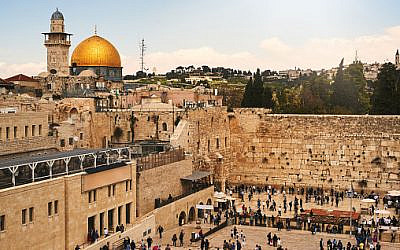
Although the title of this article suggests two separate and discrete reasons for making Aliya to Israel, upon close examination, they are not totally mutually exclusive.
Fulfilling the dream and mitzvah of yishuv eretz yisrael has always been a reality for achienu bnai yisrael since time immemorial. But making Aliya to protect our safety in the United States and to ensure our future physical wellbeing as a Jewish community is a relatively new and recent 21st century communal concern and phenomena.
As a child, I cannot recall a time when a conversation about Aliya to Israel was not front and center in our household. In fact, it was so central to our daily lives that it was second nature to talk about Aliya to Israel and about imagining the beauty and splendor of relocating and living in Israel.
Making Aliya not only fulfills a tremendous mitzvah in the Torah but inherently provides acheinu bnai yisrael with a physical and emotional safety-net in a global environment that is saturated and metastasizing with antisemitism, anti-israel anger and Jew-hatred.
Whether it was the topic of conversation over the Shabbat table, on vacation, or on a walk to the park or playground with my parents, the hope, dream and promise of making Aliya was ever so central and prevalent in our lives. It was always the central topic of our conversations.
Today, when we talk about Aliya it is discussed within a totally different context than when I was a child. For many, it takes on a different meaning and tone and its contexts appears to be more anchored or embedded in concern or fear of antisemitism and Jew hatred than fulfilling the mitzvah of yishuv eretz yisrael.
Having visited Israel on many occasions, my family and I continuously discuss the prospects of making Aliya as a serious future aspiration and eventuality.
But, the question I continuously ask myself is if not now, when? And when is the “right time”?
These questions are very similar to those that were posed by our brothers and sisters in Europe just prior to WWII, immediately after Kristallnacht and at the start of the pogroms in Poland, Germany and Hungary.
For many, these were red-flag warning signs. But for others, it resulted in a “wait-and-see” attitude or mentality, until it was unfortunately too late.
For those who saw and recognized the writing on the wall warning signs, and tried to escape Europe, they Baruch HaShem, survived. But for those who lived in denial and were convinced that they were safe and protected in their homeland, were unfortunately led like sheep to gas chambers and crematory.
Our greatest Torah scholars, intellects and giants perished at that time together with millions of innocent women, men and children. They represented an entire generation of loving, committed and kind souls of our Jewish community.
We all know that the current matzav or state of affairs around the globe for Jews is not favorable from a safety perspective. In fact, it looks all too familiar. So I ask myself, what will it take for us to actually pack our bags, take that leap of faith and move to Israel.
What makes this challenge even more significant is that many of our extended families are either living in Israel or on the eve of making Aliya. We also have close family members currently living in the States which also makes Aliya a bit more difficult, demanding challenging.
As an educator who has devoted close to thirty years of leadership to chinuch, I truly struggle with this dilemma and the question – when is the “right time”.
Each one of us have our own very personal reasons for not yet making Aliya. Some may relate to children and grandchildren living in the States, others express concern for aging parents, yet others lack sufficient financial resources necessary for such a major decision.
Just the other day, I saw numerous ads which were advertising real estate property in Israel. For the average family living in the states, these jaw-dropping prices are beyond most of their reach, especially for young families of five wishing to live in close proximity to Yerushalayim.
All of these concerns are very real, legitimate and genuine.
(The challenge of making Aliya more affordable for the average American family is a challenge and topic for another article).
I once asked a well-respected Rav the question of when is the ideal time to make Aliya. His response although somewhat predictable was “the right time is when you feel it in your heart”.
His response was way too subjective for a person seeking answers. To be sure, it was not convincing enough to base a difficult life changing decision of such magnitude.
Maybe I was just seeking a more definitive response from the Rav which would force the issue or would have tipped the scale and provide me with very little choice.
As I reflect upon this dilemma, I began to drill down a bit deeper into why and how people make Aliya.
A Historical Perspective
Throughout our history, I have found that Aliya and yishuv eretz yisrael is less about running away or escaping, but rather more about running to and taking refuge.
Yes, there are many who posit that the establishment of the State of Israel was not because we needed a safe haven to escape to or to protect us, but rather because it is a place where we can live and settle in peace in accordance with the Torah. The fact that Israel is our inherited birthright should be sufficient to motivate and stimulate our willingness to engage fulfill the mitzvah yishuv eretz yisrael.
When analyzing the rich historical and biblical origins of yishuv eretz yisrael, we see a variety of meaningful sources which support, reinforce and bolster our passion and commitment to make Aliya or to fulfill the mitzvah of yishuv eretz yisrael.
Yishuv Eretz Yisrael is the act of settling and inhabiting the land of Israel (Peninei Halacha). The biblical origins stem from HaShem’s covenant with Abraham in Genesis, where the land of Canaan is promised to his descendants as an eternal inheritance.
The Torah explicitly instructs us to conquer and settle the land as written in Numbers, 33:53 where it states, “and you shall disposes the inhabitants of the land and dwell in it”.
Later, Torah commentators like the Ramban (Nachmanides) explains that these verses create a lifelong religious duty and obligation for the community and for individuals to live in and govern the land of eretz yisrael.
Moving Forward
Friends, as we move forward into the future, acheinu bnai yisrael will eventually be forced to make a variety of existential choices and decisions.
One of those challenges include whether we are destined to make Aliya and participate in yishuv eretz yisrael.
As just indicated, there is no right or wrong response or course of action. To be sure, when the time is right, we will know.
But, the question of when that time is, and what it will look or feel like, still remains an unknown.
As the world around us becomes more dangerous for the Jewish community, it will also become more obvious and evident that Aliya may be the only realistic and responsible reaction or response.
But, let us not forget that, as an American Jewish community, we also have an unswerving obligation and an unwavering commitment to strengthen our Jewish community in the diaspora in order to help ensure its resilience, strength, viability and fortitude.
Remember, not everyone is in a position to make Aliya nor are we all equipped with the resources, mindset or head-space to make such a move a reality. But, at the end of the day, we will all know when it is the right time.
Let us hope and pray to HaShem that we will have the foresight and wisdom to make these those decisions in a timely manner.