
International Speaker, Author, Educator, Tour-Guide, Artist, Zionist
Yom Kippur 1973 and Force Tzvika
As we approach the second commemoration of the outbreak of the October 7 War, we pause to remember the fateful days fifty-two years ago when the Jewish State was hanging on by a thin olive-green line.
The reasons that Israel was so unprepared and suffered so much loss of life, two years ago and fifty-two years ago, share many remarkable parallels. In the initial phase of the Yom Kippur War, the hubris, the arrogance, “the conception,” the over-reliance on static defenses, the failure to analyze the intelligence, are all well documented.
What saved the State ultimately back in 1973, despite the blundering of the political and military intelligence echelons, was the sheer raw heroic courage of the young men on the front line, the thin olive-green line, who faced seemingly overwhelming odds.
One of these young men, Twenty-one-year-old newly commissioned Lieutenant Tzvika Greengold, was at his home at Kibbutz Lochamei Geta’ot (The Ghetto Fighters Kibbutz – founded by survivors of the Warsaw Ghetto uprising) when the war broke out. Even though he did not have an assigned unit, he hitchhiked up to the front line on the Golan Heights and was greeted with a scene of pandemonium and chaos.
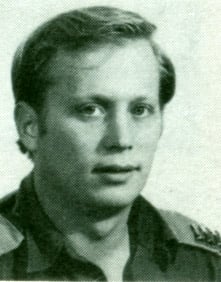
He then grabbed two hastily repaired tanks and assembled crews from amid the confusion. After Greengold announced that “Force Tzvika” (a name that would enter Israeli military lore) was in the field, he then proceeded to fight alone, or with other tanks, for the next 20 hours. Greengold changed tanks half a dozen times when his tank was destroyed. He stayed in action despite wounds and burns, saving the situation time and again.
In one situation, with a lone tank against an entire Syrian armored column, Greengold recounted:
I was alone and surrounded from the front and to the right. I fired in both directions, destroying a number (of Syrian tanks), moving backwards all the time. They began a search with lights. I destroyed a few more. The brigadier asked over the radio how many tanks I had (in my force). I told him: ‘my situation isn’t good, and I can’t tell you how many.’
Greengold’s tactical understanding of the battlefield terrain and of tank warfare strategy allowed him to successfully harass the numerically superior enemy force. In the process, he single-handedly destroyed tens of Syrian tanks and, eventually, with the other brave warriors of the armored corps, forced the Syrian divisions to retreat after days of fierce fighting. This was a major turning point in the Yom Kippur War. His citation for the Medal of Valor, Israel’s highest military decoration, states:
His outstanding courageous holding prevented the Syrian’s advancement to the Jordan River. For these events he was awarded the Medal of Valor.
“Hero” has become an overused word. A football player who scores a goal to win the game is called a hero. But a true hero is someone who puts his or her life at risk to save others. Tzvika Greengold is a true hero. Tzvika’s heroism is even greater when read against his humility. He stated that:
I didn’t plan to be a hero, but I knew if I didn’t continue to fight, Israel would be in great danger. There are men, alive and dead, who did wonderful things we don’t even know about. The men on the line did exceptional things and I pale by comparison.
The reason that Greengold, Kahalani, and their comrades fought with such desperate courage is that they knew that there was no one else to step into the breach, and they needed to hold the line long enough for the reserve troops to arrive. The alternative was the destruction of the Zionist dream. Abraham Rabinovich, in his magnum opus, “The Yom Kippur War,” wrote:
(Greengold had) an awareness that the Holocaust his parents survived was suddenly relevant again, a sense that he stood between an enemy and the prospect of his people’s annihilation.
Tzvika Greengold, a true hero, is the embodiment of an individual who, despite overwhelming odds, through sheer heroic courage, gritty determination, and inspirational leadership, moved himself and the soldiers under his command, the thin olive-green line of the armored corps, to overcome seemingly insurmountable odds and emerge victorious.
—
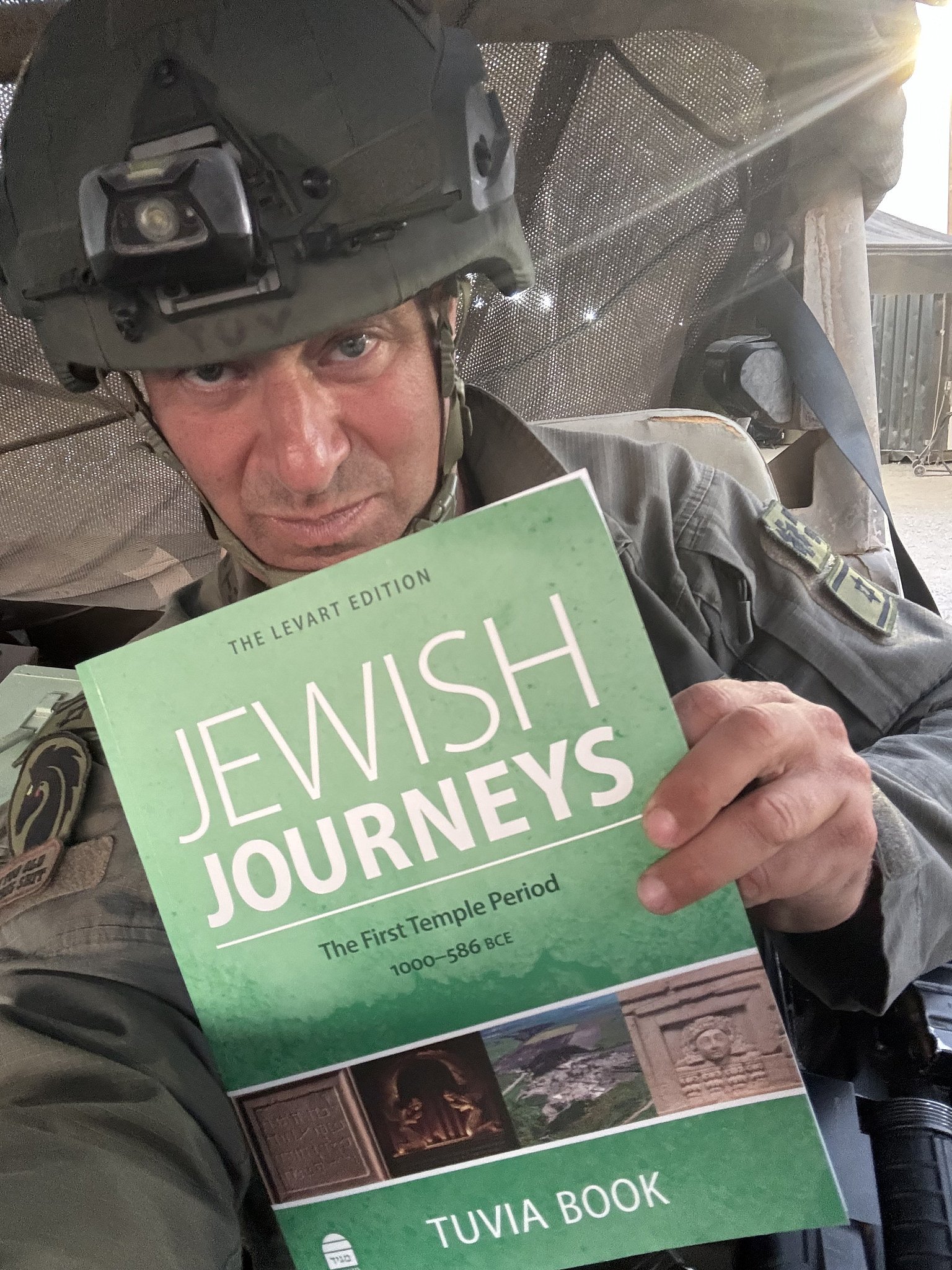
Tuvia, a licensed Tour Guide, has served seven tours as an IDF combat medic on the Gaza front, since October 7. His latest book, “Jewish Journeys, The First Temple Period” (Koren/Maggid: 2025) is now available.
Related Topics
Related Posts