
Yosef Penhos: Israel strengthens focus on Brazil for tourism growth
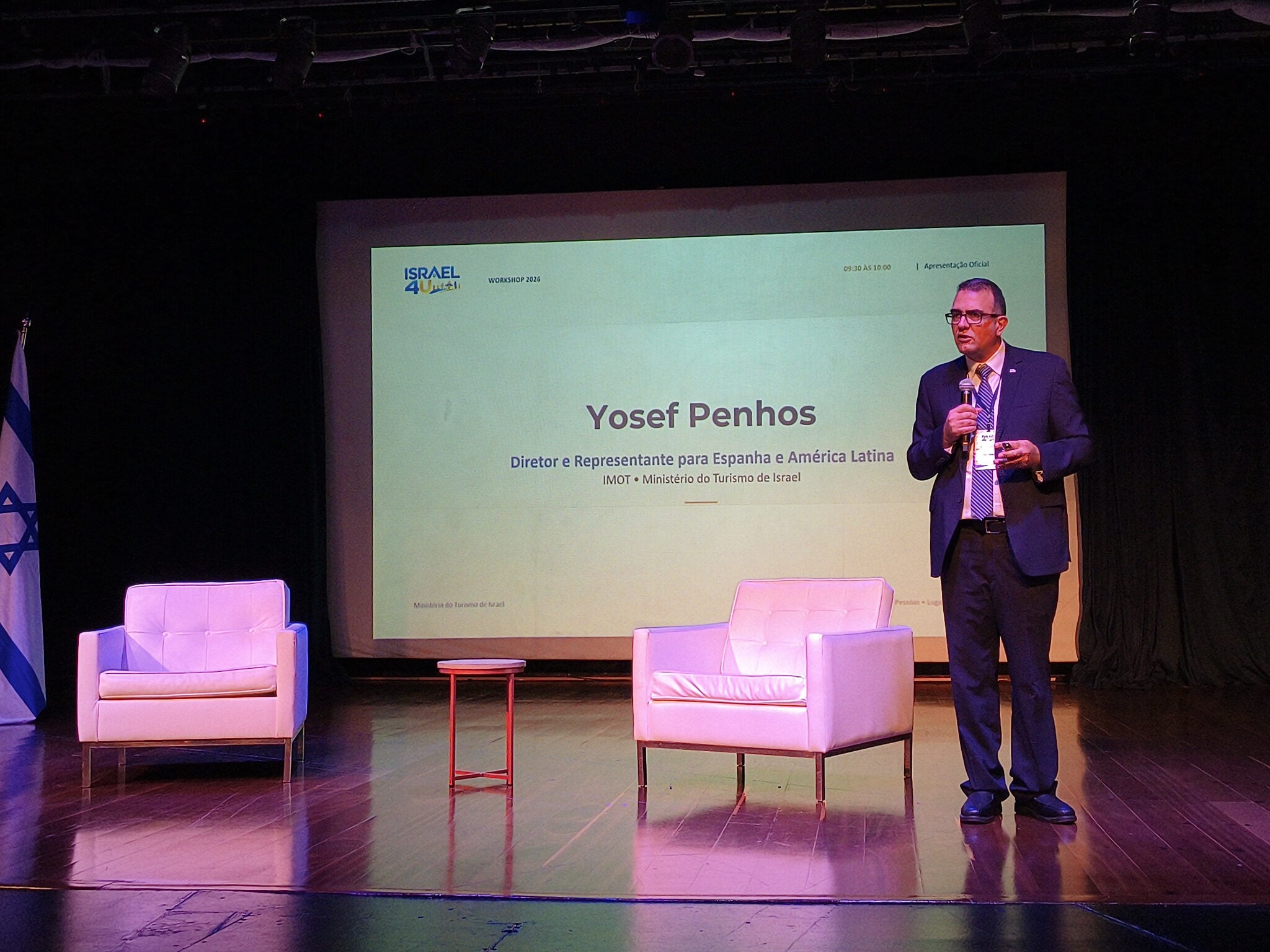
In his first official appearance before the Brazilian market, Yosef Penhos, the newly appointed Regional Director and representative of the Israel Ministry of Tourism for Spain and Latin America, outlined the country’s strategies to restore international visitor flows and expand Israel’s presence among the most sought-after destinations for Latin American travelers.
During the interview, Penhos emphasized that Latin America currently plays a central role in Israel’s international tourism promotion strategy. According to him, the region, together with Spain and Portugal, represents a strategic connection for Israel due to longstanding historical, religious, and cultural ties.
Israel has a natural relationship with Latin America through pilgrimage tourism, strong Jewish communities, and growing interest in the destination, he explained.
Brazil Is a Priority in Israel’s Strategy
Within Latin America, Brazil occupies a prominent position. According to Penhos, the country is the leading source market for travelers to Israel in the region, which is why Israel maintains a permanent institutional presence in the Brazilian market.
Currently, one of the Israel Ministry of Tourism’s 17 international offices is located in Brazil. Its mission is to strengthen relationships with tour operators, travel agencies, and other tourism professionals, expand the range of tourism products available, and encourage more groups to visit Israel.
Our office works to strengthen ties with the local tourism industry so that we can continue increasing the number of Brazilian visitors to Israel, he said.
Growth Potential in the Brazilian Market
Penhos noted that Brazil ranks among the top 10 source markets for tourism to Israel worldwide. Before the pandemic, approximately 82,000 Brazilians visited Israel in 2019.
That same year, Israel welcomed around 4.5 million international visitors, placing Brazil among its most relevant tourism markets. Today, the number of Brazilian visitors stands at roughly 20,000, demonstrating that there is still a significant path toward recovering pre-pandemic levels.
To illustrate the market’s potential, Penhos compared Brazil with the United States, which recorded approximately 450,000 visitors to Israel in 2025. While Brazilian figures remain substantially lower, the Ministry of Tourism believes there is considerable room for growth.
According to Penhos, the religious, cultural, and community ties between the two countries make Brazil one of the most promising markets for Israeli tourism in the coming years.

Three Key Challenges to Expanding Tourism Flows
During the interview, the representative identified three major challenges that must be addressed to stimulate tourism growth between Brazil and Israel.
1. Improving Air Connectivity
The greatest obstacle is the geographical distance between the two countries. Penhos stressed that the return of direct flights between Brazil and Tel Aviv remains an important objective for the sector.
According to him, Israel is working to improve connectivity through new routes and partnerships with airlines. Although connections through Europe have become increasingly convenient, the return of a direct flight operated by companies such as LATAM is seen as a significant step toward stimulating demand.
2. Expanding Portuguese-Language Content
Another challenge is increasing the availability of information and services in Portuguese for Brazilian travelers.
Penhos highlighted that Israel already has a significant Brazilian community, Portuguese-speaking tour guides, and promotional materials available in the language. However, further expansion is needed to make travel planning and the visitor experience even more accessible and comfortable.
3. Strengthening Integration With Brazil’s Tourism Industry
The third challenge involves deepening cooperation between tourism businesses in both countries.
According to Penhos, developing products tailored specifically to the Brazilian traveler depends on close collaboration between Israeli and Brazilian tour operators, agencies, and suppliers. For this reason, the Israel Ministry of Tourism has increased its participation in trade fairs, business meetings, and professional tourism events.
The goal is to create travel experiences that better reflect the expectations of Brazilian visitors while strengthening Israel’s position in the Brazilian market.
Outlook
With a strategy focused on Latin America and special attention given to Brazil, Israel is betting on a gradual recovery in tourism flows and on building stronger relationships with the Brazilian travel trade.
The combination of investments in destination marketing, improved air connectivity, expanded Portuguese-language content, and stronger commercial partnerships is viewed as the path toward increasing the number of Brazilians visiting Israel in the coming years and consolidating the country as a destination of growing interest for Latin American travelers.