
Young Israelis Seeking Political Home
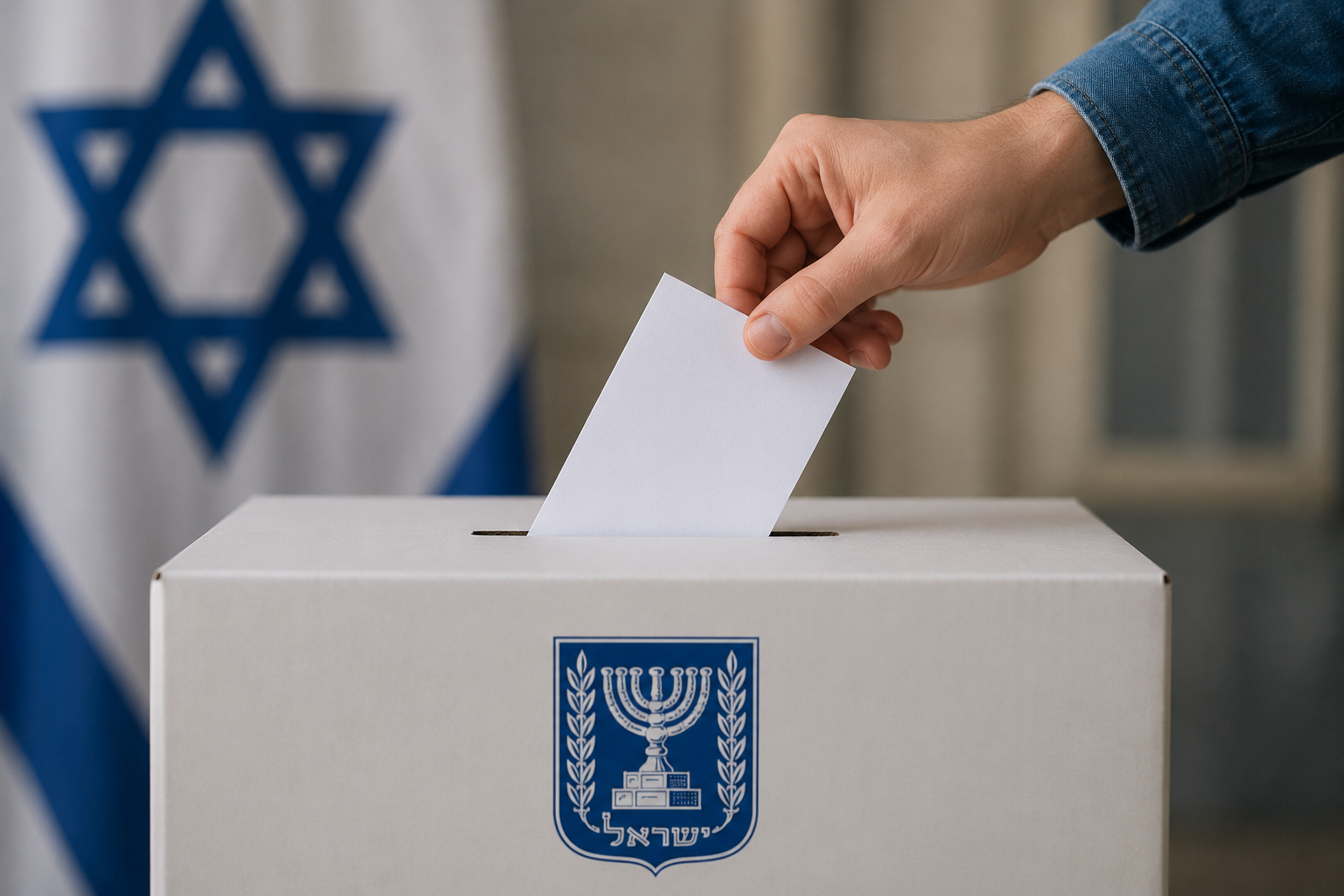
Ahead of the upcoming 2026 national elections, after more than two years of war, many young Israelis who defended their homeland find themselves politically homeless. With political leaders clearly labeled as part of either the “National Camp” or the “Change Bloc,” we are left to choose between identities to which we do not fully belong. We simply want to get the job done. We are looking for something new.
We have grown tired of the internal conflict. But, more importantly, we have become more immune to affective polarization and its disastrous effects on our society.
Affective polarization means strongly disliking and distrusting members of opposing political groups, not just disagreeing with their ideas. Unlike Waze, Mobileye and Krav Maga, affective polarization was not born in Israel. It is a global virus that has severely infected Western democracies, some of which are on the verge of autocratic regimes or even civil wars.
However, the Israeli variant of polarization may be more fragile than in other countries, and especially among the younger generation, for three main reasons.
Firstly, our social circles are usually more politically diverse compared to our parents’ generation, a direct result of demographic change. Over the years, people from different backgrounds and ethnicities have gotten closer economically and geographically. Therefore, groups of friends naturally contain different opinions. We are more used to listening to “the other side” – to listen properly – because the words we are supposed to fear come from people we respect.
Secondly, reserve duty has brought together people from every possible political viewpoint under truly surreal conditions. A combat unit fighting in Khan-Yunis is composed of the typical Ashkenazi, Mizrahi, Secular, Religious, Pro-Bibi and Anti-Bibi. Although these young, brave soldiers position themselves across different parts of the political spectrum, they fight together. As a result, out of the rubble of colliding identities, a new identity emerges, one that manages to wriggle through and put Israel first.
Thirdly, psychological research shows that young adults are more likely to be open to new ideas and to show cognitive flexibility. As a result, young Israelis are usually better at rethinking and adapting to new ideas, which opens the path to counter polarization.
On its own, cognitive flexibility cannot counter the plague of polarization, as we have learnt from other Western democracies. However, diverse social circles and reserve duty since October 7 have certainly produced the necessary ingredients for an effective vaccine against the Israeli variant.
Moreover, Israel is more emotionally polarized than it is ideologically. After October 7, consensus on major issues is generally wide. In addition, the purpose for which Israel was established, a national home for the Jewish people, is enough common ground to build a foundation for an emotional bridge between its people, especially with the rise of Anti-semitism worldwide. Generally, this gives Israel a better platform for countering division than many other countries.
Where, then, does this leave Israel’s polarization-immune young adults? It leaves us without a political home.
Every political leader is categorized. They all play by the same rules and use the same rhetoric that has been tearing us apart for a decade. The ideological and emotional foundations needed to unite us exist, but no one is willing to break the rules.
This is understandable – it is easy to sell extremism when it is marketed as “authenticity”. It is even easier to generate hate. But, unfortunately, compromise is very difficult to sell.
Yes – Bibi may be corrupt. He has certainly been in power far too long to be the innovative leader Israel needs. He has certainly ruined one of the most important political parties, surrounding himself with loyalty-first politicians who either only care for themselves or are simply incompetent for the job.
Yes – The attorney general may be fully dedicated to toppling the government. The judicial system certainly needs reform. The anti-Bibi movement has certainly achieved the exact opposite effect, having a big part in the rise of extremism and lacking the vision for a new Israel after the war.
The young generation fighting this war is looking for a brave leader, wholeheartedly committed to changing the rules. A leader that sees compromise not only as a strength, but as the primary ingredient for Israel’s internal and external policies. A leader who fully grasps, and acts on, the unique Western Middle Eastism of the Israeli people.
Today, this vision is absent. So far, my generation has not been able to produce a leader capable of carrying this vision forward, possibly due to a mix of exhaustion from the war and personal fear of entering the dirty field of politics. It may also be due to a lack of experience, and simply because more time is needed.
I hope such a leader emerges soon, and when he or she does, they will draw a great crowd. But until that moment arrives, and as long as the status quo remains, those who fought for their homeland will continue to be politically homeless.