Youth Protest Exposes: How ‘National Unity’ Became a Silencing Tool
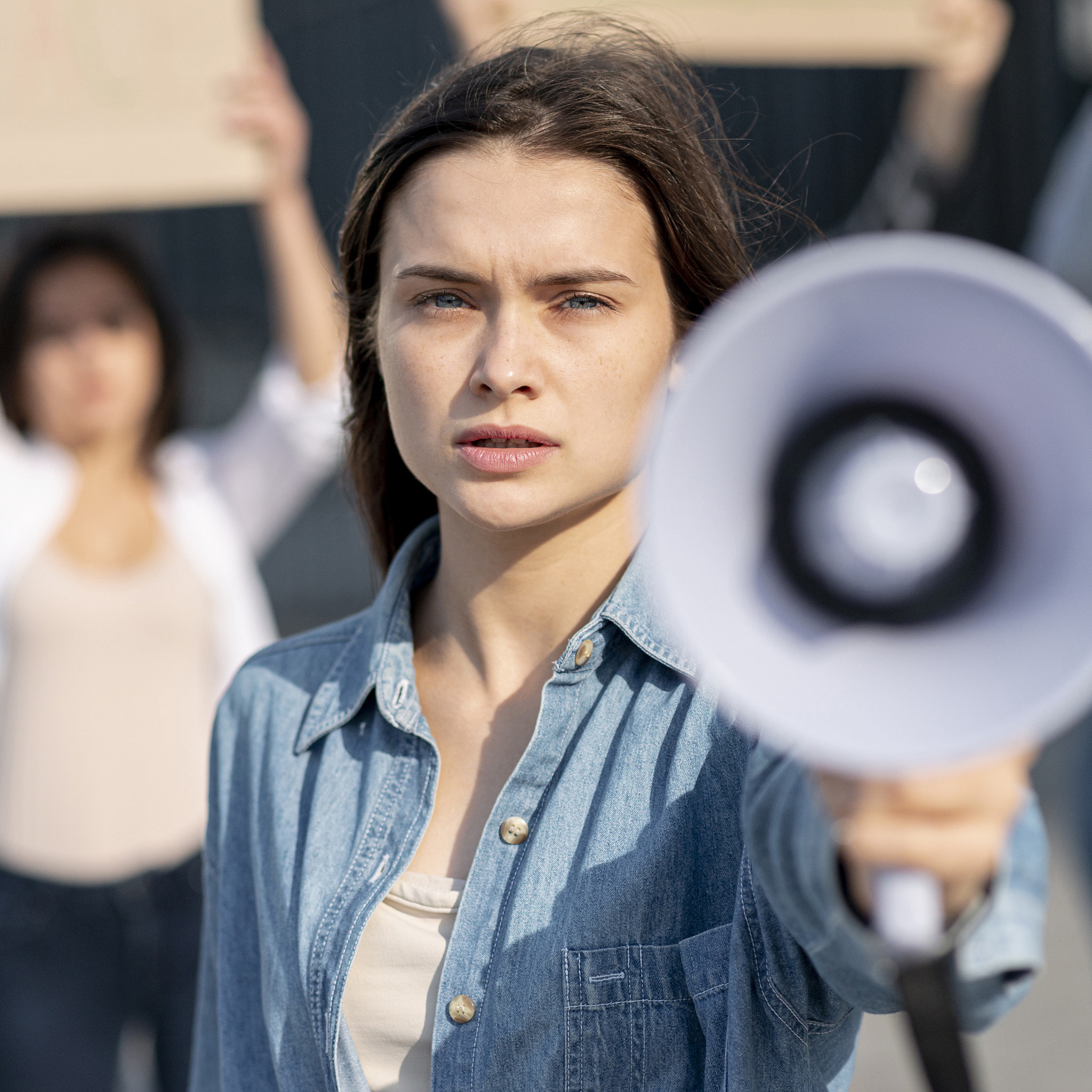
Something extraordinary happened on September 1st. Hundreds of teenagers across the country walked out of their schools to protest for the hostages – not because someone organized them, not because they received permission, but despite everyone trying to stop them. The National Student and Youth Council proposed stopping classes for only 50 minutes before returning to routine. The Jerusalem District Director at the Ministry of Education sent a letter to student council members warning against “harming national unity.” But these youth decided: we refuse to continue as usual while people are rotting in Hamas captivity.
Since October 7, 2023, when Hamas took over 250 Israelis hostage, Israeli society has grappled with how to respond. While families of hostages have led persistent demonstrations demanding their loved ones’ return, and various civic groups have organized protests, a complex dynamic has emerged around what constitutes “appropriate” activism during wartime. The government and many institutions have frequently invoked “national unity” as a reason to discourage protests, creating tension between those who see demonstrations as divisive during crisis and those who view them as essential democratic expression. This tension reached a remarkable turning point on September 1, 2025, nearly two years into the crisis.
There’s a fundamental difference between the youth protest and other demonstrations for the hostages. When hostage families demonstrate, one can say “it’s their private pain.” When political activists protest, one can claim “they have an agenda.” But here we’re dealing with something entirely different. This is an entire generation – not an interest group, not a party, not an organization. Students who have no political or personal gain from protesting. On the contrary – they risk absences, confrontation with authority, being labeled as “political.” Yet they went out to protest and strike. Their protest is powerful precisely because of what they are not: they are not “left” or “right,” not “political” or “anti.” They are simply young people who refuse to accept the absurdity of normal life while people are dying in Hamas captivity. This moral purity cannot be dismissed or defamed.
The letter from Karmit Harush, Jerusalem District Director, and Drora Herman, Director of Society and Youth Administration in the district, is a fascinating document. Not because of what’s written in it, but because of what it reveals about the mechanism of silencing. The central claim – that protesting for the hostages “will harm national unity” – demands scrutiny. Who determined there’s a contradiction between protesting for the hostages and unity? After all, ostensibly, the demand to bring everyone home is the ultimate expression of unity – we don’t give up on anyone.
But here the trick is revealed: “unity” in the official letter’s dictionary is not genuine solidarity. It’s code for obedience, silence, consent. The proposed alternative reveals much: “support for the state, strengthening IDF soldiers and raising national morale, and positive advocacy.” This isn’t just a choice of words. It’s a redefinition of what’s legitimate and what isn’t. Protest? Not legitimate. Expressing pain? Not legitimate. Demanding action? Not legitimate. Only “strengthening” and “raising” – words that empty protest of content and power.
The concept of “positive and constructive activities” that the letter proposes requires examination. What exactly isn’t “positive” about demanding to bring people home? What’s “destructive” about refusing to accept abandonment? The answer lies in the official dictionary’s definition of “positive.” “Positive” is what doesn’t challenge, doesn’t question, doesn’t demand fundamental change. “Positive” is discussion circles, not protest. “Positive” is “influencing together for the good of the hostages’ return and ending the war in victory” – a formulation that blurs the urgency, the pain, the immediate demand. It’s the same logic that turns any protest “political” the moment it demands real change. As if the most basic demand – don’t abandon people – is a political position rather than a human one.
There’s a deep paradox here. The same educational authorities that are supposed to educate for critical thinking and civic engagement are horrified when students apply exactly these values. They’re supposed to learn about democracy in the classroom, but not practice it in reality. They’re supposed to write essays about “mutual responsibility,” but not demand it in practice.
Surely there are teachers and principals who quietly supported the students, who understood the moral dilemma. But the official message, the one coming from above, was unequivocal. The Ministry of Education wants students who will win Olympiads, who will volunteer in “positive activities,” who will be “involved” – but only within marked boundaries. The moment involvement becomes real, when it demands change and not just decoration, it becomes dangerous. This isn’t just hypocrisy. It’s an entire worldview that sees youth as tools for preserving the existing order, not as agents of change. Students are supposed to be “our future” – but a future that looks exactly like the present.
The fact that the protest took place despite official opposition tells an important story. The autonomous organization of the protest proves that official systems have lost legitimacy in the eyes of youth. When the student council doesn’t represent them, they organize themselves. When the Ministry of Education tries to silence them, they find other ways. This isn’t just a protest about the hostages – it’s also a protest about the system trying to shape them in its image.
If high school students need to remind the Ministry of Education that there are people in Hamas captivity, if teenagers need to teach a lesson in civic courage, we must listen. Listen not only to what they’re saying about the hostages, but to what they’re saying about us. About a society that has made protest taboo, about a system that prefers quiet over justice, about adults who have learned to cope with the unbearable. Because the question isn’t just whether the hostages will return. The question is what kind of society we’ll be when they return – or if they don’t. Will we be a society that remembers how to insist on the most basic things? Or a society that has learned to silence every voice that refuses to comply? The youth have given their answer.