Solicitor & foreign policy adviser
Zini, new vision for Shabak and Israel’s security
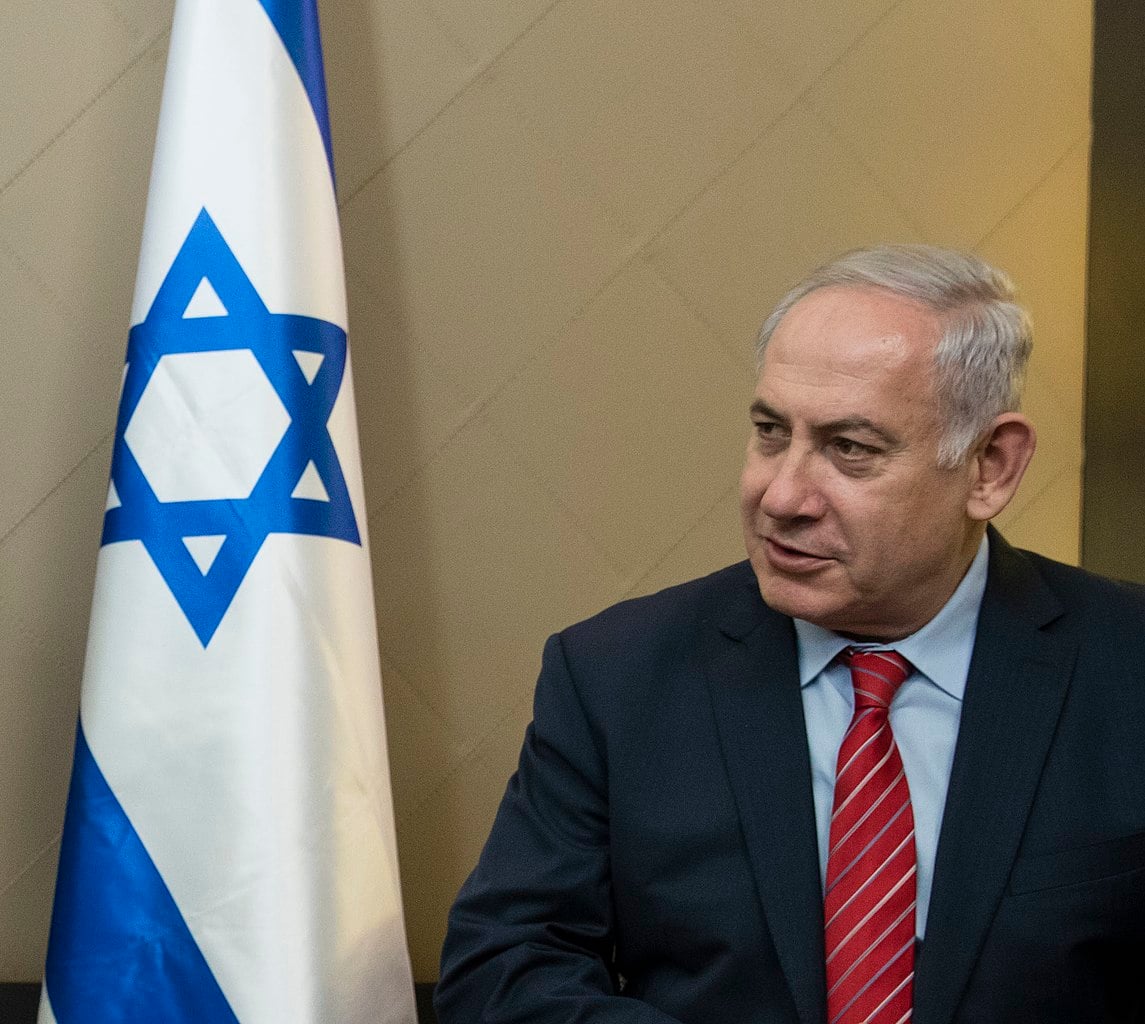
Benjamin Netanyahu (Wikipedia Commons)
The appointment of David Zini as head of Shabak marks a consequential, if underappreciated, shift in Israel’s internal security doctrine. In recent years, Shabak has strayed from its foundational discipline—quiet, precise, apolitical operational work—into an ambiguous space where public commentary, political entanglement, and bureaucratic turf wars have occasionally compromised its effectiveness. Zini’s promotion is a signal that the drift is being reversed.
A career intelligence officer with a reputation for discretion and operational excellence, Zini emerges from the ranks rather than from the revolving door of high-level political proximity. His previous posts within Shabak’s operational divisions, particularly in counterterrorism and intelligence fusion, position him to restore coherence to an agency that must now operate under the dual burden of domestic political polarisation and regionally entangled threats.
Shabak’s remit is often misunderstood. Unlike Aman (military intelligence) or Mossad (foreign operations), Shabak sits at the junction of internal security, strategic warning, and political stability. Its mandate includes the prevention of terrorism, counter-subversion, protection of state institutions, cyber-defense in the civilian sphere, and the monitoring of hostile activity in the territories. In the aftermath of the October 7 attacks, this mandate has taken up new urgency and complexity.
Zini inherits an agency that must evolve rapidly. Hamas’s operation was not only a tactical shock but an intelligence and operational failure at multiple levels. Shabak must now recalibrate its field architecture in Gaza and the West Bank, rebuild human intelligence networks in areas it has not effectively penetrated since the 2021 disturbances, and develop a more robust analytic interface with both the IDF and the political echelon. Zini is said to favour decentralisation of field command and an overhaul of collection-processing cycles, a shift that would move Shabak closer to a dynamic, mission-oriented intelligence model, akin to how the IDF’s Unit 8200 operates in real time. With the hostage crisis back in spotlight, Zini’s arrival brings some much-needed focus to the war effort. Allegedly, he doesn’t believe in big prisoner deals that just encourage more kidnappings—he’d rather use sharp, quiet force than trade politics for bodies.
At the foreign policy level, Zini’s appointment is equally significant. Shabak is a key player in Israel’s regional architecture of quiet cooperation—its liaison channels with Egypt and Jordan, its counterterror cooperation with the Palestinian Authority, and more discreetly, its dialogues with Gulf security agencies under the Abraham Accords framework. Zini’s reputation as a quiet professional may reassure these partners that the agency is refocusing on operational substance rather than institutional theatrics.
This is particularly crucial as Israel begins to re-engage with Riyadh. Any future Saudi normalisation deal will likely require Israeli guarantees on internal security threats, including Iranian-backed cells and cyber operations within the Kingdom. Shabak’s role in formulating these guarantees, alongside Mossad and the NSC, will be critical, and Zini’s technocratic profile strengthens Israel’s hand by projecting competence rather than volatility.
Domestically, his leadership could also stabilise an increasingly frayed relationship between the intelligence services and the political class. While his appointment bypassed traditional vetting channels, it reflects an effort to reassert executive control over an agency that, under Ronen Bar, occasionally blurred the line between institutional independence and political posture. Zini is unlikely to give interviews or lecture on “democratic norms;” he will be too busy reorganising threat detection architecture and recalibrating covert operations protocols.
The challenges ahead are formidable. Shabak must simultaneously suppress a rising tempo of attacks in the West Bank, reassert control over its Arab sector outreach, and construct an anticipatory model for unrest in mixed cities. In each of these, Zini brings not just technical depth but a strategic ethos: less press, more precision.
In an age when national security has become performative and intelligence leaks are used for factional advantage, Zini’s appointment is a course correction. Israel needs not just power, but order. Shabak under its new chief may provide both.
Related Topics
Related Posts