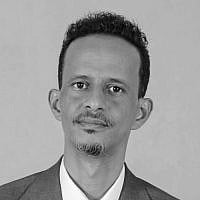
Psychoanalyst & Counter Terrorism Expert
After Survival: Somaliland
There are moments in the life of a political community when the narrative that sustained it begins, quietly, to shift. What once functioned as a source of cohesion and legitimacy can, over time, become more difficult to examine from within. It is precisely at such moments that internal critique becomes both necessary and difficult.
Abdishakur Hassan-kayd’s The Era of Rebirth enters at this juncture. The book traces Somaliland’s trajectory from devastation and abandonment to what has often been described as an improbable and largely self-generated process of state-building. Yet it does not remain within that familiar account. Its concern is with what follows: the period after survival, when the structures forged under pressure must contend with a different set of demands.
The argument advanced is a challenging one. Somaliland’s primary vulnerabilities, Hassan-kayd suggests, are no longer external. They are internal. The arrangements that once enabled stability—forms of negotiated authority, reliance on informal mechanisms, and a political culture shaped by survival—have, over time, become more difficult to adapt. What was once functional may, under new conditions, begin to constrain.
This is not an easy claim to make, nor an easy one to receive. It unsettles a narrative of success that has real grounding. It also raises questions about institutional development, political accountability, and the relationship between continuity and change. Hassan-kayd writes from within this tension, and it is this position that gives the work its particular force.
At the same time, the book is marked by the intensity of its intervention. Its language at times moves toward moral polarization, and its critique can take on a declarative, even confrontational tone. Yet this, too, reflects something real: a generational impatience with inherited frameworks, and a refusal to allow the fact of survival to stand in for a completed political project.
What emerges, then, is not simply a critique of governance, but a more fundamental question. Can a polity formed under conditions of extreme constraint reconfigure itself for a different phase without losing the internal coherence that made its survival possible? This is not a question unique to Somaliland, but it takes on a particular clarity in this context.
The Era of Rebirth does not resolve this question. It insists on it.
By way of disclosure, I am a colleague of the author and was invited by him to Hargeisa on an official visit for the Hargeisa International Book Fair. That visit was both an honor and an opportunity to learn directly from him about Somaliland and its ongoing process of rebirth.
This is an important book for those seeking to understand Somaliland beyond its founding narrative and to engage seriously with the conditions for a more healthy and productive rebirth.
Related Topics
Related Posts