POST-HARMONY Special Project
An Added Dimension: Tom Stoppard. In Memoriam
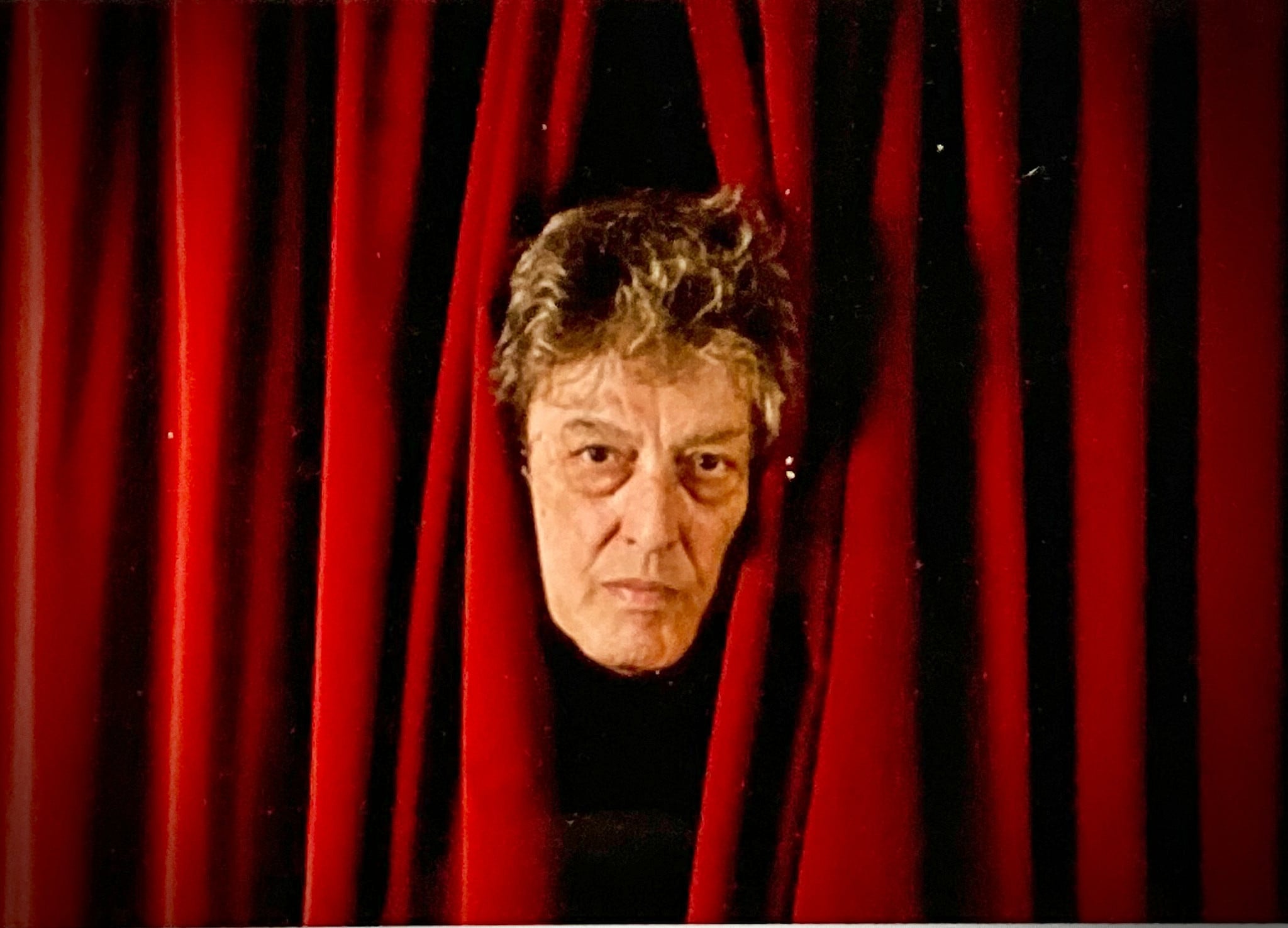
Tom Stoppard. Creative Commons.
The HEIGHTS OF FREEDOM and the PIERCING HEART
Bright Star
From the start of my professional career as a theatre dramatist, the name of Tom Stoppard was our brightest star – also because he was living and highly productive playwright, and was creating in a real-time, which was a very rare luxury of a true, brilliant talent who was stimulating the best in us, professionally, at the time.
His plays, his way of imagination, his metaphors, his sense of stage were the golden standard of the profession in theatre for so many in so many countries, but especially so in Central and Eastern Europe, understandably so, because his mind-set was of our origin. We knew that great Stoppard, our contemporary, was from Czechoslovakia, with their mighty intellectual potential. Even if we would not know, we would feel the close familiarity in the way of seeing the world, instantly. These things are of a natural sub-conscience origin, they need no translation. We all knew that Stoppard was one of us, and we were very proud that he made it in the UK, the US and in the West in general.
Not only did he make it, but he set some standards there as well, on all those famous stages, on the big screen, and in the Western culture in general, bringing there that way of seeing the world, looking into the depth, but with a superb elegance and wit of a true, not pretending, freedom.
The freedom which is in the genes. The freedom which is not given, but which is a conscious choice and denomination of dignity.
An Added Dimension
Later on, getting to know Tom Stoppard via and because of my dear friend Vladimir Bukovsky, I saw a very British person which at the same time was somebody else. It was the man with an added dimension, so to say. There was always something else there, some extra depth, extra volume, extra bravery. And palpable independence.
Tom Stoppard demonstrated an exemplary human stand against tyranny in his great and immensely important Every Good Boy Deserves Favour play, a musical on the nightmares of the Soviet punitive psychiatry, with music written by Andre Previn. Coming in 1977 from the world-famous author of the Rosencrantz and Guildenstern Are Dead, at the time of the Soviet Union was still unshaken, it was a mighty hand stretched decisively towards those who needed it badly. It was the deed of the right man at the right place at the right time.
Stoppard learned about the things which are the subject of that very impactful play first-hand from Vladimir Bukovsky. Volodja did tell me about it in detail, many times. Tom never was publicly sentimental. But he was the mensch. And that mattered the most. As for Bukovsky, as for Fainberg, as for many other dissidents who knew the real price of freedom.
In his current short in-memoriam post, Norman Lebrecht , the sophisticated insider of the London musical and theatrical world, have noted, prophetically, that the expected avalanche of obituaries for Sir Tom ‘might forget the EVBDF’, as the Stoppard’s highly emotional cry in defense of human dignity is known among the professionals. And he turned out to be correct in his prediction, sadly.
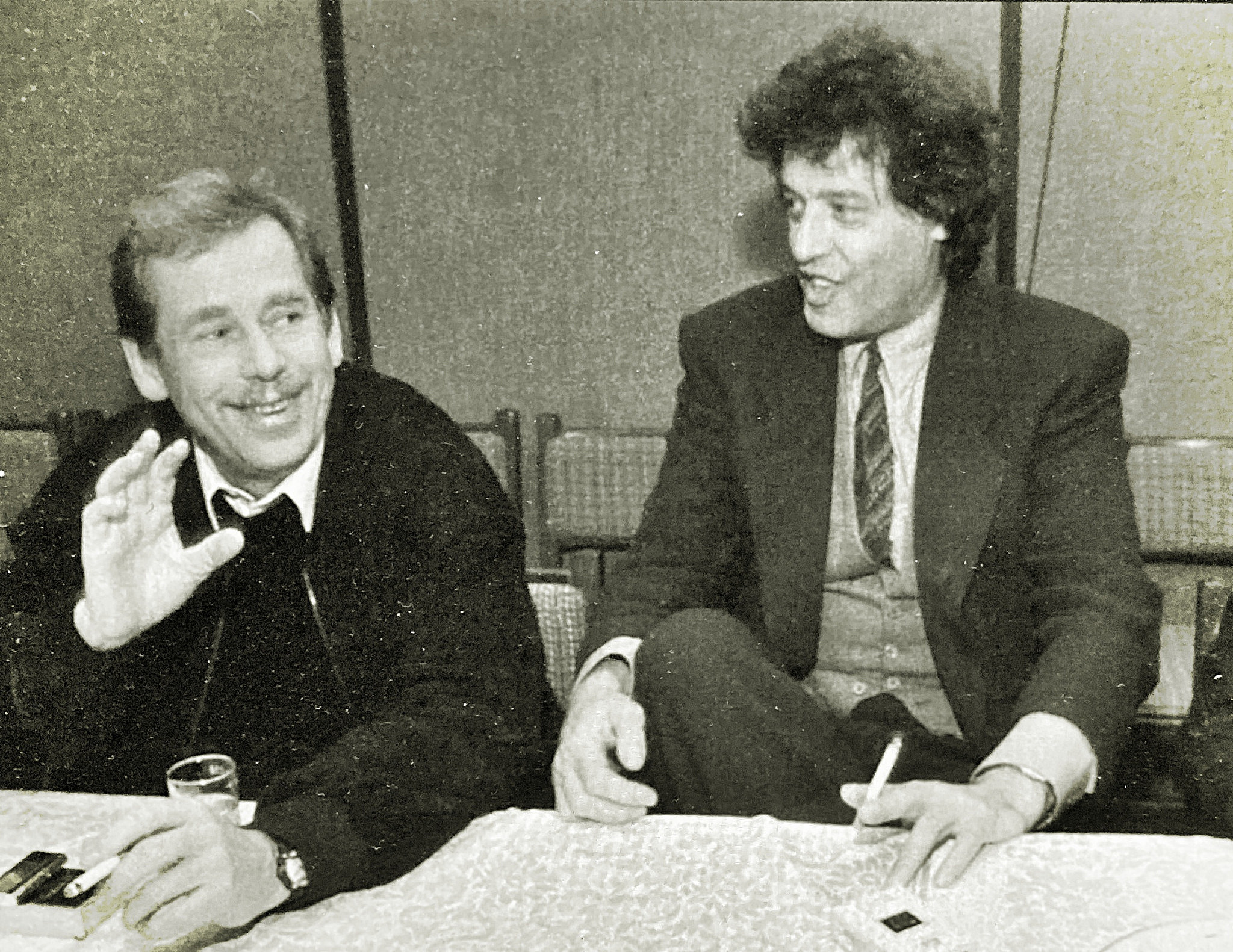
There was no mention either about Stoppard courageous and timely stand for dissident in his famous play which was still performed until 2011, nor about his friendship and cooperation with Vaclav Havel and other outstanding Czech intellectuals, one of whom he really was. The topic is not fashionable for a long time already, with dissidents and Eastern and Central European intellectuals who all were modest people have been moved off stage, both literally and metaphorically.
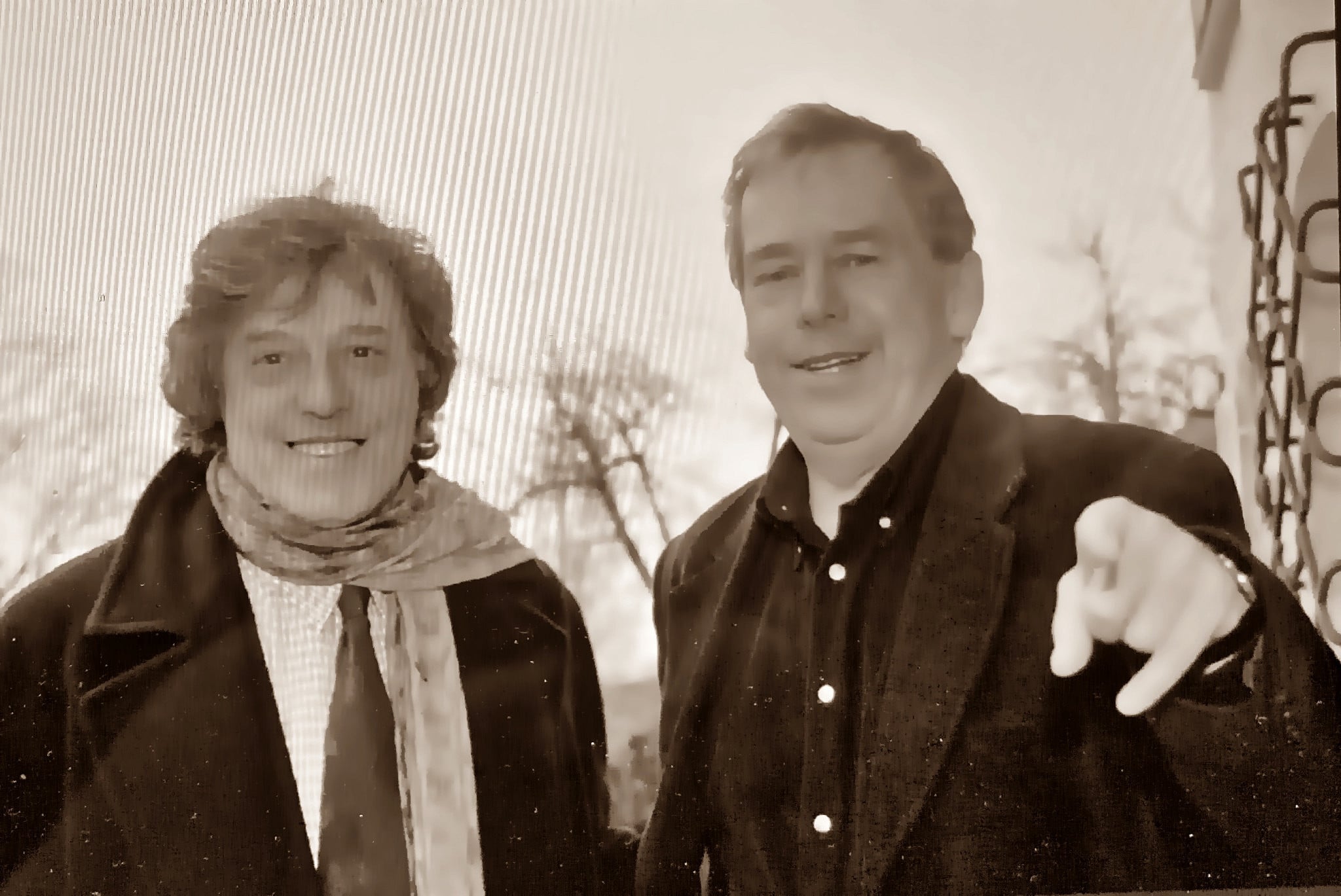
Still, in the case of Tom Stoppard, Shakespeare in Love or script for Indiana Jones were professionally done commercials, but his heart was with the people to whom he felt genuinely close, on so many levels, people like Havel and Bukovsky, powerful intellectuals, undeservingly free souls, charming, easy-going, with superb feeling of humor, as Tom himself possessed. I was privileged to see it all first-hand, and I am grateful for such enrichment of my life.
Jewish Essence
There is also one thing which went missing in all obituaries but one, fine one by David Jay in the Guardian. I was watching so many entries on Sir Tom’s death all over British TV, on all its channels. I was not surprised, given the times in which we are living, with its total moral inadequacy. I just fixed this reality of today – in which Tom Stoppard, born Thomas Straussler in the Moravian Zlin, was attested, very much off-hand, as ‘coming from Czechoslovakia’ with full stop there.
There was not a single mentioning of Leopoldstadt, the most important, last and the best play of Stoppard ( 2019-2020) , which I called Tom Stoppard’s Kaddish, and with which the great playwright has agreed when we spoke in person about it at the London premiere of the most important deed of his long and productive life, in the Wyndham Theatre in London in February 2020.
The Jewish component in the great British playwright’s life is one of the most delicate and painful. His family of his doctor father and housewife mother of two boys was not observing, but this does not mean that they were not Jewish. The family was rescued by the brave Czech owner of the shoe fabric in Zlin at the very last moment, literally. Tomas was barely two years old at the time.
From that very moment, the boy embarked on the long, literally dangerous and very demanding far-stretching journey from Europe to Singapore, then India, then several places in the UK, this is in a new format of the family, with British military officer Stoppard whom his mother married after the tragic death of Tom’s Jewish doctor father.
All his life, Tom Stoppard learned about the history of his Jewish family in a retrograde motion. It is not easy when it has happened once but in his case, he endured it several times. He knew that his father, who saved him, his brother and their mother when sending them to India from Singapore on the eve of the Japan occupation during the Second World War, just in time, and who left behind because of his conviction that under the circumstances, doctors will be needed during the war, has died there. Tom presumed that his father died in Japanese captivity. He learned the truth about the tragic death of his father only when he was in his 30s. Jewish doctor Eugen Straussler was on the last ship leaving Singapore with refugees onboard, trying to escape. The ship was bombed and hit, and doctor Straussler was one of many victims of the bombing.
Stoppard’s mom Martha whom Tom adored with all love of the Jewish son to his Jewish mother, has been so traumatized by all the events of the Second World War and the Holocaust that her immediate family endured that she never ever spoke a word about it.
It is a known phenomenon of the generation of the Shoah. As it is now with many of us, in our post-October 7th syndrome. My grandfather who lost the large part of his family in the Holocaust, never uttered a word about it. It does not mean that the presence of the loss, the ongoing feeling of the tragedy, the painful memory, the helpless silent cry of those whom our grandparents could not save, were not palpable in our homes and our lives.
They were all there, every moment. It was the same for Tom Stoppard , however British he might become. Even more graphically, but – inside. Always inside, in that quietly piercing heart. Quietly does not mean less painfully. Very much to the contrary.
Family Destiny
Twenty five years after learning details about the tragic death of his father, soon after the fall of an Iron Curtain, Tom Stoppard who was 56 at the time, learned from his cousin who came to see him from Germany, about his Jewish family in Czechoslovakia. His both paternal and maternal grandparents, his three aunts, his mom’s sisters who all perished in the Nazi concentrated camps, Auschwitz and the other ones. This mortal catalogue will sound from the stage not before another twenty seven years, in the chilling very quiet line pronounced and repeated on the stage in Leopoldstadt by aunt Rosa, one of the three survivors of a big Jewish family: “Auschwitz… Maidanek… Treblinka… Teresin… Auschwitz… Auschwitz… Auschwitz…”
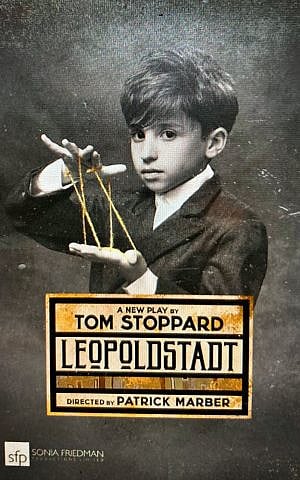
Loving and respecting his mother, Stoppard did not publicize any of his reflections on his new devastating knowledge about his family until she was still alive, until 1996. And a long time after it. He was processing.
He published his only essay about the essential part of his Straussler family’s tragic destiny , My Secret Holocaust History, in 2021, after the grandiose impact of his Leopoldstadt on everyone with the heart in the right place, Jewish or not. It was as if he was checking the temperature of public opinion water before coming out with the most personal thing in his life.
For those who knew Tom Stoppard well, there was a little surprise in this waiting. He always was pretty much aware of him always moving on a thin ice, in his own ever alerted self-perception, in the case of an occasionally accented word, or a mini-lapse on some organically British facts of life or history that would let him out as a stranger. That inner, deeply rooted and hidden self-awareness of ‘a still stranger’ in the country where you grew up from being eight, worked hard, mastered the language as a rare native, got extremely successful and known quite early in your life, was always there, in Tom’s innermost. And this fragility and self-imposed deeply hidden vulnerability was the secret that made his heart pierce. Very, very quietly. But non-stop.
Leopoldstadt: Statement and Testament
It took Sir Tom thirty two years after learning the nightmares of his Czech Jewish family to create Leopoldstadt , arguably the most powerful play about the tragedy of European Jewry in the Shoah in modern times. Those who had no chance to see it in London or New York, can read it.
Somehow I knew that it was the last play of the great playwright. By the time of its premiere in London, Stoppard was 83. But I knew it was not because of the fact of his age. By the time, I knew Sir Tom and some of his friends – such as another great personality of our times, prince Karl Schwarzenberg, close friend and colleague of Vaclav Havel, the Minister for Foreign Affairs of the Czech Republic, outstanding fighter for human rights, and the descendant of the Princes of Schwarzenberg House – well enough to recognise the additional meaning behind his new plays. This one, Leopoldstadt, was completely in its own league in the rich outcome of Stoppard’s creations. It was a statement. And it was a testament.
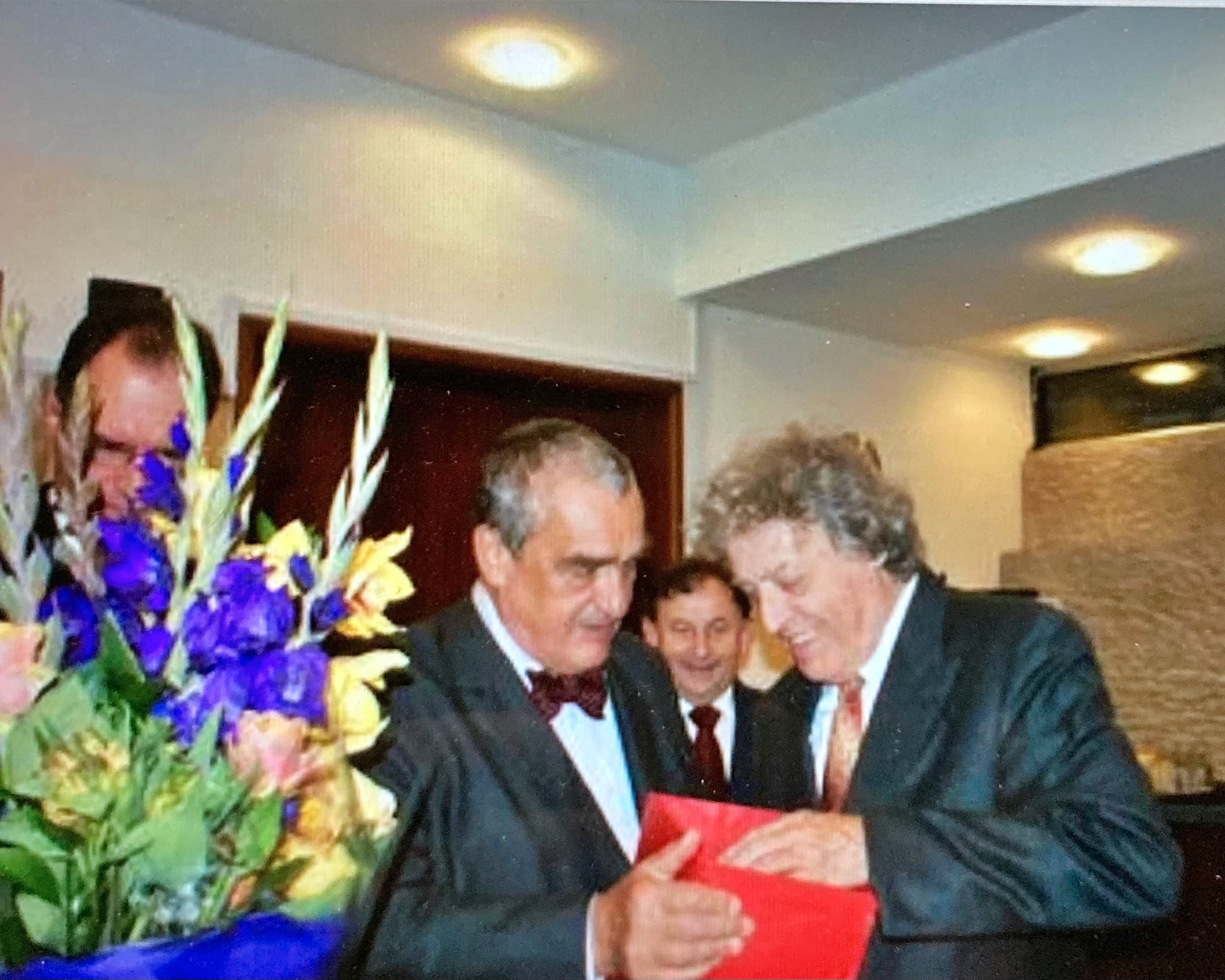
One does not mention such things to people, naturally. The more I was struck when Sir Tom said to me at the premiere of Leopoldstadt in London: “I am not planning to write anything else. That’s it.” We were alone in his lounge at the Wyndham Theatre. It was a very nice and gentle conversation, we were smiling and speaking about our mutual friends. But I saw that Stoppard was very tense, and all nerves at the first evening of Leopoldstadt. He was all there, inside.
I was starting to move the conversation towards the play, and was taken off-guard by his short announcement. I was about to say something conventionally appropriate, like “Oh no, dear Tom, you will write some other important things”. But I did not. I knew Tom well enough not to insult his sharp intelligence with generalized conventionalities. I saw his look directed at me, simple and serious. And I said: “ I absolutely understand dear Tom. I do. I would not do , not able to, nor willing to think about anything after something like that and about it either”. And great Stoppard smiled with his customary broad smile, the one which he had not for the professional photo ops, but for the moments when he was feeling himself. He was also comforting me, gently tapping my hand, saying nothing, but smiling warmly.
Then we switched to the historical matters related to his play, to the metaphor of history which is so paradoxically actual any time one gets a closer, personalised look at it, to the acute actuality of Leopoldstadt sixty five years after the time of the last scene of the play.
I did my best to assure him that the timing of his play – we both knew, the last one – was incredibly precise and amazingly timely. And now I think that it was. For him and his family, for sure. And it is what really matters when a family’s tragedy opens up to a person in two-three decade gaps, with all eight decades of that silent but so mighty drama ongoing. Until Leopoldstadt is done. Nothing else really mattered anymore. I quite understand.
I did it back in February 2020 and I do it now, saying farewell to Tomas Straussler, the Moravian Jewish boy from a doctor family, whom the world knows as Sir Tom Stoppard.
* * *
Inna Rogatchi’s previous writings about Tom Stoppard:
Leopoldstadt: Tom Stoppard’s Kaddish
The Grace of Love: British Jewry and Its Great Men
November 30, 2025
Related Topics
Related Posts