
An American Dilemma
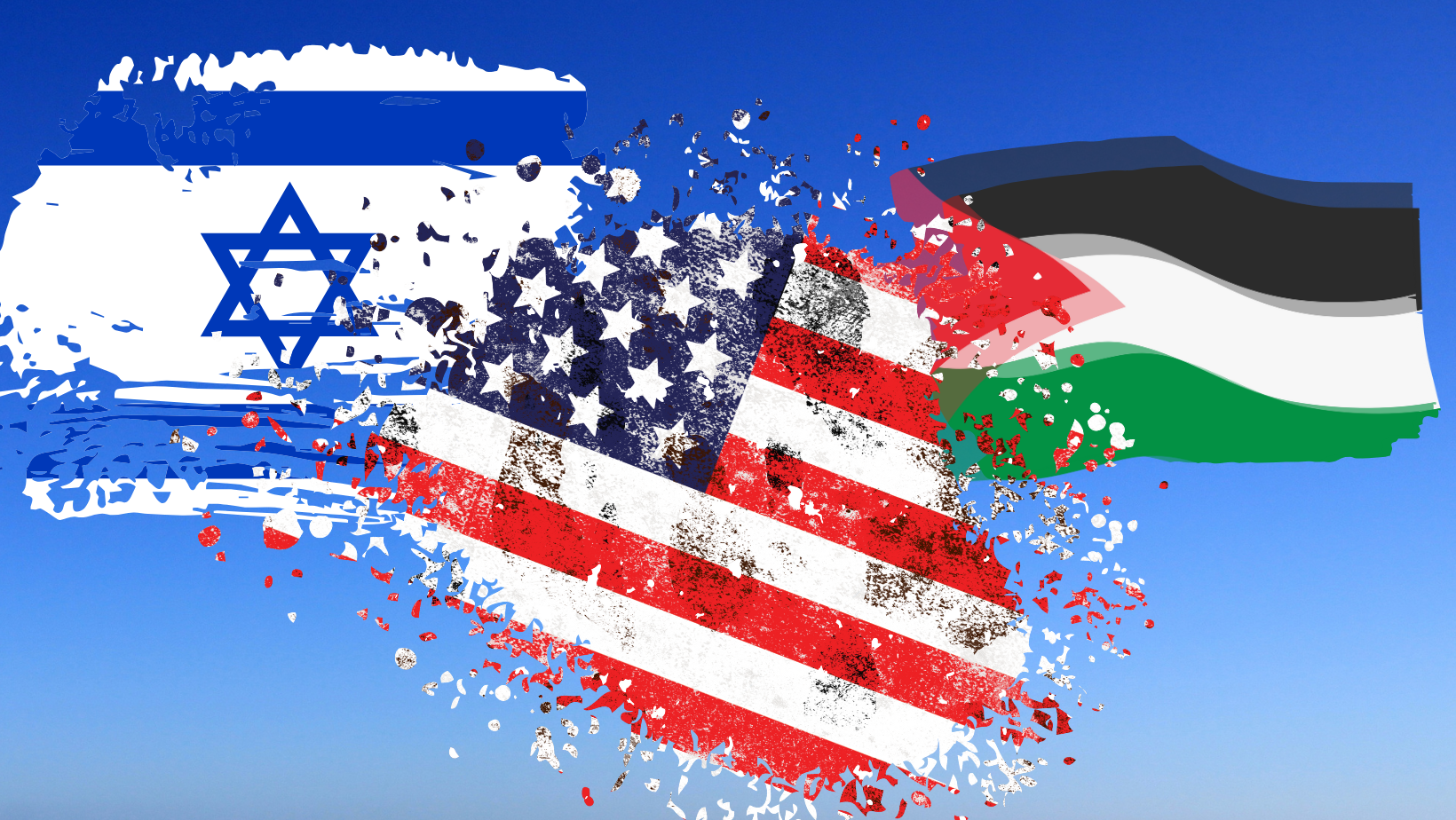
Being a Jewish American Zionist has never been this hard.
In Israel, I believe its a little bit easier, as the Israeli media has been comfortably sheltering us from acknowledging the horrors taking place in Gaza.
But in America, no one is given that same comfort, everyone is exposed to the reality on the ground, and this forces a dilemma.
Should the Jewish American Zionist say, “what do I know, I’m so far away, I trust Israel to handle this? (Blindly?)” Should he or she join in and amplify the Israeli trauma and the israeli perspective? and ultimately deny what is happening, deny Israel’s responsibility, deny the possibility of more ethical alternatives?
Should he shed his Zionist identity – what connection does he have to israel’s actions anyway?
Or, can the Jewish American Zionist take advantage of the outside perspective, and broaden the Israeli perspective? Be brave enough to remind those in Israel that this does’t have to be a zero-sum game, that maybe this time the horrors *do* go beyond the Hamas propaganda.
Can the Jewish American Zionist amplify a more ethical Zionist perspective, one that can have empathy for israelis and still hold empathy for Gazans as well? Can Jewish American Zionism accept them, if they do?
Currently, in Israel, I’m heartbroken to share that this is the minority of the minority: empathy for Gazan’s is experienced here in Israel as a *radical* left “political agenda”, instead of merely an acknowledgement of the humanity of others.
Can the Jewish American Zionist be brave enough to criticize Israel? not as an outsider, or as an anti semite, or as someone rejecting israel’s right to exist.
But yes to dare to give loving and constructive criticism, as someone who cares deeply, from the inside, but on the outside, and wants to protect Israel from our own traumatized reactivity?
And again, can Jewish American Zionism accept them, if they do?
In my job as a social worker, I work with many parents on the task of balancing between supporting and validating a struggling child versus enabling their child to adopt a broader, more flexible perspective and set boundaries. One pattern that becomes clear is that just one or just the other is ineffective, and even unhealthy- good parenting requires the balance of both together. It is not easy!
The Jewish American Zionist is in the rare position that allows for real validation through authentic and deep understanding of the israeli experience, yet at the same time, may allow for the cultivation of a broader perspective, setting boundaries, that is less directly affected by those same fears.
So If this is you, please don’t keep silent- you have a role.
It might feel like you have nothing to say, like its not here nor there, or like you have no right to say it.
But the opposite is true – this voice is important and its not loud enough.
It is up to us to amplify this perspective in all of our communities, and acknowledge that it is blatantly missing in the Israeli discourse.
I’ll go one step further:
In America, in Europe, wherever you are:
We *must* stop framing this as “pro israel” versus “pro palestine” .
It only perpetuates this as an “either/or״ conflict – and instantly sends the other into a survival-mode panic, and fight or flight ensues.
I’ve seen tons of pro-Palestine rallies that only intensified the deep fear of Israelis and Jews around the world.
In turn, I’ve seen Israel Day Parade and other pro-Israel messaging that only further threatened Palestinian causes.
Where is the “Israel-Palestine-Solidarity Parade?”
Where do we call for a Zionsm based on democratic ethical foundations, which actively and explicitly rejects the current radical voices (found on both sides of course) of “by any means necesary?”
Now, more than ever, especially in the face of the horrifying atrocities occuring at this moment in Gaza:
We must do more to show that while we are anti-Hamas, we dare to be simultaneously pro Israel and pro Palestine, and ultimately, pro peace.