A comedic survival guide to a country that breaks you, rebuilds you, and calls it Tuesday.
An Australian Visa, a South African Alibi and an Israeli Home
My first trip abroad on an Israeli passport nearly ended at Ben Gurion. Sydney gave me back family, confidence and parts of myself I had misplaced—until an Uber driver asked one ordinary question.
The first surprise of my enormous Australian journey was that it might end at Ben Gurion Airport.
I had a valid Australian visa, a current Israeli passport, a confirmed ticket and pneumonia. Only the pneumonia was accepted without further documentation.
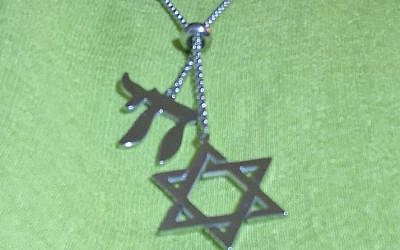
Before I reached the counter, three members of my family had urged me to remove my Magen David necklace, earrings, and my chai rings. They were worried about my travelling through Dubai and Sydney visibly Jewish. I understood the fear. I also hated complying with it. My blue passport would state my Israeli identity plainly, while my neck and fingers had been instructed to keep quiet.
Then the check-in agent demanded my physical Australian visa.
There was one small difficulty: Australia had not issued me one. My visa was electronic and linked to the passport in his hand. He needed to enter my passport details into the system. This was not an obscure legal remedy requiring senior counsel and an urgent application. It was typing.
He declined to do it.
I searched my emails while coughing, found the visa grant, extracted the reference number and presented him with the evidence he could have found himself. He still did not check me in. He dismissed me to a colleague with the air of a man delegating an unreasonable woman rather than transferring a passenger whose documents he had refused to examine.
His colleague entered the details. My visa appeared. I was checked in.
The first agent had not denied my Israeli identity; the passport made that impossible. He had denied that I possessed a valid visa and therefore my right to make the journey to Australia. The distinction matters. It mattered especially while I stood there with pneumonia, watching weeks of planning depend upon whether a stranger could be persuaded to use a keyboard.
Eventually, I boarded. Diplomatic normalization had opened my route through Dubai; administrative normalization had apparently missed its connection.
I arrived in Sydney ill, furious and depleted. I expected relief. I did not expect to be looked after so thoroughly that I would remember how adventurous I could be when I was not permanently preparing for trouble.
The first discovery was not the harbor, the ferry or Australian vegetarian menus, although each deserves honorable mention. It was the luxury of knowing what would happen next.
Every morning, I knew the plan. Somebody had checked the weather, rain, arranged the lift or thought about the meal. In the evening, I knew where I would return. There was food, conversation, rest and a bed. Nobody presented this as an achievement. For me, it was revelatory.
I had become accustomed to spending a great deal of energy anticipating disruption: transport that might fail, plans that might alter, health that might collapse, money that might not stretch and arrangements that might suddenly require rescue. In Sydney, I stopped bracing. At first, I did not realize I had stopped. I merely noticed that I was saying yes more often.
Yes to lunch. Yes to the ferry. Yes to another coffee. Yes to meeting somebody from a history I had not known how to approach. With less energy being wasted on contingency plans, I began wanting things again.
Much of that security came from my three sisters, S., H. and P. I expected to love them. I had not expected to become quite so besotted.
With S., there were our three-hour expeditions to the gym. That statistic is accurate and will survive cross-examination, provided nobody asks how much of the three hours was spent in the jacuzzi, sauna or electronic compression machines. We talked, laughed and allowed technology to squeeze our legs on the understanding that circulation is practically athletics.
With H., there were coffees, chai lattes and fried eggs on sourdough toast at her superb bakery and restaurant, Baked by 22 Grams, and, of course, at 22 Grams. I loved the food, but I loved watching her in her world more: capable, busy, creative, surrounded by the evidence of something she had built.
With P., there was Shabbos, children, my birthday and the intimate pleasure of being absorbed into the ordinary workings of her home. I was not being entertained as the relative from overseas. I was simply there, included in the plans, the meals, the noise and the end-of-day collapse.
That was the revelation. I had travelled across continents expecting visits. Instead, for a little while, I belonged inside their lives.
And then there was J., my big brother, my rock and my adviser on all matters real and rational. J. is not a public-displays-of-affection sort of man. He will not smother you in declarations, but neither will he leave you wondering whether you matter. His affection appears as reliability, attention and advice that returns every crisis to the facts—particularly when I have been attempting to negotiate with them.
I am proud that I have made progress that impresses him. He still thinks I can be reckless, a concern not invented without supporting evidence, but he worries less. I am more focused now, more conscious of my responsibilities and more willing to admit that choices produce consequences even when one has made those choices with tremendous personality.
At 57, recognition as a responsible adult may be arriving somewhat behind schedule. Still, J. is a rational man. If he sees progress, I am accepting the finding.
In shul, another part of the family came into focus. Dad recited the maftir he first learnt for his bar mitzvah. It was special because it was Dad: confident, beautiful and carrying words he had first carried as a boy. I sat listening with unreasonable levels of pride.
The rabbi, rebbetzin, chazan, his wife and the congregation welcomed us with a warmth that made the occasion larger. I had expected to enjoy hearing Dad. I had not expected to feel time fold quite so neatly—the boy he had been, the man he became and his daughter listening in Sydney.
Then I met L., a singer-songwriter, Mum’s high-school boyfriend and now a close friend.
Children are appallingly self-centered about their parents’ biographies. We imagine they began shortly before we required them. L. knew Mum before any of us had the chutzpah to call her Mum. Over lunch, I heard about a girl I could never meet directly, preserved in the memories of somebody who had known and cared for her then.
He returned later with CDs for me and for Mum’s twin, also L., and introduced me to his wife, who is lovely and beautiful. There was no awkward attempt to disguise the old romance or inflate it into mythology. It had become friendship. The music had continued. They had all built lives. I was allowed a glimpse into a chapter of my mother’s story that existed long before mine.
Not every discovery was easy.
Meeting my late stepfather’s daughters, J. and M., meant entering a part of our family history shaped by childhood trauma, painful misunderstandings and boundaries that had held for years. There was no honest way to make the past pleasant, and no value in pretending that adulthood had magically given us identical memories of it.
We spoke about the lost years. We exchanged family history. J. and M. spoke of forgiving me.
The word sat uneasily with me. Forgiveness can smuggle in a verdict: one person did the damage; the others survived it. Our history was not that tidy. What we were eventually able to acknowledge was that all of us had been children or young adults caught inside destructive family dynamics. We had each been hurt. We had interpreted events from inside that hurt. None of us had been given particularly impressive tools with which to manage it.
One meeting could not repair decades, and we did not insult one another by pretending it had. It did something more credible. It allowed us to recognize the injuries, mourn the missing years and consider the possibility that the past need not continue deciding whether we have a future relationship.
I left gutted by what had been lost and grateful for what might still be possible. It was an uncomfortable combination, but it was the honest one.
Around these larger encounters were dozens of smaller pleasures: old friends C. and I.; cousins S. and M.R.; new acquaintances who felt oddly familiar; and Dad’s Breakfast Boys, his Wednesday-morning compatriots at the coffee shop next door.
Some already read my blog. Others had been sent a post by somebody else—NOT BY ME—and subscribed after meeting me. I have finally identified my target market: decent, intelligent people with dark humor and sufficient chutzpah to enjoy mine. This is gratifying, although possibly too narrow a demographic for global domination.
Sydney fed me almost continuously. There was Turkish, Italian and Thai food, sweet potato fries, perfectly baked salmon, an Israeli Shabbos at P.’s and wonderful meals at C.’s. Vegetarian options appeared without anyone treating me as a theological challenge or presenting the same mushroom at four consecutive meals in different lighting.
I loved giving presents and then immediately began investigating whether I had bought the wrong ones. A personalized toiletry bag was promptly converted into a child’s stationery bag. I experienced a brief crisis of judgement before accepting that the bag had found more meaningful employment than I had intended for it.
The most joyful day was one of the least consequential.
My bonus mum and I took the light rail to Circular Quay and the ferry to Manly. We had no difficult conversation scheduled, no family history to excavate and no medical problem requiring interpretation. We crossed Sydney Harbour because it was magnificent and because we could.
The fish and chips had been fried with a commitment bordering on ideology. I shared some of the excessive chips with the seagulls, who abandoned gratitude almost immediately and began negotiating from a position of aerial superiority.
I was cold, overfed and entirely happy.
Nothing was solved that day. Nobody forgave anybody. I did not acquire insight, improve my prospects or demonstrate resilience. I sat beside my bonus mum on a ferry and enjoyed my life. After illness, anxiety and years of managing reality as though it were liable to escape, simple happiness felt almost illicit.
By my birthday, the change in me had become visible.
I went to P.’s wearing the disco-ball headband C.C. had given me. We collected pizza and pasta from my favorite local place, where I began dancing with the staff while they cooked. Nobody had booked me. Nobody had requested entertainment. I was simply more spirited than I had felt in a very long time and lacked the discipline to conceal it.
Later, once the children were in bed, we watched The Hustle. It was light, charming and required nothing from me. I had pizza, people I adored and a reflective structure attached to my head. At 57, I could think of no urgent improvement.
Then I got into an Uber.
The driver, S., had done nothing to make me afraid. But it was late, I was alone in a stranger’s car and I was suddenly conscious that the safety of the previous weeks belonged to other people’s homes. Here I had to make my own calculation.
He asked where I was from.
“South Africa,” I said.
This was true. It was also not the whole truth. I did not say that I lived in Israel. I did not mention Ra’anana. Israel disappeared from my answer so quickly that I only noticed the omission after it had been made.
My accent provided corroborating evidence, and S. began discussing rugby. This was fortunate because rugby allows me to sound South African using approximately three pieces of information. I know who the All Blacks are. I know what the haka is. I know the Springboks inspire feelings normally associated with religion and disputed inheritances.
S. told me South Africa was at the top of the world rankings. I received this news with the pride of somebody who had resumed representing the nation for personal-security purposes. He talked. I agreed warmly. We arrived without incident.
Only later did the irony settle.
At Ben Gurion, I had fought for recognition of my valid Australian visa and my right to enter Australia. In Australia, I had edited out the country that was home.
This was not S.’s fault. He had given me no cause to distrust him. The omission came from the calculation Jews know too well: Who is asking? Who is listening? What might the answer cost? Do I need to find out?
Before leaving Israel, I had written about traveling internationally for the first time on my Israeli passport. I wanted to place that blue passport on a foreign counter and allow it to state the truth without qualification.
Israeli.
Not visiting Israel. Not attached to Israel through ancestry, religion or sentiment. Israeli because I made aliyah, live here and have chosen its future as mine.
The passport had spoken at Ben Gurion. In the Uber, I had silenced the life attached to it.
That small omission clarified my Zionism more effectively than speeches generally manage. I did not make aliyah because Israel promised safety, serenity or competent administration. Nobody who has spent eleven minutes dealing with an Israeli government office could maintain that fantasy. Israel offers war, sirens, grief, impossible supermarket prices and official forms that appear to have been translated through several extinct languages.
I made aliyah because I refuse to remain a guest in Jewish life. Israel is the place where I can answer the question without first assessing the room. If I say I live in Ra’anana, the likely response is a complaint about Ahuza Street or property prices, not a discussion about whether my country ought to exist.
Israel is difficult, imperfect and mine.
I returned home stressed, exhausted, strung out and almost indecently excited to see Purrcy, Petunia and Sammi. Sydney winter was still attached to me when the Israeli August hit. I showered, changed from severe winter into practically nothing and discovered that I had no koach for the messages already arriving.
“Welcome home.”
“Come for coffee.”
“We must catch up.”
All loving. All impossible.
I had no strength to make dinner, retell the journey or sit upright while anybody welcomed me. I drank water, took my medication and went to bed.
The cats inspected my luggage, registered my return and demanded food. They recognized my right of entry immediately, although my right to recover remained under review.
South Africa is where I began. Australia gave me family, forgiveness, steadiness and parts of myself I had almost forgotten. Israel is where I can give the whole answer.
Related Topics
Related Posts