From Kibbutz to the global stage
As Witkoff Arrives in Istanbul, Envoys Signal Diplomatic Shift, Public Fears War
Over the past weekend, as many believed the United States was on the verge of striking Iran, a broad network of envoys met and held talks across Middle Eastern capitals, as well as in Moscow and Washington.
Iran’s Secretary of the Supreme Military Council met with President Vladimir Putin in Moscow; Israel’s chief of staff met with senior officials in Washington; the prime minister of Qatar visited Tehran; Iran’s foreign minister met with Turkish President Recep Tayyip Erdoğan; and Egypt’s president held a phone call with Iran’s president.
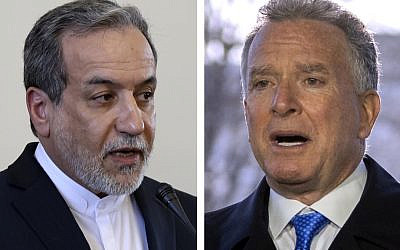
The talks appeared to bear fruit. On Saturday night, Middle East time, Iran announced the cancellation of a planned military exercise in the Strait of Hormuz with the Russian and Chinese navies. At midnight US time, President Donald Trump stated that the Iranians were serious about their willingness to hold talks with Washington and that, for now, he was choosing a diplomatic path. Several hours later it was reported that the talks would take place in Istanbul, with the participation of Iran’s foreign minister and US envoy Steve Witkoff.
The American envoy, Steve Witkoff — who in the eyes of many has become, within a matter of months, a kind of “Kissinger” for the Trump administration, lacking the professorship but displaying energy and diplomatic agility — arrived in Israel in recent days to brief Prime Minister Benjamin Netanyahu, the IDF chief of staff, and the head of the Mossad. He is then expected to travel to Abu Dhabi for talks with the leadership of the United Arab Emirates and with representatives of Ukraine and Russia, before continuing to Qatar to coordinate issues related to Iran and to energy and nuclear agreements, and from there on to Istanbul.
According to assessments, senior representatives from Turkey, Qatar, Egypt, Pakistan, Oman, and Saudi Arabia are also expected to join the Istanbul discussions, alongside Jared Kushner, with the possibility that additional countries may take part as well.
In parallel, President Trump has already spoken with India and announced a trade agreement between India and the United States, including a reduction of tariffs from 50 percent to 18 percent. This comes just one week after India signed a free trade agreement with the European Union, and ahead of negotiations with Iran — even as Tehran continues to position itself along the China–Russia–Europe axis.
The intense movement of envoys and the flurry of global communications may point to a broader arrangement than is immediately apparent.
The conflict between Israel and Iran, often framed in religious terms involving Shiite extremists who deny the right of Jews to a state in the Land of Israel, could be replaced by security mechanisms and guarantees provided by major powers as part of a wider global reorganization.
On one side, China and Russia could become involved in monitoring, deterrence, and security guarantee mechanisms aimed at ensuring that Iran does not pursue military nuclear capabilities and refrains from attacking Israel and its neighbors with ballistic missiles or other weapons. On the other side, the United States may offer guarantees designed to restrain Israeli military action against Iran, driven by fears of Iranian military buildup and persistent rhetoric calling for Israel’s destruction.
Alongside the Iranian issue:
China, Russia, and Iran seek to preserve the continuity of their land-based axis at the political level, and economically toward Europe as well.
Russia and Ukraine appear, at least tentatively, to be moving toward a resolution of their long and bloody conflict.
The Istanbul summit could also serve as an initial framework for regional cooperation in the civilian use of nuclear technology and energy production. Nuclear states such as Pakistan could contribute their experience; Iran could redirect the extensive knowledge it has accumulated toward civilian purposes and regional benefit; and Saudi Arabia and Turkey — both interested in involvement in the field — could likewise benefit from shared expertise.
The United Arab Emirates may assume civilian responsibility for the Gaza Strip, a move that could alleviate Israeli concerns regarding Qatari and Turkish involvement there.
Whether the emerging arrangement to be discussed in Istanbul will gradually reintegrate Iran into the international community and lead to a reduction — or abandonment — of rhetoric calling for Israel’s destruction, and whether Israel will internalize the anticipated shift and act accordingly, will become clearer after the summit on Friday and in the months that follow.
In any case, even the avoidance of another round of confrontation between Israel, the United States, and Iran — backed by China and Russia — would constitute an important development for the Middle East, the Gulf states, Asia, and the world at large.
Related Topics
Related Posts