
Published author, Jewish educator and scholar
Bamidbar: Living with Uncertainty
ChatGPT
As the Israelites entered the wilderness, they must have been gripped by profound uncertainty and fear. Behind them lay Egypt—the only world they had ever known. It was a land of cruelty and oppression, yet it was also familiar and predictable. Ahead of them stretched an endless desert: barren, dangerous, and unknown. They possessed no permanent homes, no reliable source of food or water, no clear map, and no way of knowing what enemies or hardships awaited them along the journey. Even the Promised Land toward which they marched remained distant and abstract, a dream spoken of but never seen.
With every step deeper into the wilderness, they left behind whatever fragile sense of security they once possessed and were forced to place their trust entirely in God, in Moses, and in a future they could scarcely imagine. Beneath the exhilaration of liberation there must therefore have lingered a deep and haunting anxiety: What if the journey fails? What if we never arrive? What if freedom itself proves more frightening than slavery?
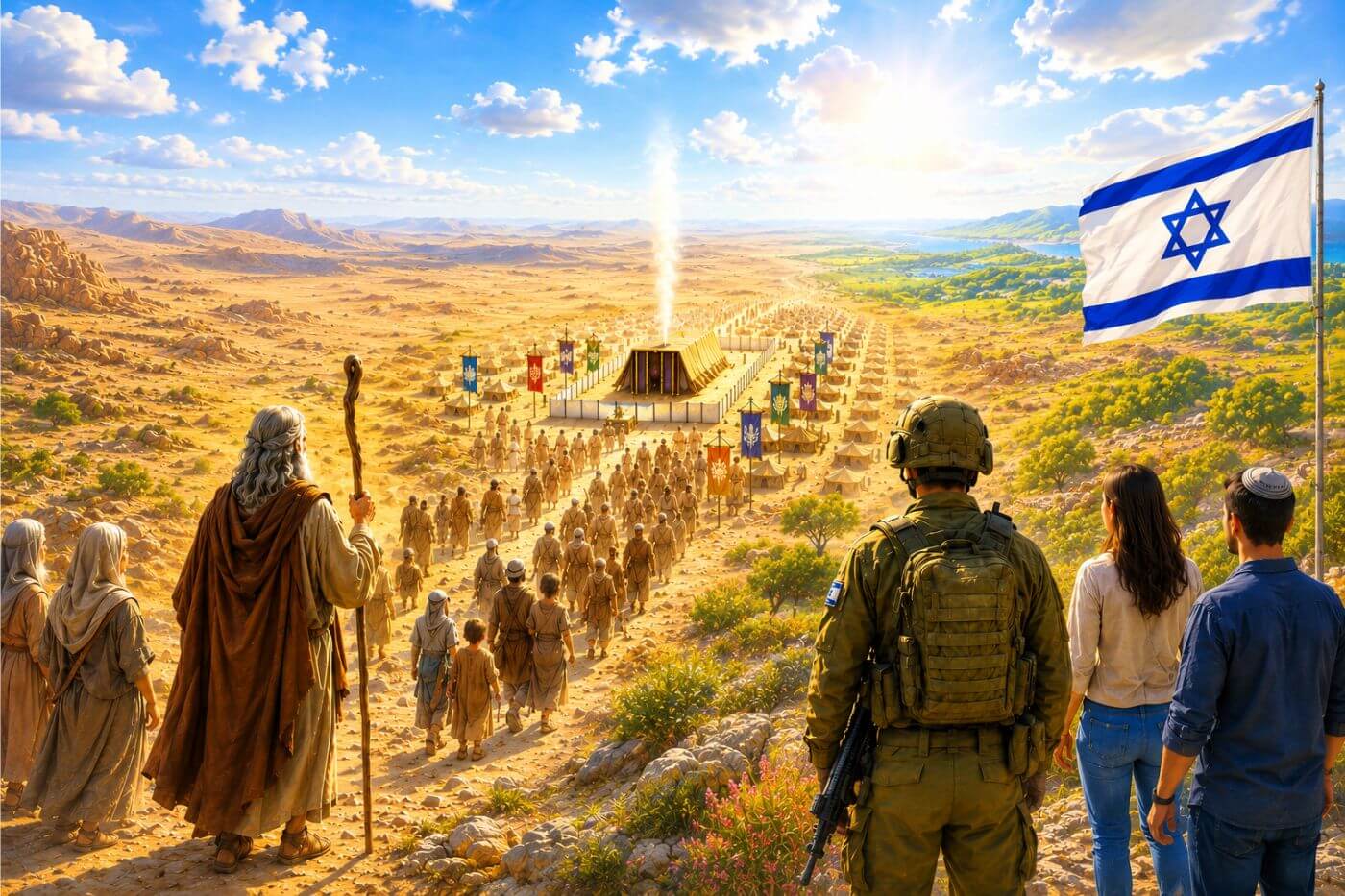
At the opening of Sefer Bamidbar, which we begin reading this week, the Israelite camp appears almost idyllic in its order and structure. Every tribe is carefully counted and assigned its precise place around the Mishkan. Each marches beneath its own banner, guided by clear leadership, direction, and purpose. The camp is arranged with remarkable symmetry, radiating outward from the Divine Presence at its center. At first glance, it seems that the newly freed slaves have successfully transformed themselves into a disciplined and unified nation confidently preparing for its journey to the Promised Land.
Yet this atmosphere quickly begins to unravel.
Beneath the external order lies deep anxiety and instability, and before long the complaints begin to erupt. The people grumble about food and water, rebel against Moses and Aaron, nostalgically long for Egypt, and repeatedly lose faith in the journey ahead. The carefully organized camp gradually descends into tension, division, and chaos.
Sefer Bamidbar thus reveals that the path from exile to nationhood was never smooth or certain. It passed through fear, internal conflict, military threats, political struggles, and moments when the future appeared frighteningly unclear. Yet despite all this, the people continued marching forward.
Israel today finds itself in a remarkably similar moment.
After two thousand years of exile, the Jewish people have returned to their ancestral homeland and reentered the stage of history as a sovereign nation. Yet the journey remains far from complete.
Although there is currently a temporary ceasefire, nobody truly knows whether it will endure. Hamas remains standing in Gaza. Hezbollah continues to threaten the north. Iran and its regional proxies continue to cast a shadow over the entire Middle East. Israelis live with the constant awareness that the country could once again find itself fighting a devastating war on multiple fronts at any moment.
At the same time, the nation faces profound political uncertainty. Elections appear to be approaching, yet no one knows precisely when they will take place or what direction the country will choose afterward. Many Israelis view these elections as among the most consequential in the nation’s history because the issues at stake touch nearly every dimension of Israeli society: security, international relations, the relationship between religion and state, military service, the economy, education, and the character of Israeli democracy itself.
In many ways, we too are still journeying through the wilderness.
Sefer Bamidbar teaches that a nation cannot wait for complete certainty before moving forward. Just as the Israelites continued marching, building, struggling, and persevering even when they could not clearly see the destination ahead, so too must Israel today continue defending itself, rebuilding itself, and striving for unity and purpose even amid uncertainty and fear.
Like our ancestors in the desert, we cannot yet fully see the final destination. And, like them, we must continue the journey forward.
Shabbat Shalom.
–
For an abridged video version of these parasha thoughts: https://youtu.be/gV1ExOVzpVY\
For more articles, or to sign up for my newsletter, visit my website: https://davidharbater.com/
Related Topics
Related Posts