Barrels and Dollars
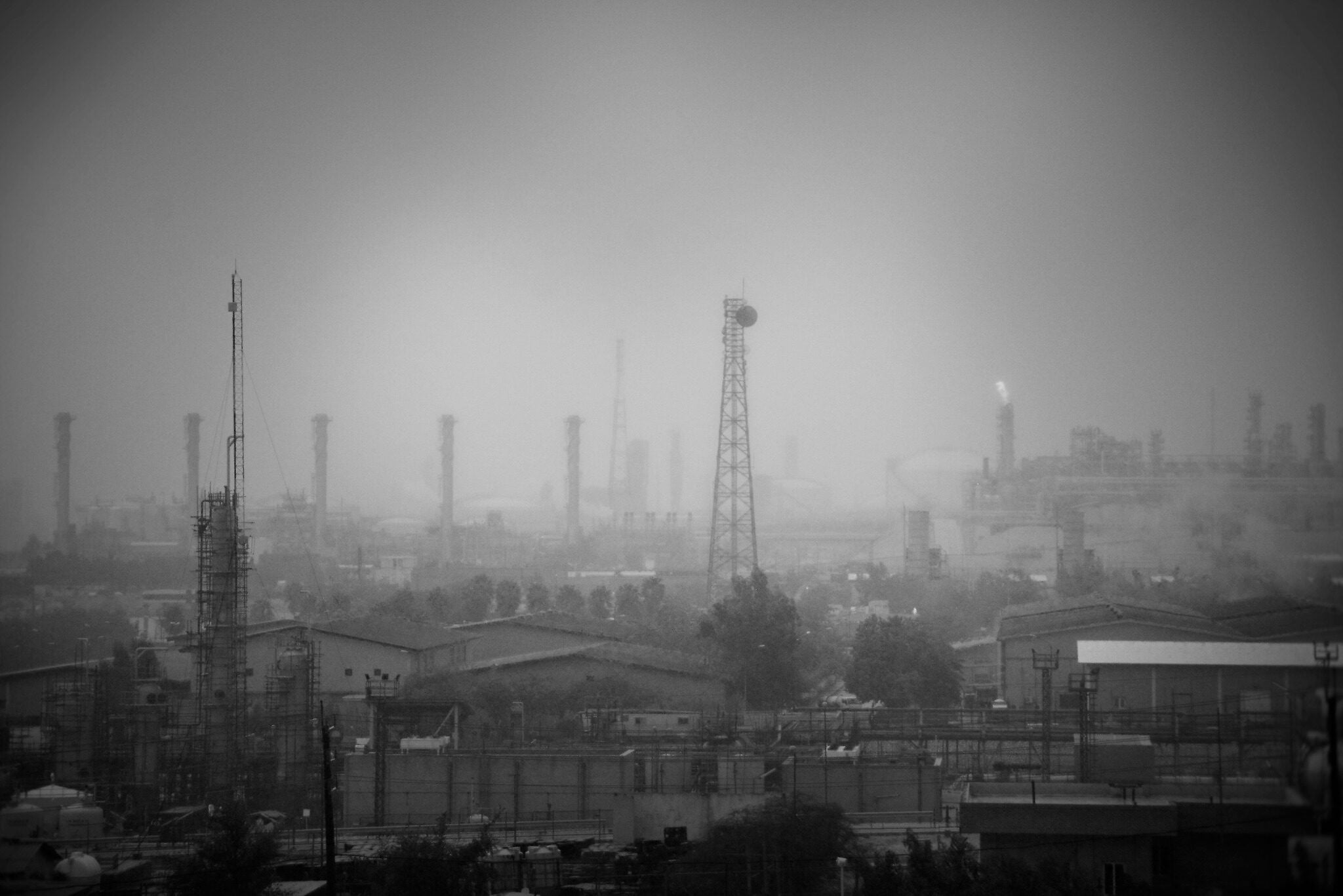
How are banks misled about dubious customers? When Iranian nationals struggled to open foreign companies and bank accounts by regular means, they turned to Caribbean citizenship by investment. This phenomenon is not a fantastical scenario; it is one consistently executed by Iranian sanctions evaders. Opal Exchange, an exchange house prolific in helping Iran evade financial sanctions, is run by Pedram Pirouzan and Hossein Mohammad Rezaei, both of whom hid their Iranian citizenship by registering Opal’s front companies under their Dominican nationality. These companies exist for only one purpose: to collect and move illicit oil revenue for Tehran. Following the money trail shows why the Trump administration has started going after the banks themselves.
As of April 2025, Iran exported about 1.6 million barrels of petroleum a day, roughly 584 million barrels a year. Iran sells this oil below market price, mostly to China, and more specifically to small independent “teapot” refineries. Some of these teapots have ties to the US financial system, giving Washington leverage over them. The proceeds fund the regime’s military: FinCEN projected that by the end of 2025, more than half of Iran’s oil revenue would be allocated to its armed forces, including the Islamic Revolutionary Guard Corps’ Quds Force, which the United States designates a terrorist organization. Selling the oil is easy. Getting paid without a bank noticing is harder.
When observed more closely, Iranian oil undergoes a very different process from normal oil exports. Instead of tankers with clear ownership and registration, Iran uses a “shadow” fleet with opaque ownership structures and deceptive tactics. To hide the oil’s origin, the shadow fleet carries out ship-to-ship transfers at sea off the South China Sea, and the cargo is then relabeled “Malaysian blend,” even though Malaysia itself produces little oil. Chinese refiners primarily settle these purchases in yuan, keeping the payment outside the US financial system. The payment does not go directly to Iran but to a shadow banking network made up of foreign front companies and exchange houses, which is essential to the regime’s money laundering and sanctions evasion. The front companies are typically registered in third countries, most commonly Hong Kong and the UAE. They are usually recently incorporated, have little web presence and move large sums. Opal Exchange controls an extensive network of such companies, 13 of which the US Treasury named in May 2026. For a sense of scale, Treasury says Iranian exchange houses facilitate billions of dollars in foreign currency transactions each year. Because front company accounts can both receive and send payments, the money never needs to be repatriated to Iran: Iran gets paid for its oil and pays for products, including weapons components, entirely abroad. Each front company can also transact for multiple sanctioned entities, which makes the money trail even harder to follow.
The US’s strategy towards these evasions has been a mixed bag. Between February 2025 and May 2026, the US sanctioned more than 1,000 Iran-related targets. These include persons, vessels, and aircraft. On 1 May 2026, the US Treasury named Opal Exchange on its sanctions list, along with its owners. However, designations alone cannot hold back the network: new front companies can be formed after a previous one is blacklisted. One exchange house in Iran runs multiple front companies; therefore, removing one piece from the puzzle will not prevent an exchange house from continuing. While the US has seized ships during the blockade against Iran, the US has also previously seized the “Skipper” in December 2025. The reasons given for the seizure were the tanker’s links to the IRGC, as well as the fact that it was flying a false Guyanese flag at the moment of seizure, which made it stateless. Still, before the blockade, very few sanctioned ships were seized: the US had sanctioned over 350 vessels by mid-2025, yet only a handful have actually been stopped, because the administrative and legal process takes a long time.
Every front company needs a bank account, and the UAE’s banks, Dubai’s specifically, have long held Iranian-linked deposits. Iran’s Bank Melli has operated in the UAE since 1969, before the country was established. A US Treasury Financial Crimes Enforcement Network study, cited by the Wall Street Journal, found Dubai-based companies moved $6.4 billion in potential Iranian shadow-banking funds in 2024, accounting for 71% of the global total identified. On 19th of August 2026, the UAE officially suspended all trade and financial transactions with Iran after renewed missile fire from it. On 24 August, the Treasury launched Operation Economic Outcast. The operation aims to sever the remaining financial lifelines that sustain the regime; its first action targeted nearly 60 individuals, entities and vessels accused of Iran links. Going a step further, the US Treasury proposed cutting Banque Misr’s UAE branches off from US banks, after identifying 103 potential Iranian front companies with accounts there. UAE officials opened an urgent examination of the branches, and weeks later, the National Bank of Egypt stepped in to acquire them. However, the enforcement of the UAE’s suspension has remained in question: it took until 23 September for the UAE central bank to ban Bank Melli’s branches from transactions with Iran. Even if the UAE does completely cut off Iran’s access to its markets, potential alternatives remain in Turkey, China, and Oman.
How are banks misled about dubious customers? Often, transactions look ordinary, even if executed by front companies or sanctioned personnel. For example, a compliance officer in Dubai considers the red flags published by the US Treasury. They may receive a payment with incomplete information regarding the source of funds, from a recently incorporated Hong Kong company banking through a Chinese non-resident account. Until Banque Misr, missing those signs was not taken as seriously as it is now. Enough mistakes, and a bank may lose access to the dollar and the wider financial network of the world. That is why the fight over Iran’s oil money has moved from the ships to the banks.
Works Cited:
“The Central Bank Imposes Strict Sanctions on the Branches of Bank Melli Iran Operating in the United Arab Emirates.” Central Bank of the UAE, 23 Sept. 2026, centralbank.ae/media/vq0htmbi/the-central-bank-imposes-strict-sanctions-on-the-branches-of-bank-melli-iran-operating-in-the-united-arab-emirates.pdf.
“Economic Fury Targets Iranian Shadow Banking Networks Moving Billions in Foreign Currency.” U.S. Department of the Treasury, 1 May 2026. GlobalSecurity.org, www.globalsecurity.org/wmd/library/news/iran/2026/05/iran-260501-treasury01.htm.
“Egypt’s NBE Gains Preliminary Approval to Acquire Banque Misr’s UAE Operations.” Reuters, 22 Sept. 2026, www.reuters.com/world/middle-east/egypts-nbe-gains-preliminary-approval-acquire-banque-misrs-uae-operations-2026-09-22/.
FinCEN Advisory on the Iranian Regime’s Illicit Oil Smuggling Activities, Shadow Banking Networks, and Weapons Procurement Efforts. Advisory FIN-2025-A002, Financial Crimes Enforcement Network, 6 June 2025, www.fincen.gov/system/files/advisory/2025-06-06/FinCEN-Advisory-Illicit-Oil-Smuggling-508.pdf.
“Iranian Banks and Businesses Remain Open in Dubai despite Trump’s D-Day – WSJ.” Iran International, 28 Aug. 2026, www.iranintl.com/en/202608285585.
“Treasury Launches Unprecedented Campaign Against Iranian Regime on Economic D-Day.” U.S. Department of the Treasury, 24 Aug. 2026, home.treasury.gov/news/press-releases/sb0613.
“United Arab Emirates Suspends Trade with Iran after Coming under Renewed Missile Fire.” AP News, 19 Aug. 2026, apnews.com/article/iran-united-arab-emirates-trade-august-19-2026-47c95fe382c49289ab0419310b6d8057.
“United States Seeks Forfeiture of Oil Tanker and 1.8M Barrels of Crude Oil That Supported Iran and Venezuela.” Office of Public Affairs, U.S. Department of Justice, 27 Feb. 2026, www.justice.gov/opa/pr/united-states-seeks-forfeiture-oil-tanker-and-18m-barrels-crude-oil-supported-iran-and.