Between the Siren and the Coffee Cup
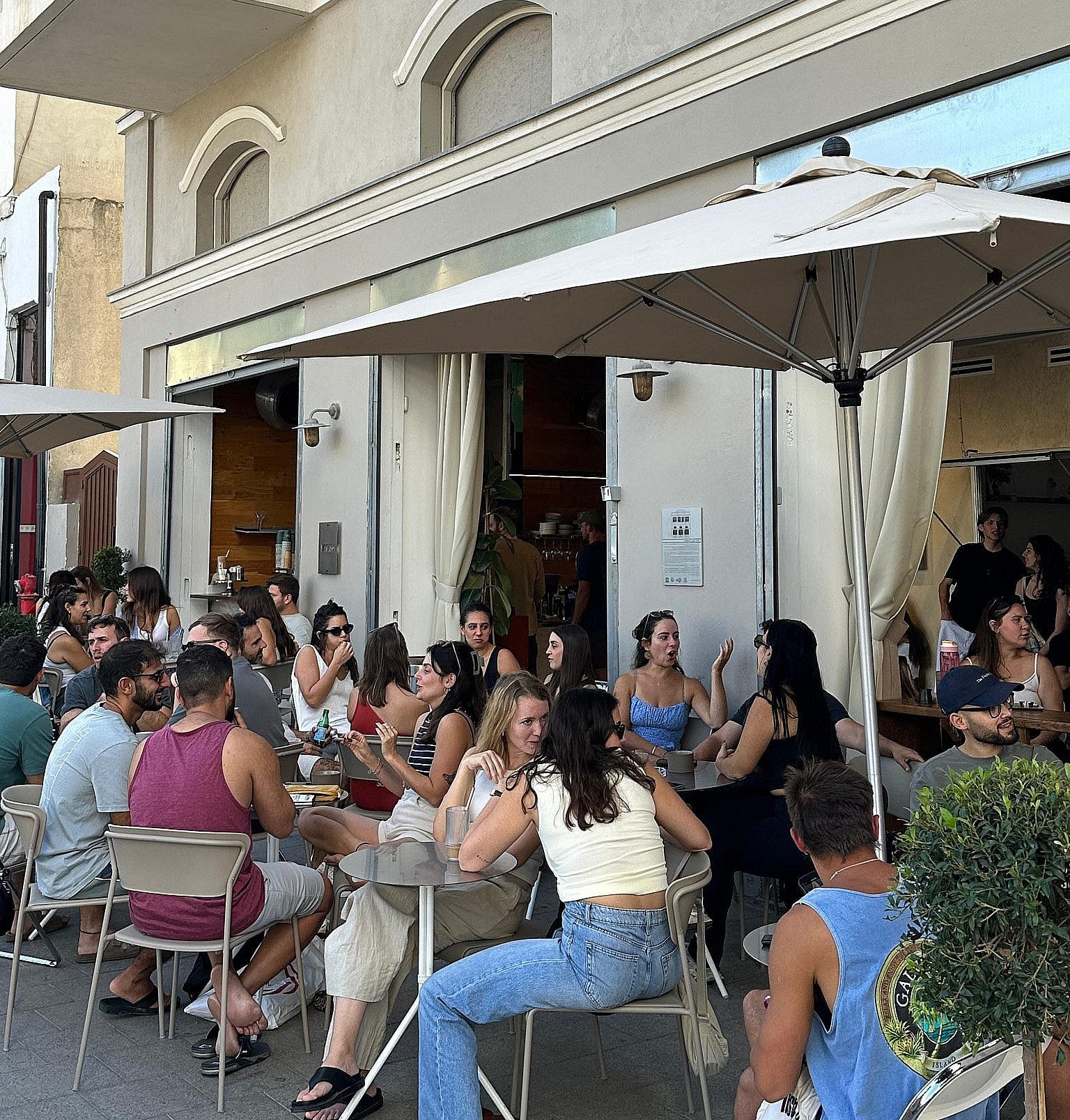
Broken hearts and broken buildings, yet cafe culture in Tel Aviv is still booming. I’ve always admired Israelis’ tough skin, though stubborn at times, their resilience during crisis astonishes me. “A shelter is located nearby,” casually reads the Instagram caption of my favorite Tel Aviv cafe, recently rebuilt after a missile strike, advertising their pastries and operating hours as if it were just another day. Right beyond its outdoor seating lies a stretch of rubble, serving as a constant reminder of war. And still, people are encouraged to come, to sit, to stay, to enjoy. Nothing seems to stop Tel Avivians from reaching for some sense of normalcy.
I ask myself how we got here. Israel is built upon the weight, and in many ways, the unity, of generational trauma. With the very existence of the nation bound to the Holocaust, decades of war, and October 7, 2023, psychological terror has seared itself into the collective memory of Israelis, repeating and rarely allowing its citizens to catch their breath.
I spent two years living and studying Psychology in Tel Aviv through the Tel Aviv University-Columbia University dual degree program, present as the war unfolded, watching the city absorb what seemed unabsorbable. And what I kept returning to were the cafes.
In Tel Aviv, the cafe is not a simple grab-and-go activity. Sitting at one becomes a way of maintaining structure when structure is constantly threatened. It becomes normal that cafes stay open during ballistic missiles, that the presence of a shelter is mentioned alongside menu items, and that after a siren, people return, resuming exactly where they left off. The war does not disappear, but it does not fully disrupt either. Instead, it is absorbed into the rhythm of daily life, folded in so seamlessly that the boundary between crisis and routine begins to blur.
Walking through Tel Aviv, watching people laugh and talk as though everything were okay, I once interpreted this as collective denial. How do you sit with coffee just feet from destruction? But the longer I sat in those same spaces, I realized that people are not unaware. The awareness is constant, Israel is small, everyone knows everyone, but it doesn’t demand direct confrontation at every moment. Instead, vulnerability surfaces elsewhere, quietly, in the act of simply showing up.
This is where escapism offers some insight, understood not as avoidance, but as a natural psychological impulse to seek relief when reality becomes too much to hold all at once. And yet calling this purely escapism feels insufficient, because nothing is fully left behind. The shelter remains nearby, and the possibility of interruption is always present.
These cafes function instead as what sociologist Ray Oldenburg called a “third place,” neither fully private nor fully public, with open layouts, large windows, and seating that spills onto the street, where you can be alone and together at the same time. This past year, when missiles sent Israelis into bomb shelters, some opened free pop-up coffee shops underground, choosing connection even there. The third place, it turns out, goes wherever the people go.
For those of us in the diaspora who love Israel and its people, there is a temptation to reach for the clean narrative, the one where Israelis are simply strong, simply resilient, simply okay. But what I witnessed was something more complicated: people moving through an ongoing reality in whatever ways are available to them, finding moments of connection and temporary stability in spaces that let them hold everything without having to resolve it.
They are not just resilient. They are human, fragile, uncertain, taking it day by day, not knowing if tomorrow a friend will come home from the army. And that, to me, is the more powerful version of resilience: not the brave face, but the willingness to show up anyway, to let the cafe hold what you cannot, to be both fragile and together at the same time.
Because in Tel Aviv, sitting in a cafe is never just about coffee. It is about continuing. And it asks us, those watching from a distance, to make room for a resilience that doesn’t erase the fear, but one where the strength and the vulnerability exist together, and both get a seat at the table.