
Can You Drown in Blessings?
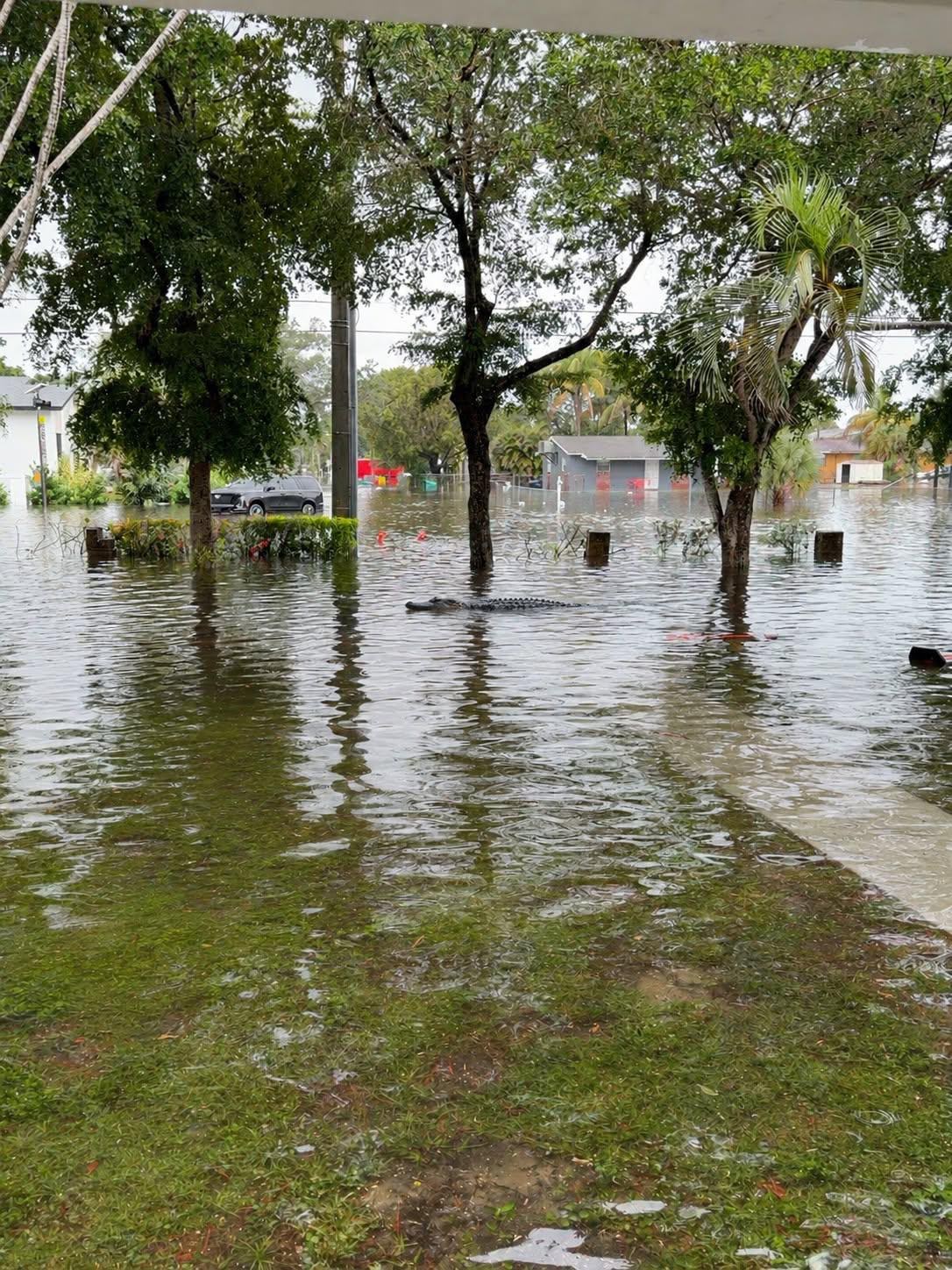
This week, rain brought much of South Florida to a standstill. Broward County public schools closed for 3 days, and many roads and highways flooded, leaving people I know personally stranded in their cars for hours.
Seeing flooded homes and the collapsed roof of a synagogue in Hollywood was heartbreaking. For people facing damaged property and disrupted lives, this was far more than an inconvenient rainy few days.
So, I was thinking. We know that rain is a blessing. We pray for it, depend on it, and recognize that without it, nothing grows.
But can there be too much blessing? Can we ever have too much of a good thing?
This week gave us a very wet answer. Once the ground is saturated and the water has nowhere to go, the rain that should sustain life becomes overwhelming and destructive.
Of course, the danger of too much rain depends on more than just how much rain falls. It also depends on our ability to absorb it, drain it, and move the excess water along.
Coral Springs is a master-planned city, and our canals, underground drainage pipes, and pumping stations are designed to carry excess rainwater toward the ocean.
At our Chabad center, we must also have our parking lot drains cleaned and certified every five years. Because even a drain that once worked beautifully can become clogged with leaves and debris. So the city makes sure that our drainage system remains clear and open before the next downpour arrives.
I found myself thinking about how much this applies to the blessings in our own lives. We spend so much time asking G-d to send us blessings, but how much care do we give to our ability to handle them?
We ask for success, a growing family, more business opportunities, and a flourishing financial portfolio. But without the right systems in place, those very blessings can flood our schedules, inundate our thoughts, and leave us struggling to keep our heads above water.
This explains Yaakov’s seemingly incomprehensible request in this week’s Torah reading. After he leaves his parents’ home, he dreams of a ladder stretching from earth to heaven and receives an extraordinary promise from G-d.
“Your descendants shall be as the dust of the earth… All the families of the earth shall bless themselves by you and your descendants. Behold, I am with you, and I will guard you wherever you go… I will not leave you until I have done what I have promised you.” (Gen. 28:14-15).
What greater assurance could anyone ask for? G-d has clearly promised to constantly be at Jacob’s side and protect him in all that he does!
And yet, when Yaakov awakens, his prayer seems so much smaller. He asks G-d for protection on his journey, “bread to eat and clothing to wear”, and a peaceful return back home. (Gen. 28:20–21)
Hadn’t G-d already promised to take care of him? To make him a great and numerous nation? What is he so worried about?
And why is his request so seemingly simple, specifying that he wants nothing more than bread “to eat” and clothing “to wear”? What else was he planning to do with them?
I once heard a beautiful explanation. Yaakov was concerned that the amazing and powerful blessings he had just received from G-d could overwhelm him.
He was about to enter a world of business, ambition, and material success. He would earn a living, provide for a growing family, and deal with his dishonest uncle Lavan. And now G-d had promised to protect him in all those dealings, ensuring his success.
But would his work begin to occupy so much space in his head that he would forget who he was and what he was working for? Would the blessing of success completely overwhelm him?
He wanted to come home with his connection to G-d as whole and pure as it was now. He wanted to make sure the Yaakov who returned would be the same Yaakov who had left.
So he prayed for bread “to eat” and clothing “to wear”. He prayed that despite making lots of money, bread would always only be something to eat at dinner. That clothing should just be something to wear.
He prayed that his work and money would support his life without taking over his life.
I think many of us understand that concern. We work hard to provide for our families, but sometimes we become so consumed by our responsibilities that our families only receive whatever energy is left after our job has taken everything else.
The business becomes more successful, and suddenly there is less peace of mind. We have more places to go, more decisions to make, more people depending on us, so our thoughts remain at the office long after we have come home.
Our blessings have overflowed their banks and flooded our gardens, turning the grass to a swamp of mud. We sit at dinner, but mentally we are still answering emails, solving problems, and worrying about tomorrow.
Yaakov was praying to be able to enjoy the blessings G-d would give him, and use them properly, to support a meaningful Jewish life.
This also helps us understand something unusual Yaakov does before going to sleep. He gathers stones and places them around his head, which Rashi explains was to protect him from wild animals.
The Rebbe asks a simple, yet powerful question. Why only around his head? Were his arms and legs somehow safe from the animals, that they didn’t need protection?
And if he trusted G-d to protect him in his sleep, why did he need any stones?
The Rebbe explains the deeper message. Yaakov was preparing to enter the working world, where his hands would work, and his feet would be busy all day taking him where he needed to go.
What concerned him was his head. He was afraid his mind would become consumed by his business. What he needed was protection to ensure he remained connected to Torah, to prayer, and to the purpose of life.
He was ready to be deeply involved in earning a living. But only without allowing it to become his entire identity.
He wanted the blessings to nourish his life without drowning his soul.
We need those protective stones, too. We need canals and systems that help us absorb our blessings in a healthy way, with ways to release the pressure and pump out the stress that builds around these blessings.
A regular Torah class helps us remember what matters. Dedicating time for prayer each day reminds us who is really running the world, and a Shabbat table with no technology gives our families our undivided attention while business waits.
And just like the drains in our parking lot, these commitments need to be regularly maintained and inspected to ensure they are clear of debris. Are we still making time for spiritual self-care, or have those canals become clogged by our busyness?
Because if we not emotionally centered and spiritually prepared, we might suddenly find ourselves drowning in a non-stop rainstorm of challenges, and in a flood of blessings carrying us away from home and from who we are.
So may G-d bless us generously, as He blessed Yaakov, with health, family, happiness, and prosperity.
And may we make sure our heads stay protected and our drains stay clear, so those blessings nourish a beautiful, flourishing garden in our lives.
Good Shabbos!
Rabbi Yankie & Chana Denburg