Childhood in a death row prison ward
Five men from one Isfahan protest case have been hanged since July, two of them in public before the morning call to prayer. Seven are waiting, and nobody I asked could name one of them.
“Every night, as we lay down to sleep, we knew that for someone among us, it might be the last night of their life.
“Before dawn, the loudspeakers would erupt with the morning call to prayer—’Allahu Akbar’—and almost immediately, the silence would be ripped apart by bursts of machine-gun fire. We would wake with a start, our hearts pounding, listening to the volleys. Then came the final shots: isolated, deliberate, unmistakable.
“It happened again and again, morning after morning, until dawn itself became inseparable from the sound of death.”
A woman I have known for years wrote that. She spent part of her school years in an Iranian prison. That was the 1980s.
“Because ours was what they called a ‘temporary ward,’ prisoners were often transferred there from other prisons on the night before they were to be executed. Some were brought to spend their final hours among us before being raped and then taken away to face the firing squad at daybreak.
“And perhaps one of the hardest things to comprehend is how young we were. I was not the only one. Most of us were barely sixteen or seventeen years old, and some were even younger. One of my fellow prisoners was only fifteen when she was sentenced to fifteen years in prison.
“We were still children, yet we were being forced to live with rape, executions, gunfire, and the constant fear that the next name called might be our own.”
Forty years later the hour has not changed. On the morning of July 18, guards at Dastgerd prison in Isfahan told twelve young men, all sentenced to death in one case, that they were being taken to see the judge. Before the next dawn two of them were hanged inside the prison: Erfan Esfandiari, reportedly eighteen, and Gol Mohammad Mohammadi, an Afghan of 23. Ten days later the judiciary built a stage in Alikhani Square, where the protest had been, and hanged Abolfazl Sepahi, 23, and Amirhossein Safari, not yet thirty, before the morning azan. Several hundred people came and booed the police. On August 20, again at dawn, again inside the prison, they hanged Mohammadi’s cousin, Ghaem Hosseini. Seven are waiting.
Iran Human Rights in Oslo has confirmed 532 executions this year and holds five hundred more reports it could not confirm. Reporting an execution can itself be a crime. We do not know how many deaths go unreported.
At the end of August, in a second Isfahan case, the Revolutionary Court sentenced Taraneh Rahimi, 20, to death alongside nine men. Leila Abolhasani, 43, a beautician and mother of two, is under a death sentence for photographing a burning supermarket on January 8. Her appeal is at the Supreme Court.
I am not going to argue that the Alikhani men were innocent. Nobody outside that courtroom can know. State media say they killed four members of the security forces on January 8. That sentence is all anyone will ever be permitted to know: one closed hearing for twelve men, confessions of the kind the UN says were coerced and broadcast, the rope within months. Relatives told ABC News their sons were tortured for days into confessing and were refused lawyers of their choosing. They asked not to be named, to spare the men more pressure on death row. And the same authorities are the only source for who the dead were. In January the UN rapporteur reported that families were being told to pay the equivalent of five to seven thousand dollars to recover a body, or to sign that their dead had been Basij killed by rioters. A year’s wages for your son, or your signature under the lie that he was one of them.
From a war you can run. Millions did, from Syria, from Ukraine, and the world had a word for them and a form to fill in. From a cell in Dastgerd there is no border to reach. There is a summons to the prison for a visit, and by now every family in the Alikhani case knows what the summons means.
I asked the people I know who follow Iran most closely, in Israel, Germany and the United States, whether they could name one person hanged in Iran this year. All of them had heard of the executions. One man’s first thought was that the regime had outplayed Trump. Another gave me a death toll for January, thirty to fifty thousand by his estimate, and could not give me one name. A third said the only place he sees any of it is my own posts. A fourth remembered that a young woman had been executed recently. Not her name. Nobody could name one.
Iranians are not silent. Within a day of the Isfahan hangings a petition against the death penalty gathered about half a million signatures on Instagram alone, and the state summoned close to a hundred artists and public figures for posting against it. In July fifteen hundred men on death row in Ghezel Hesar refused food; some sewed their lips shut. The silence is ours.
Three weeks ago Shahin Najafi and Saghar released a track called Grave. The voice in it is a father’s. He sings his dead son to sleep and offers him the wedding he never had. “I’ll throw your wedding celebration, my son — are you awake? Hush now, Daddy’s darling, sleeping in your own blood. There’s an ocean of tears inside my head.” The wedding is the hejleh, the decorated chamber set up in the street for a young man who dies unmarried; in the 1980s the Islamic Republic made it an instrument of state, the martyr’s wedding, for the teenage boys it sent to the Iraqi front. Najafi sings that liturgy back over the men the state now murders. The song ends with the dead asking to be mourned with joy, and asking that their killers not be forgiven. “They took her life and called it order. Every bullet will feed this flame. You call it hopeless, still we won’t break.” Iranians hear in it the mothers who dance at their sons’ graves, because the state does not get to own the mourning too.
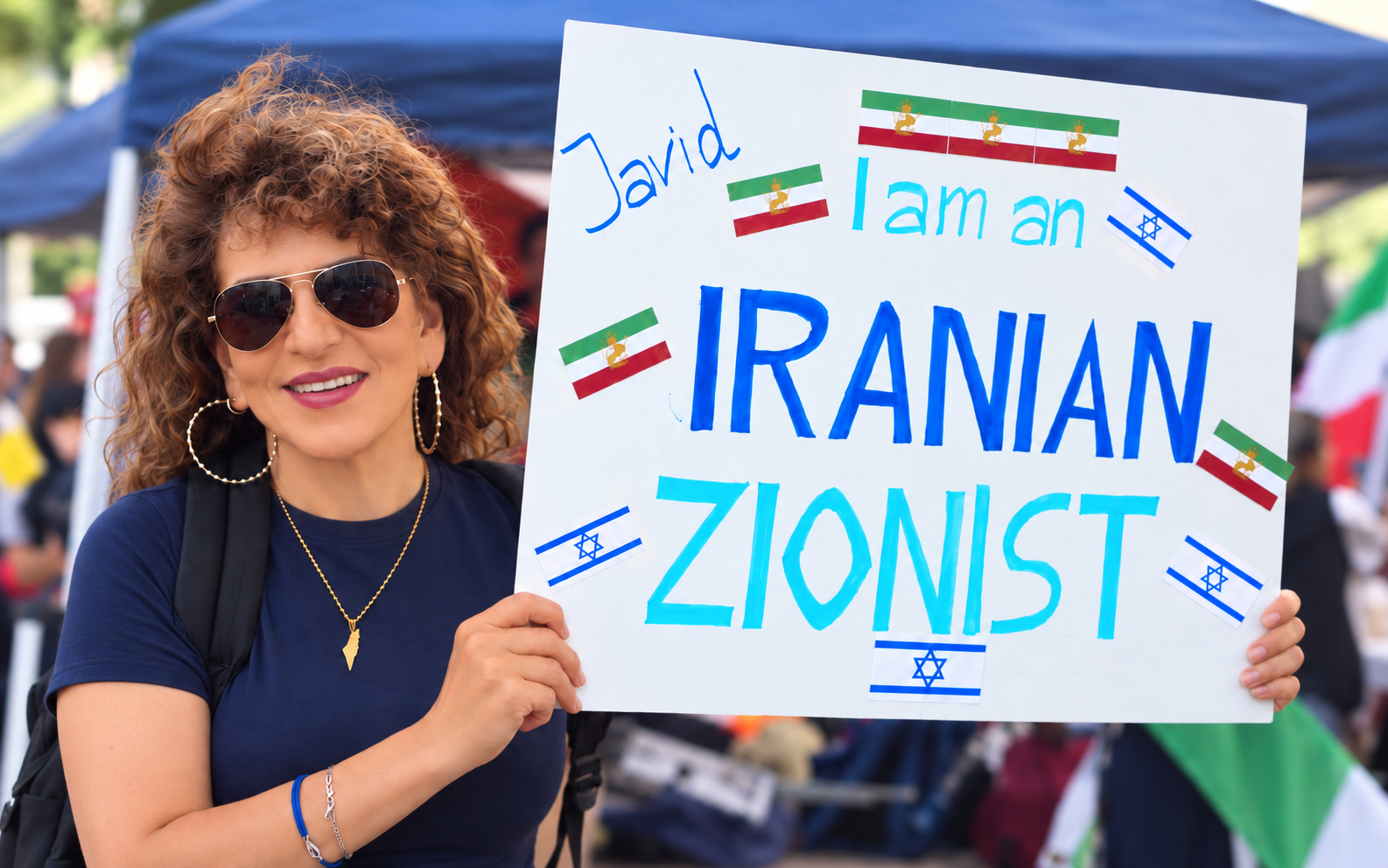
Israelis have a particular reason to look. More than a dozen of this year’s executions were for spying for Israel; Kurds and Baluch were among the hanged. And every Saturday in Stuttgart a few dozen Iranians stand with their flag beside an Israeli one. On Saturday a man from the crowd tried to urinate on it, and a woman holding a sign that read I am an Iranian Zionist was spat at and filmed for hours. That was one afternoon. The demonstration lasts ninety minutes; in ninety minutes the insults run into the dozens, and they do every week. None of them is Jewish. They have stood there every Saturday for years.
In her ward the rape came the night before the firing squad. By 2009 it no longer waited for a sentence. Afshon Ostovar, in Vanguard of the Imam, his history of the Revolutionary Guards, records what came out of the IRGC’s Kahrizak detention center that summer: a fifteen-year-old boy raped in front of the other detainees by guards who told him they were doing this for G-d, then bound and raped again after he reported it to his interrogator, so that he would learn not to tell such tales anywhere else. A former Basij member told Channel 4 News that the rape of detainees was permitted to Guards and Basij as a gift for their part in putting down the protests. When he objected, his commander told him this was Fath al-Moin, aid to victory: “It’s a worthy deed. There’s nothing wrong with it.” In 2024 the UN fact-finding mission found that the rape of detainees in 2022 rose to a crime against humanity; in January it said the evidence from this year’s crackdown includes sexual violence again. The state has a theology for what its men do. I have no right to tell Iranians what should replace this regime. Neither does Washington.
She also wrote:
“So many years have passed, yet the innocent faces of my fellow prisoners have never left me. I can still see them as clearly as if they were standing before me now. And the sound of those machine-gun bursts has never truly faded from my ears.
“Each morning, as ‘Allahu Akbar’ thundered from the loudspeakers and the gunfire began, I would picture the bodies of my fellow prisoners lying soaked in blood somewhere beyond the walls.
“And beneath all of it was another kind of terror: the waiting.
“None of us knew whose turn would come next. None of us knew whether, the following night, it would be one of us who would be taken away.
“We went to sleep each night carrying that question with us, never knowing whether the next dawn would bring another morning—or our own death.”
Tomorrow the azan will sound in Isfahan before sunrise. Iranians online have started calling it the death song. Seven men in Dastgerd are waiting for it.
P.S. Put the subtitles on.