
Exploring Jewish heritage through global travel and culture
Dragør: The Little Fishing Village That Helped Save a Nation’s Jews
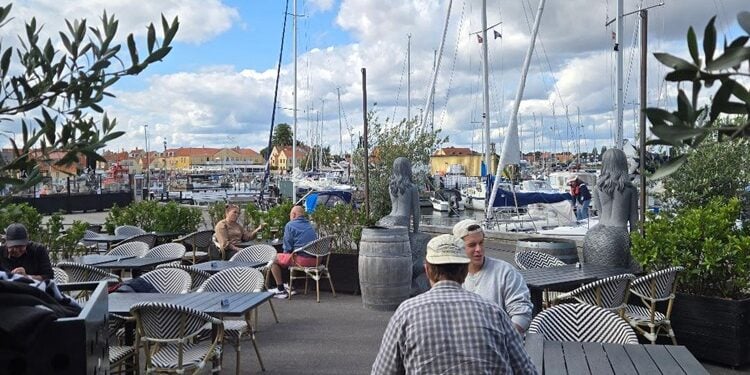
The picturesque village of Dragør, Denmark. Photo: New York Jewish Travel Guide.
There are places where history is impossible to miss. It stands in monumental buildings, fills museum galleries, and announces itself through plaques and memorials. And then there are places like Dragør, a beautiful fishing village just outside Copenhagen, where history seems almost hidden beneath colorful houses, cobblestone lanes, fishing boats, and a peaceful harbor facing Sweden.
It is precisely that contrast that makes Dragør so compelling.
Today, the village feels serene. Visitors stroll along the waterfront, boats rest quietly in the harbor, and the atmosphere is that of a traditional Danish seaside community. Yet in October 1943, this same coastline became part of one of the most remarkable rescue stories of the Holocaust.
During our Jewish Heritage journey through Denmark, we came to Dragør to learn how this small fishing community became one of the departure points for Danish Jews desperately seeking refuge in neutral Sweden. Our Jewish guide, Pia Litwar, led us through the village, gradually revealing a story of courage, uncertainty, sacrifice, and the extraordinary choices made by ordinary people.
October 1943: The Rescue
The story begins in the autumn of 1943, when Denmark’s Jewish population suddenly found itself in danger.
When plans to arrest and deport the country’s Jews became known, warnings spread quickly. Danish Jews were hidden in private homes, churches, hospitals, and other places of refuge. Resistance networks helped organize escape routes, while along Denmark’s coastline, fishermen began preparing their boats for journeys that had nothing to do with fishing.
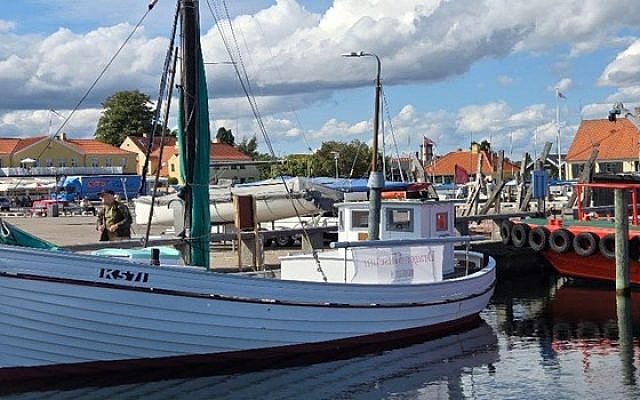
The destination was Sweden.
Across the Øresund, the country offered safety. But reaching it meant crossing dangerous waters while Nazi forces searched for Jews attempting to escape.
Dragør became one of the places from which those desperate journeys began.
As Pia explained, approximately 700 Jewish refugees are estimated to have escaped from Dragør, representing roughly one-tenth of the Danish Jews who reached Sweden.
Standing beside the harbor, that number takes on a different meaning. Families arriving here did not know what would happen next. They were leaving behind homes and possessions and placing their trust in fishermen willing to take them across the water.
The danger was very real. On October 4, German forces carried out a raid in Dragør, and Jewish refugees heading toward the harbor were intercepted. Warning shots alerted others in the town, forcing those involved in the escape effort to hide and temporarily clear the harbor of rescue activity.
The Fishermen Who Risked Everything
The rescue of Denmark’s Jews is often remembered as a national story, but in Dragør, the history becomes intensely personal.
Pia told us about Captain Einar Larsen, skipper of the Elisabeth K571, whose story illustrates the courage of the fishermen who transformed their working boats into vessels of escape.
Larsen and his brother helped transport approximately 70 Jewish refugees across the Øresund. According to Pia, they also transported English paratroopers who had come down in Denmark.
Eventually, the danger became so great that Larsen himself had to flee to Sweden in 1944.
These were not soldiers protected by an army. They were fishermen, brothers, neighbors, and members of a local community who made decisions that could put their own lives in jeopardy.
And not everyone in Dragør supported the rescue. Pia reminded us that some people supported the Germans. Those hiding and transporting Jews therefore could not always know whom they could trust.
That uncertainty makes their courage even more remarkable.
The Elisabeth K571: A Boat That Became a Lifeline
Our journey through Dragør eventually brought us face to face with the Elisabeth K571.
There is something different about encountering history in the form of an actual object that was there.
Standing beside the weathered wooden fishing boat, I found myself looking at the deck and rails differently. It was easy to imagine frightened families stepping aboard in the darkness, perhaps carrying only a small bag or whatever possessions they could take with them.
For them, this was not a museum boat.
It was their possible passage to freedom.
Today, Elisabeth belongs to the museum and remains a tangible connection to those extraordinary wartime journeys. It is a modest fishing cutter that, during those dangerous months, became a lifeline—hope afloat.
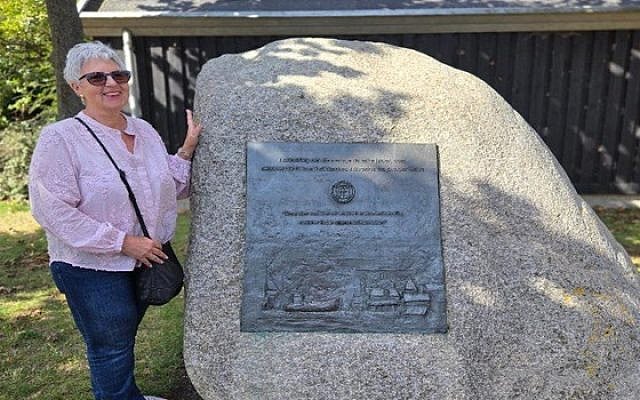
A Nine-Ton Stone Becomes a Memorial
From the harbor, our walk continued toward the coast and a memorial overlooking the beach and sea.
Here Pia told us another story that seemed almost symbolic of Dragør itself.
A massive nine-ton stone was discovered when workers were digging on the beach. Normally, a stone like this might have been crushed and used for pathways. But because of its extraordinary size, the community decided it deserved another purpose.
It would become a memorial.
The mayor commissioned a local artist to create a monument commemorating the Danish Jews who came to safety in Sweden from this harbor in October 1943.
The memorial incorporates a powerful Jewish teaching associated with the Talmud: saving a single human life is like saving an entire world.
Standing before the enormous stone, the words seem especially fitting.
The rescue was not about statistics. It was about individual people. Every person who reached Sweden carried a story, a family, a history, and a future. Hundreds of those worlds passed through Dragør.
A Name in the Pavement
Our walk eventually brought us near the former home of Vilhelmine Nelson, a non-Jewish woman who, according to the story shared by Pia, sheltered and helped save at least 50 Jews.
There, almost hidden beneath the ordinary rhythm of the street, is a Stolperstein, or “stumbling stone,” embedded in the pavement in her memory.
Pia explained that the stone was installed the previous year by the mayor in recognition of Nelson’s actions during the rescue.
It is a remarkably modest memorial. There is no imposing monument demanding attention. You can walk past it without noticing.
You must look down.
And that seems appropriate. The rescue was ultimately a story of individuals—people who acted quietly, often without knowing whether anyone would ever remember what they had done.
The Stolperstein ensures that at least one name is not forgotten.
When History Becomes Part of the Classroom
The rescue story does not end with the generation that experienced it.
Pia explained that Danish children continue to learn about what happened through classroom instruction, films, and survivor testimony. Students see original films in which survivors tell their own stories, allowing young people to hear directly from those who lived through the events.
School groups also visit places such as Dragør, standing in the very locations where Jewish families once waited for boats to carry them to Sweden.
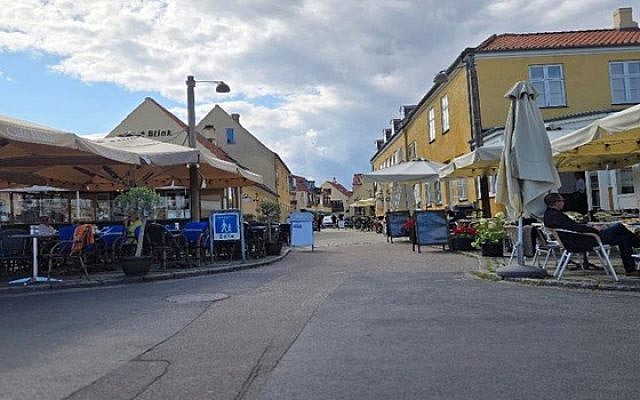
Pia explained that Danish students are required to learn about the Second World War, what happened to the Jews, and the role Danish citizens played in helping them escape as part of the national curriculum.
There is something particularly meaningful about this approach.
The next generation is not being asked merely to memorize dates. They are being brought to the places where those dates became human experiences.
Lunch at Café Espersen
After walking through Dragør and absorbing its history, we stopped for lunch at the charming Café Espersen, overlooking the same harbor that had played such an important role in the rescue.
Today, the scene could hardly be more different from October 1943. Visitors sit comfortably enjoying Danish vegetarian food and conversation beside the peaceful waterfront. Boats move across the marina. The village feels relaxed and unmistakably Scandinavian.
Yet sitting there, it was impossible not to look toward the water differently.
In 1943, families came to this coastline frightened and uncertain, hoping that someone would take them across to Sweden.
Today, travelers come here for a meal.
The harbor remains, but its meaning has changed.
Standing Where History Unfolded
There is a difference between reading about history and standing where it happened.
In Dragør, the story is all around you: in the harbor where refugees waited for boats; in Elisabeth K571, the fishing cutter that became a lifeline; in the enormous memorial stone overlooking the coast; and in the Stolperstein honoring Vilhelmine Nelson.
Looking across the Øresund, it is difficult to imagine the darkness of those nights in 1943. The same water that now reflects sunlight and sailing boats once represented an uncertain journey toward freedom.
For the Jewish families who boarded those boats, Sweden was not simply a destination.
It was safety. It was freedom. It was the possibility of seeing another day.
Perhaps that is the lasting lesson of Dragør.
History is not shaped only by governments, armies, or great leaders. Sometimes it is shaped by a fisherman who decides to take people across the water, by a woman who opens her home, or by a neighbor who decides that another person’s life is worth protecting.
Standing on the waterfront today, with the peaceful waters of the Øresund stretching toward Sweden, it is almost impossible to picture the desperation of those October nights.
But the water remains.
And it still reminds us.
In Dragør, the route to Sweden became far more than an escape path. It became a passage from persecution to hope—and a lasting testament to what can happen when ordinary people choose humanity over fear.
By Meyer Harroch | New York Jewish Travel Guide
This press trip was hosted by Jewish Copenhagen, with special thanks to Charlotte Thalmay, Ronen Thalmay, and their team for curating the Jewish heritage journey across Scandinavia.
Related Topics