“Marginal” Hitler

Lithuania’s Genocide Centre chief wrote the introduction to Mein Kampf. He refused the requested annotation in his own institution’s Holocaust history.
Dario Martinelli, “Hitler under the Christmas tree? Seriously? – opinion,” LRT, 21 November 2026. https://www.lrt.lt/en/news-in-english/19/3119401/hitler-under-the-christmas-tree-seriously-opinion
Image created by Grok AI
A Lithuanian commercial publisher is advertising Adolf Hitler’s Mein Kampf for delivery next month, before Christmas. It is an 800-page hardcover, with a regular price of €129.
The introduction was written by Arūnas Bubnys, acting Director General of Lithuania’s state-funded Genocide and Resistance Research Centre, LGGRTC. According to the publisher, he also supervised the translation’s historical accuracy. The publisher promotes his official title alongside his contribution. His government position supplies authority to the marketing of this book.
About 95 percent of Lithuania’s Jews were murdered. Lithuanian police, battalions, officials and local men participated in their persecution and murder. Eighty-five years after 1941, the head of the state institution charged with researching those crimes has contributed to a commercial edition of Hitler’s manifesto.
I consider that obscene.
What kind of person buys this book, at €129, as a Christmas present? What kind of country publishes and sells such filth, with the head of its state Genocide Centre writing the introduction?
The same public official has refused the requested editorial note in his institution’s Holocaust history, where a contributor describes Lithuanian participation as “essentially marginal.”
Hitler’s text receives more than 1,500 explanatory notes. The marginality passage does not receive the one annotation I requested.
What Israel said
The Embassy of Israel in Lithuania expressed “deep shock and dismay.” It described Mein Kampf as the manifesto that laid the ideological foundation for the annihilation of millions, including approximately 95 percent of Lithuanian Jewry.
The Embassy acknowledged scholarly research but distinguished controlled academic study from commercial distribution on bookstore shelves. For Lithuania’s Jews, it said, the book represents genocidal hatred. It asked the publisher to reconsider.
The Lithuanian Jewish Community reproduced the statement in full. Gercas Žakas, head of the Kaunas Jewish Community, strongly opposed the publication. According to LRT, the Lithuanian Publishers Association also supported calls to reconsider.
Asked whether it had consulted the Lithuanian Jewish Community before deciding to publish, the publisher gave no direct answer. It pointed instead to its cooperation with Bubnys.
His participation does not answer that question. A historian of the Holocaust is not a substitute for the community of its survivors.
The publisher says the edition is dedicated to the memory of people who suffered under the criminal regime. The murdered Jews of Lithuania did not ask to have Hitler’s book dedicated to them.
Hitler without footnotes
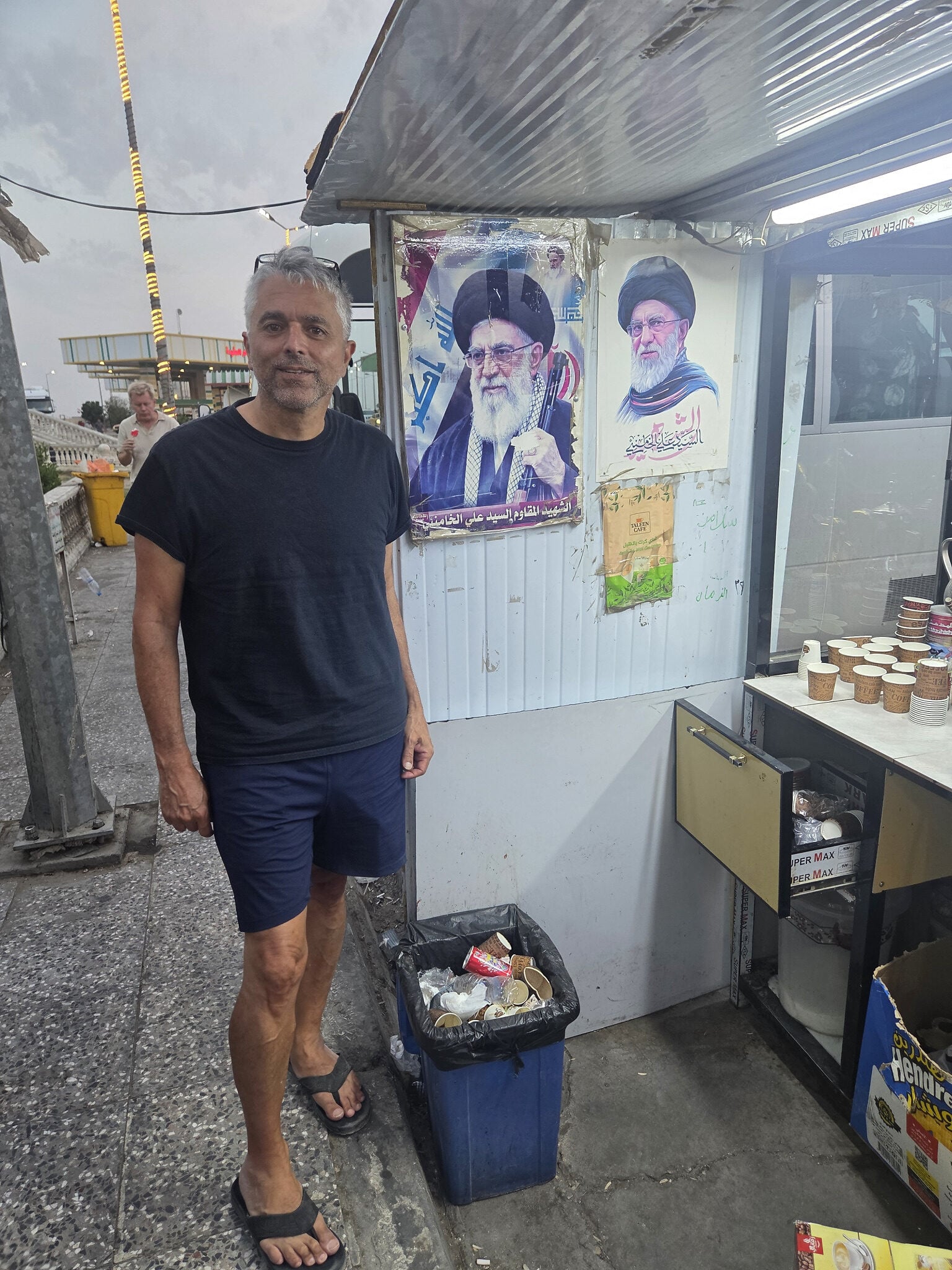
In October I traveled through Iraq. In a Baghdad market, Hitler’s portrait, in uniform with the swastika armband, was displayed for sale below a smaller portrait bearing Hassan Nasrallah’s name. At a roadside café, a poster displayed Iran’s Ali Khamenei holding a rifle and described him as a “martyr” and “resistance fighter.” To me, these displays glorify the men they depict. Hitler is offered for sale; Khamenei is celebrated as a martyr and resistance fighter. There are no critical notes and no historical context.
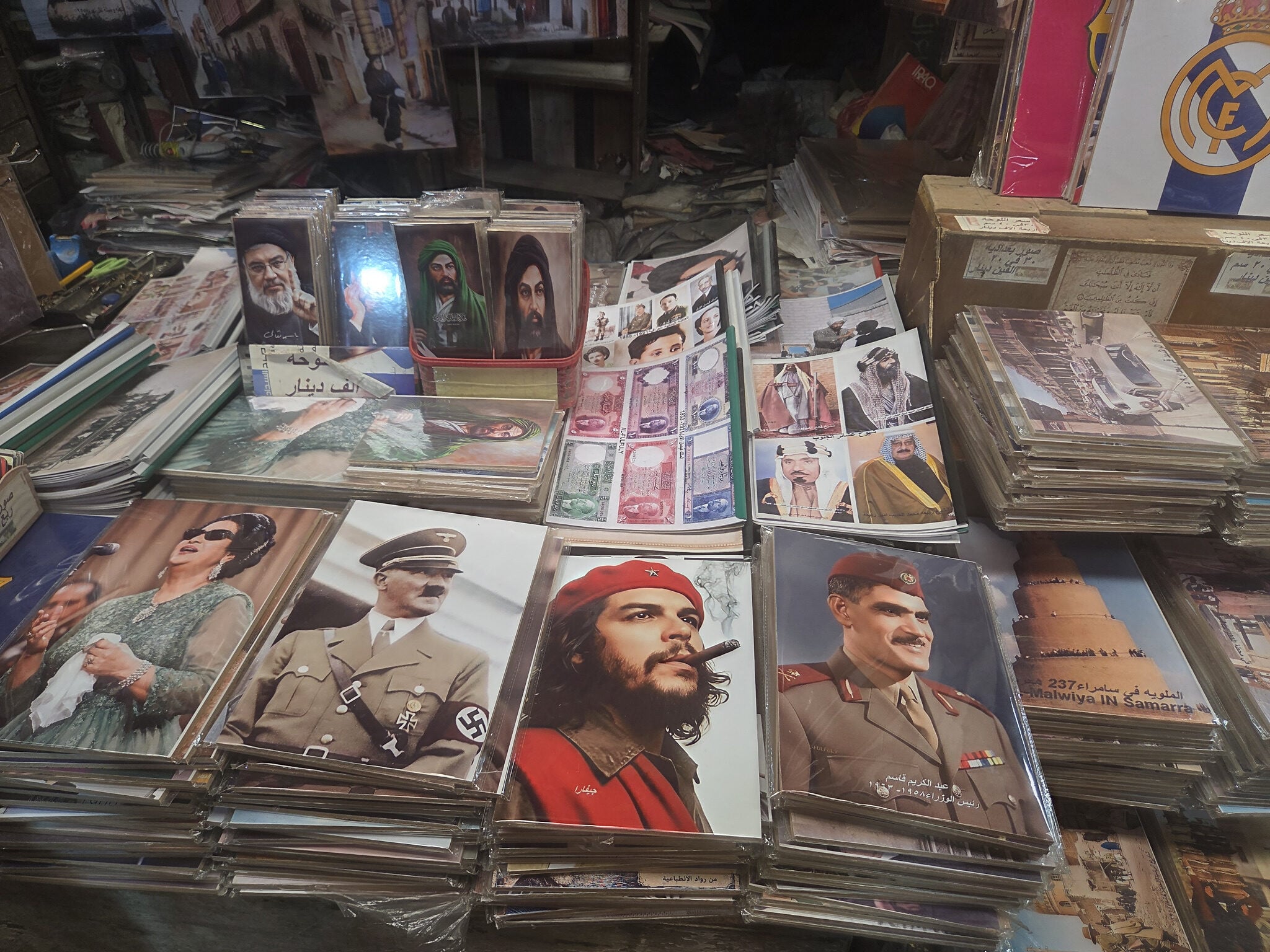
Baghdad has its own memory of where Nazi propaganda and antisemitism led. On June 1 and 2, 1941, during the Farhud, rioters murdered between 150 and 180 Jews in Baghdad, following the collapse of a pro-German government. Just over three weeks later, on June 24, German police murdered 201 people, predominantly Jews, at Gargždai—the first mass shooting of Jews in Lithuania after the German invasion of the Soviet Union. Lithuanian auxiliary policemen later participated in the murder of the town’s surviving Jewish women and children.
A critical edition should expose the ideology that an uncritical display leaves unexplained. Bubnys accepts that responsibility when introducing Hitler. I demand that he apply the same commitment to critical scrutiny when his own institution describes Lithuanian participation as “essentially marginal.”
Apply the warning at home
In his introduction, Bubnys condemns Hitler’s racism and antisemitism. He presents the book as a historical warning about hatred, authoritarianism and the rejection of democracy.
In remarks quoted by LRT, he invoked present-day Russia and authoritarian tendencies in the United States.
I ask him to apply the same scrutiny to Kaunas in June 1941; to the county offices that ordered ghettos, the police precincts that guarded Jewish prisoners and the battalions that shot them; and to his own institution’s account of those events.
Lithuanian participation was not confined to watching Germans murder Jews. The United States Holocaust Memorial Museum documents Lithuanian anti-Jewish violence before and immediately after German forces arrived, followed by Lithuanian auxiliaries participating with German killing units.
Confinement, guarding, dispossession and shooting required identifiable people performing identifiable acts. A German command structure does not erase the responsibility of the Lithuanian officials and perpetrators within it.
Bubnys knows this history. He published it.
In LGGRTC’s 2020 English volume, The Holocaust in Lithuania 1941–1944, whose original Lithuanian volume he compiled and whose English edition he co-updated, Bubnys explains that the genocide could not have proceeded so quickly or on such a scale without the active assistance of the Lithuanian administration and local population.
Twenty-five pages later, Darius Furmonavičius begins with the conditional formulation, “If there were Lithuanians who took part in these events”, and characterizes their contribution as “as supporting cast and thus essentially marginal.”
That word is why this series exists.
Context for Hitler
I challenged page 40. On November 3, 2026, Bubnys signed decision 55R-1130, refusing correction or an editorial annotation.
The decision treats the passage as its author’s scholarly interpretation, reached after assessing the sources. It characterizes my objection as personal opinion.
Those sources include the evidence in the institution’s own book.
On page 268, Bubnys attributes the order forming the Kėdainiai ghetto to County Governor Petras Dočkus. On page 269, his account describes Lithuanian participation in the massacre and records that the children were shot last. The victims included 599 Jewish children.
On pages 294–295, the book identifies Lithuanian guards, commanders and shooters at Petrašiūnai.
I examined that contradiction in “Marginal” Heroes. Bubnys subsequently signed a refusal preserving the marginality passage without the requested annotation.
He cannot explain that decision by saying the Lithuanian role was unknown to him. His own pages establish otherwise.
The publisher’s case for the Hitler edition rests on critical context. LGGRTC’s answer to my challenge rests on protecting an interpretation from the annotation I sought.
These are two documented actions by the same government employee. He must explain the standards he applied.
The burden of answering
When I ask LGGRTC to account for its Holocaust history, its signed reply invokes a disproportionate burden.
In a separate information-supply portion of 55R-1130, the institution used the phrase “sudaro institucijai neproporcingai didelę naštą”: it would impose a disproportionately heavy burden on the institution.
Six days later, in its November 9 defense 67R-30, LGGRTC told an administrative tribunal that I had submitted 294 communications with attachments, totaling more than 900 pages, between July 1 and November 3.
That is the Centre’s count.
It invoked disproportionate expenditure of work and time. The pleading was signed by Deputy Director General Vytas Lukšys, temporarily performing the Director General’s functions.
The count measures submissions. It does not measure the extent of the problem.
My investigations have documented omissions, unsupported conclusions and refusals to reconcile published claims with contrary records. Those findings are available, town by town and document by document, in the Lithuania Project. Further submissions will follow wherever the evidence warrants them.
Answering my submissions was described as a burden. Preparing Mein Kampf was a project.
That contrast requires disclosure.
Bubnys holds public office. The publisher uses that office to establish the authority of its edition. Was his contribution authorized as institutional work or undertaken privately? Who supplied the time, expertise and resources?
Was he paid? Did LGGRTC staff assist? Did he obtain permission for outside work? Was any relevant private interest declared? Did the institution authorize the promotional use of its name?
These questions have answers. LGGRTC and its supervising authorities should produce any contracts, permissions, declarations and records of institutional assistance, and identify which were never created.
The public should not have to infer the arrangement from a publisher’s advertisement.
Who reviews the reviewer?
Bubnys helped produce the Holocaust volume. His own research supplies evidence against the marginality formulation. As acting head of LGGRTC, he signed the refusal to annotate it.
That is a documented problem of institutional self-review.
In separate correspondence concerning earlier LGGRTC letters, I requested reassignment to someone who had not prepared them. A reply in Bubnys’s name rejected that request, stating that prior official participation does not itself establish a private interest or conflict of interest.
That reply concerned the earlier letters, not page 40. But the question remains: who independently examines an institution’s contested work when its own leadership controls the response?
An authority independent of LGGRTC should examine whether Bubnys’s overlapping editorial, administrative and commercial publishing roles created conflicts of interest. The investigation should establish the arrangements and responsibilities from records.
Calling the marginality passage scholarship does not answer the evidence against it. Calling my objection personal opinion does not reconcile the pages.
The encyclopedia remembers the medals
Bubnys also belongs to the consultative board of Lithuania’s national encyclopedia.
Its biography of Petras Dočkus records his career, his county office and three decorations. It omits the ghetto order attributed to him in the Holocaust volume.
The encyclopedia’s general Holocaust entry acknowledges Lithuanian police formations among the perpetrators. My accusation concerns the biography of this particular official: his decorations appear; his documented role in confinement does not.
Board membership does not establish that Bubnys approved that entry. It does establish another position from which he can ask why the omission remains.
A reader looking up Dočkus deserves to encounter the ghetto order alongside the medals.
Read the towns
LGGRTC counted my letters. Readers can examine the communities behind them.
The Lithuania Project town research directory covers hundreds of towns, villages and killing sites, free of charge. Where the evidence permits, the reports identify officials who ordered confinement, police who guarded prisoners, people who took Jewish property and units that murdered families.
They distinguish documents, testimony and analysis. They invite documented corrections.
Search the place your family came from. Follow the sources. Ask who issued the orders, who enforced them and what happened to the people named in them.
Then consider whether “essentially marginal” adequately describes that participation.
What must happen now
Bubnys must disclose the terms of his contribution to Mein Kampf. The publisher must state precisely what he checked. LGGRTC must explain whether it participated and whether it authorized the use of its institutional identity.
The marginality passage requires independent examination by scholars unconnected to the volume. The examination must confront the Lithuanian participation documented in its own pages.
The encyclopedia must explain the omission from Dočkus’s biography.
The Embassy of Israel asked the publisher to reconsider. The Kaunas Jewish Community’s chairman opposed publication. My position is that this commercial release should not proceed.
Bubnys has presented Hitler’s text as a warning requiring critical context. His public responsibilities require him to confront the Lithuanian history that makes that warning immediate.
Were the county governor who ordered the ghetto, the police who guarded Jewish prisoners and the men who shot the children of Kėdainiai essentially marginal?
My answer is no.
Earlier installments: Murders, Rapes, Infanticide, Plunder, Slavery, Sacrilege, Arithmetic, Auctions, Heroes, Signatures, Research, Laws, Lithuanian Citizenship.