This Way Up: Spiritual Means to Psychological Ends
East Meets West in the Classroom: Jewish Curiosity and Chinese Resolve
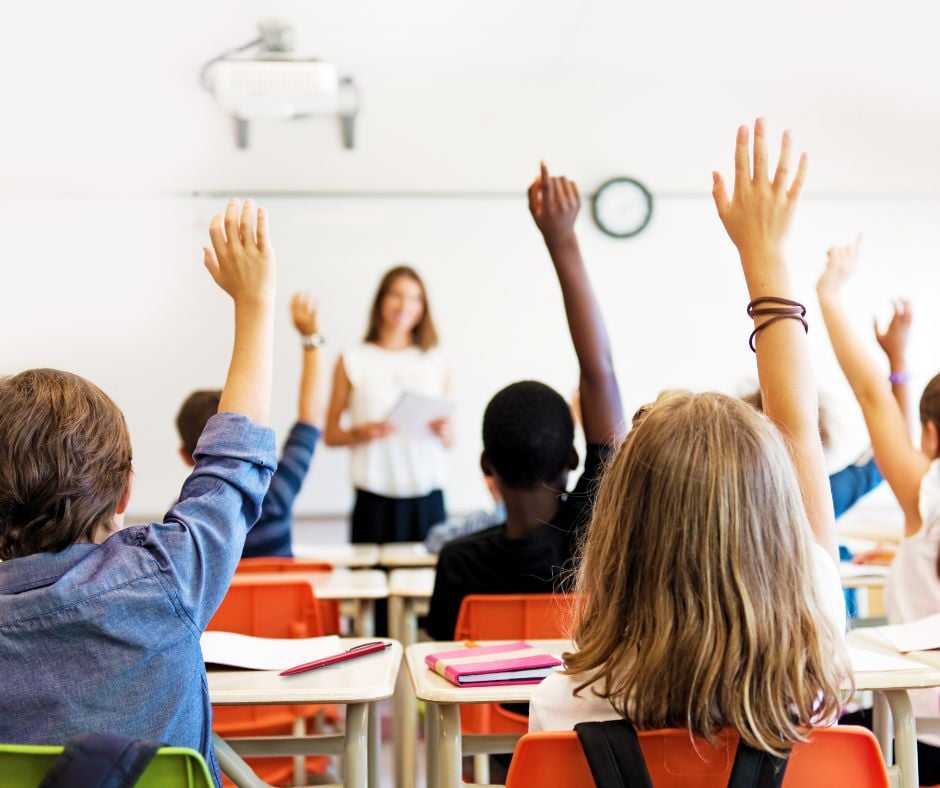
Image courtesy of Canva.com
When cultures meet, something remarkable can happen. One striking example is the collaboration between a Chinese businesswoman, an Israeli educator, and a group of Chinese teachers who dared to rethink the very foundations of classroom life.
For centuries, Chinese education has been shaped by Confucian ideals: the teacher as absolute authority, students as respectful recipients of knowledge, discipline as the pathway to mastery. By contrast, Jewish education, influenced by rabbinic tradition, has long valued questioning, dialogue, and debate. The Talmud is not a book of answers but of arguments — a record of disagreements that sharpen the mind and train students to think independently.
Into this meeting of worlds stepped Zhou Ying, a charismatic Chinese entrepreneur who encountered the philosophy of Yaacov Hecht, the Israeli pioneer of “democratic education.” Hecht, who had already launched dozens of democratic schools in Israel, argued that students thrive when they are given voice, choice, and responsibility in their learning. To Chinese ears accustomed to strict hierarchies, this sounded radical — even reckless. Yet Zhou Ying believed it was exactly the medicine China needed as it sought to cultivate creativity and innovation for a new century.
One of the teachers who took up the challenge was Jiang Hanwei, a physics teacher in Anhui Province. Inspired by the workshops she attended with Zhou and Hecht, Jiang made a dramatic change in her classroom: instead of lecturing from the podium, she invited her students to interrupt, question, and even take her place at the teacher’s desk. At first, the experiment looked disastrous. Grades dropped, colleagues complained, parents worried. But then something shifted. Within months, her students’ results on the all-important gaokao — China’s grueling college entrance exam — rose to the top of the school. What had seemed like chaos revealed itself as a new kind of order: students engaged, motivated, and capable of thinking for themselves.
Why did this unlikely experiment succeed? Because it drew on the strengths of both cultures. From the Chinese side came discipline, respect for learning, and commitment to excellence. From the Jewish side came chutzpah: the boldness to question, to challenge authority, to interrupt when insight demands it. Together, these qualities created a new hybrid — one that honored tradition while daring to innovate.
This is precisely what becomes possible when Jews and Chinese share tools and know-how. Each tradition carries unique treasures: Jewish habits of study, argument, and moral questioning; Chinese habits of perseverance, communal loyalty, and reverence for teachers. When brought together, they do not cancel each other out. They complement, correct, and enrich.
The classroom in Anhui Province is more than a local curiosity. It is a parable for the world. If Jewish and Chinese thinkers can join hands to reimagine education — one of the most tradition-bound institutions of all — then we can also imagine partnerships in medicine, psychology, the arts, and community life. Our peoples, shaped by long histories of resilience and adaptation, can model what happens when civilizations do not clash but collaborate.
At a time when the world is fractured by suspicion and rivalry, such stories point to another possibility. Jewish debate and Chinese discipline; Jewish imagination and Chinese perseverance; Jewish innovation and Chinese scale — these are not opposites. They are building blocks of a new future.
When Jews and Chinese come together, we remind the world that difference need not mean division. It can mean discovery.
Related Topics