
Author of historical and contemporary novels
Featured Post
East of Eden and north of Jaffa: John Steinbeck’s hope
The author's 19th century ancestors moved to the holy land to help teach the Jewish community to farm. I found traces of them in Tel Aviv – and on Netflix
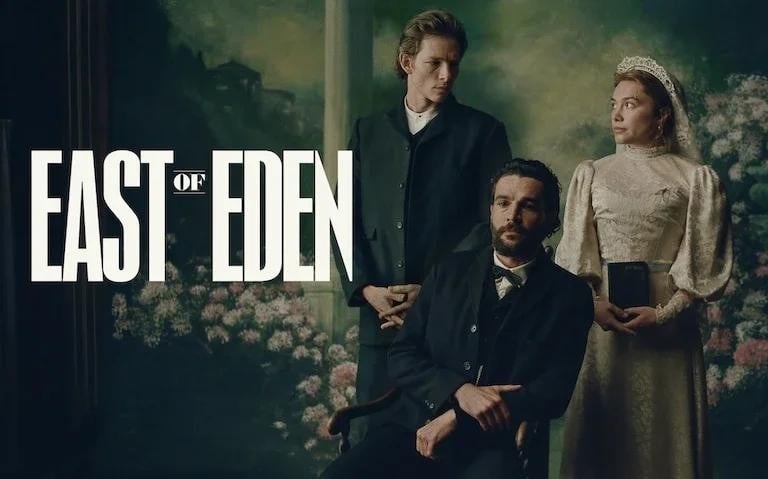
East of Eden. Promotional still courtesy of Netflix. Used for illustrative review and commentary purposes under Fair Use.
Since its release on October 2, 2026, “East of Eden” has been one of Netflix’s most-watched series in Israel, the United States, and the UK. The title comes from the story of Cain and Abel in Genesis (Bereshit): after killing his brother, Cain “dwelt in the land of Nod, on the east of Eden.” The novel retells that story across two generations of the Trask family: Adam and his half-brother Charles, then Adam’s sons, Cal and Aron, whose names echo Cain and Abel.
At the heart of the novel is a Hebrew word, “timshel” (timshol). Over dinner with Adam and their neighbor, Samuel Hamilton, Lee, a learned Chinese-American servant, discusses God’s words to Cain in Genesis 4:7. He found two English translations with very different meanings: one promises that Cain will rule over sin, the other orders him to do so. Puzzled, he wondered what the original word was that created two vastly different meanings. So he related how he consulted with Jewish scholars in San Francisco who identified the original Hebrew word as “timshel” which Lee interprets as meaning, “thou mayest” – that each person has free will. Our destiny is not predetermined.
The Hebrew in Genesis is actually “timshol,” closer to “you will rule,” so Steinbeck’s reading is more a literary interpretation than a literal translation. But the idea became the central theme of the novel.
I recently finished watching the series and was curious about Steinbeck’s use of biblical allusions and this central philosophical theme, and delving deeper led me to an unexpected and fascinating link between the story and Tel Aviv. It involves Steinbeck’s own family. Here’s what I found.
In 1849, John Steinbeck’s paternal grandfather, Johann Großsteinbeck, and his brother, Friedrich, emigrated from Germany to the Holy Land (then under Ottoman rule), with a group of Christians. Their goal was to help train the local Jewish community to farm, which they believed would assist the “Second Coming.”
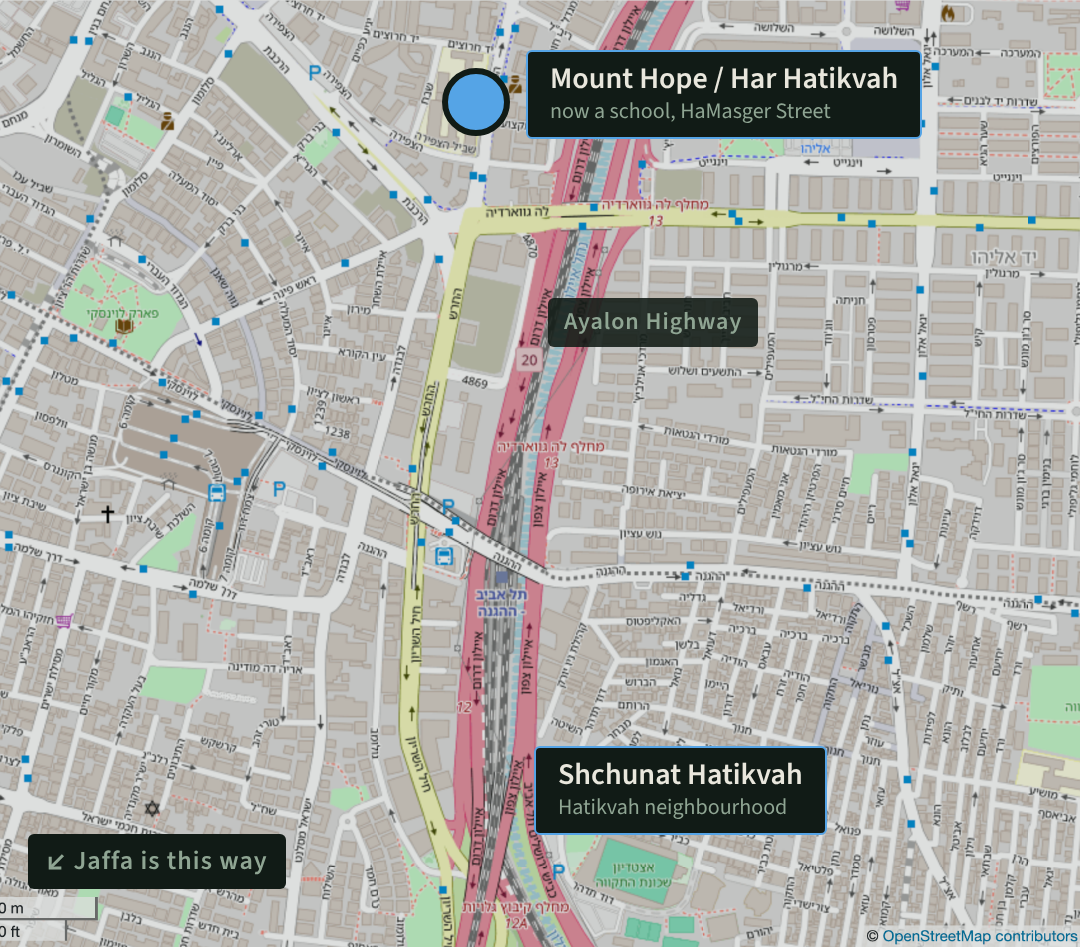
In 1853, together with a group of American Christians, they established a farm on a ridge, north of Jaffa, which they called Mount Hope, or “Har Hatikvah.” A year later, Johann and Friedrich married two sisters from one of the American families in a double wedding.
However, the farm came to a tragic end. On January 11, 1858, five armed men from the nearby Arab village of Salameh raided it, murdered Friedrich, and sexually assaulted his wife and her mother.
The remaining residents left the farm and emigrated to the United States, where Johann shortened his surname to Steinbeck. Four years later, in 1862, John Steinbeck’s father was born. That is also the year “East of Eden” begins.
Steinbeck scholars believe the novelist hinted at the Mount Hope attack in the novel, when Lee recounts the story of his own birth and his mother’s rape and death.
On my way to work this week, I made a detour east of Aden (the Aden Jewish Heritage Museum, that is), to visit the site of the former Mount Hope.
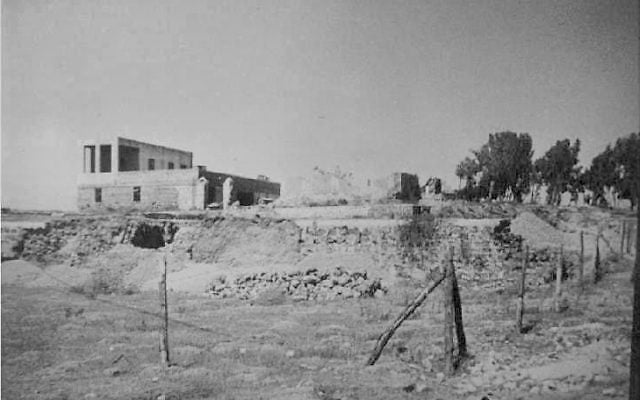
Today, it is a school building on bustling HaMasger Street in South Tel Aviv. It is hard to believe that this was once farmland. The photo above, from 1933, shows the remains of the farm on the ridge. Unlike the rest of the street, which was leveled during construction, the ridge is still visible.
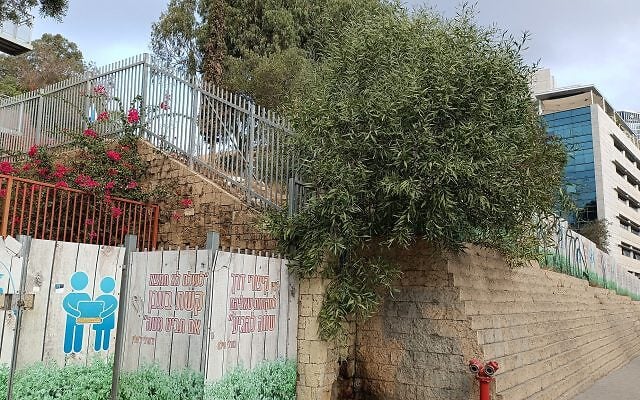
On the grounds of the school is a sycamore tree that was planted by the farm’s founders. I could not enter the building, but you can still see the tree from the road.
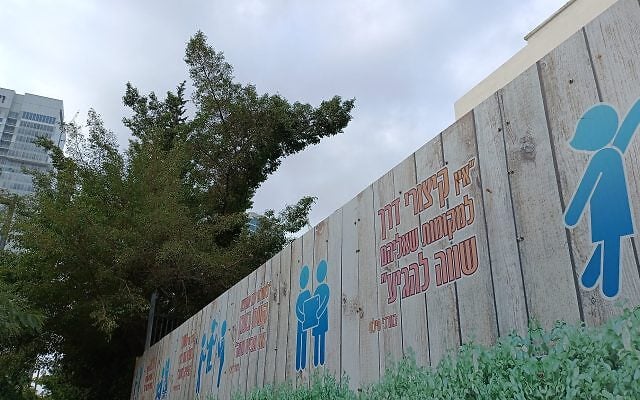
The nearby neighborhood of Shechunat Hatikvah (Hope neighborhood) was named in memory of the farm.
In 1966, John Steinbeck visited Israel and toured the site that was once Mount Hope/ Har Hatikvah. In a letter that year, he wrote: “The Israelis are the toughest and most vital people I have seen in a long time… They say that Israel’s secret weapon is ‘No Alternative.’ They have no place to go…”
It is true that we have no other place – and also true that we choose (timshel/timshol) to have hope. Hatikvah.
Related Topics
Related Posts