Easy to enter, hard to leave: Israel’s return to Lebanon
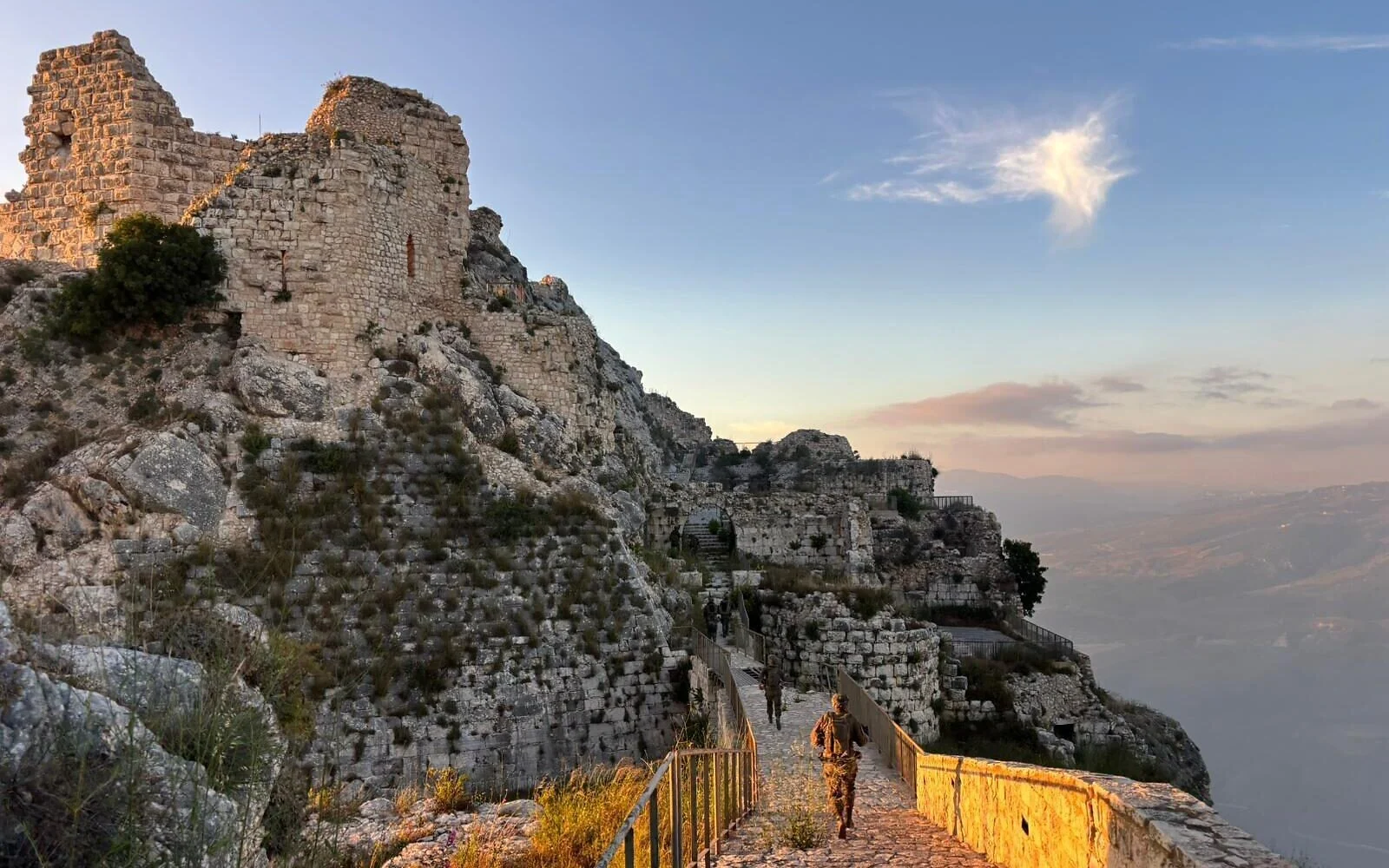
Israel has recaptured the historic Beaufort Castle in Lebanon — a Crusader fortress perched on a strategic ridge, which served as an IDF stronghold from the First Lebanon War in 1982 until the withdrawal from southern Lebanon in 2000.
“I have instructed the IDF to expand its ground maneuver in Lebanon,” Prime Minister Benjamin Netanyahu announced this week. Soon after, former cabinet minister Brigadier General (ret.) Effi Eitam proclaimed in a radio interview: “The Beaufort is a symbol. It is like the many heights the IDF once held, lost its nerve and abandoned, and has now returned to. The return to the Beaufort is first and foremost a strategic necessity. It is not a mistake; it is an essential requirement in that area. We are building a new security zone to replace the one that we abandoned when we fled from Lebanon with a reckless and, to a large extent, defeatist spirit.”
I will leave matters of Israeli security policy and the management of the current war to those who understand them better than I do. Who is wise? As the sages teach, “He who knows his place” (Avot 6:6).
What I do want to address is the impact of the people on the success of a military campaign. Throughout history, scholars and strategists have debated whether the “people’s spirit” or the “commander’s spirit” is more important in shaping the ultimate course of a war. As much as skilled commanders are surely essential, winning a war is unlikely without the commitment of the people.
In this week’s Torah portion (in Israel), Parshat Shelach, Caleb stood up against the 10 spies who had scouted the Promised Land with him and who portrayed the land as too difficult to conquer. “Let us by all means go up,” he cried, “for we shall surely overcome it.” (Numbers 13:30). The people’s spirit, which lacked his confidence, worked against him; their lack of collective resolve condemned the people of Israel to 40 years of wandering in the desert.
Centuries later, King Saul attempted to lead his people in yet another campaign against the Philistines. They were exhausted, and it failed (see Samuel I, 14).
In 1982, I had the privilege of serving in the force under Effi Eitam’s command in the eastern sector of Lebanon. For us — the rank-and-file soldiers — entering Lebanon was exhilarating and gave us a sense of enormous power. We bathed in Lake Qaraoun and spent Shabbat on the high ridge overlooking the Beirut–Damascus highway. But gradually, Israel’s prolonged presence in Lebanon became a grinding routine. It eroded the country’s solidarity from within. Casualties in Lebanon became part of our cruel daily reality.
A people’s spirit can run high or low, but one truth remains: there is no kingdom without a people.
The years of deployment gave rise to the Four Mothers movement, a grassroots organization of bereaved and military families. Its campaign eventually played a decisive role in Israel’s decision to withdraw from southern Lebanon in 2000. The spirit of the people had changed.
In the late 1990s, the IDF Northern Command was headed by Major General (ret.) Amiram Levin, who led many bold operations in Lebanon. He embraced the withdrawal from Lebanon wholeheartedly, though it took place after his tenure.
One of Levin’s subordinates was Effi Eitam, then commander of the Galilee Division and responsible for southern Lebanon as well. Eitam was among the most outspoken opponents of the withdrawal.
The dispute between these two great military strategists continues to divide Israeli society deeply, to this day. The camps they represented decades ago are still very much alive.
The national camp, which Eitam represents, opposed the withdrawal from Lebanon in the late 1990s and is now driving the re-entry to Lebanon. Levin’s camp is weary of wars and is seeking solutions through diplomatic agreements.
And where do the people stand? They are torn and divided.
The “people’s spirit” is no less essential to the success of a war than the “commander’s spirit.”
Are the people in a different place today than we were a generation ago?
Has our ability to withstand the human cost of a prolonged stay in Lebanon changed over the last 40 years?
Did October 7th create a new understanding that this war has no expiration date and that the only way to guarantee security for the communities of Israel’s north is through our sustained physical presence in parts of Lebanon?
It is difficult to gauge the true pulse of the people. But it is not at all clear that an elected government that includes many representatives of ultra-Orthodox parties who are fighting to exempt their own sons from military service can be the one to send our children on a long march into the depths of Lebanon.
One thing is certain, however: the political leadership that has ordered the IDF’s renewed advance deep into Lebanon must tell us what it sees as the actual objective of this war.
We — the veterans of the First Lebanon War — still carry the scars of the ambiguity that reigned between then-prime minister Menachem Begin and his defense minister Ariel Sharon, when there was a disconnect between the declared goals of the war and the military reality.
I am allowing myself to voice this concern out loud because I know that entering Lebanon is (relatively) easy, but leaving is much harder. And in the absence of a clear objective, the families of deployed soldiers cannot breathe, while the road ahead is growing longer.
I offer this prayer for all our fighters and for ourselves — their families: May the leaders of our country and the commanders of its army act with wisdom, courage, and sensitivity, for the sake of defeating the enemy in the north and for the well-being and security of the entire State of Israel.
For He will command His angels to guard you in all your ways.”
“The Lord will guard your going and coming, now and forever.”(Psalms 91:11 and Psalms 121:8)