Edgar Morin (1921–2026): A Complex Mind
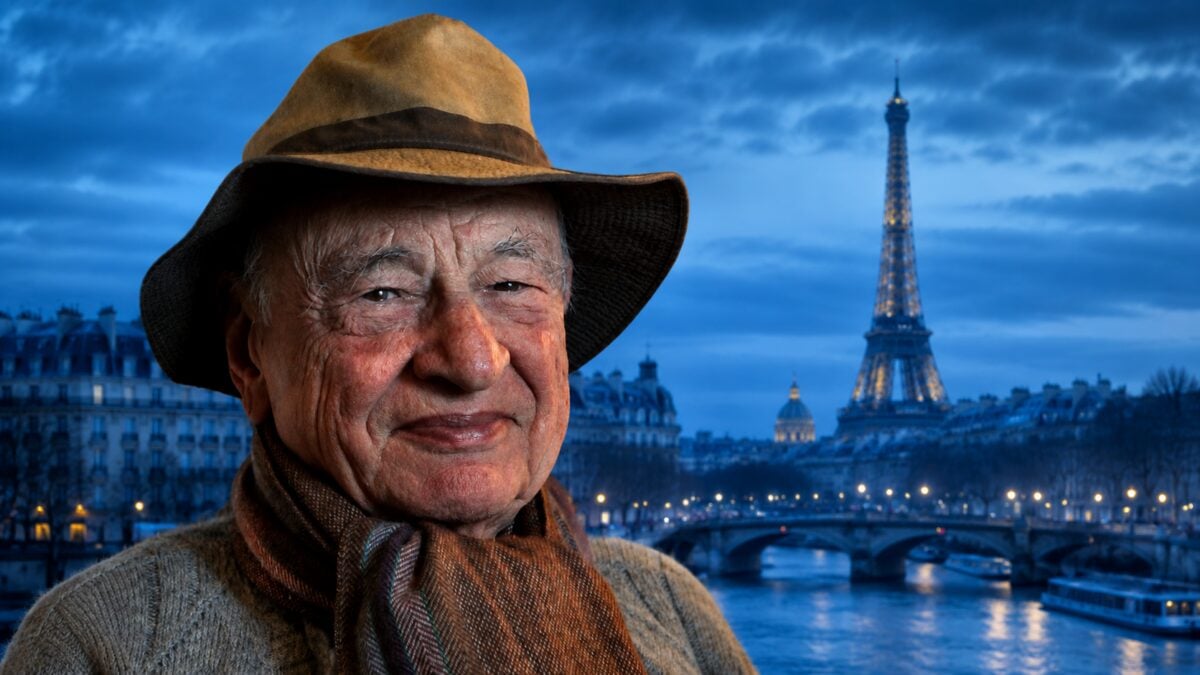
I learn of his death in my home, 3,500 miles away from Paris.
To speak about the French-Jewish Edgar Morin, it would be good to go a little back in time. The thread that began in Spain –the West…– of the 15th century, unwound and moved eastward, to the Ottoman Empire, to Salonica with its dominant Greek elements, where his father, Vidal Nahoum, was born in 1894, and from there the Sephardic immigrant’s thread traveled to Marseille –back to the West, that is…– during the years 1916–19, and thereafter to Paris, where Edgar Nahoum was born in 1921 (Nahoum, which during the Resistance he would change to Morin), –he lost his mother, Luna Beressi, at a young age…– and only now has this precious thread been cut. It broke.
This path of meaning, thought, life is not accidental. It contains what I would also call Jewish brilliance. Something I felt a few days ago when I was reading with great interest the interview of Ruth R. Wisse with Elliot Kaufman for the Wall Street Journal. Intelligence that leaps out of sentences as if steel is being forged, and is capable to distil books, whole libraries or periods in history into a single, razor-sharp line.
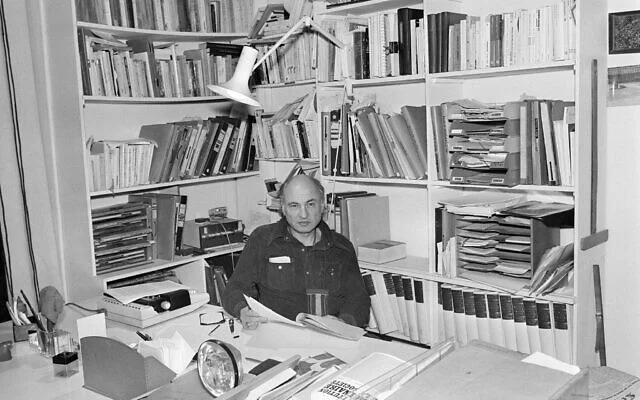
In this path, or more correctly, in his 104 last years, as he himself will say, religion came in a second role, the first role was taken by gastronomy, perhaps also good wine we would add. In the city with the largest majestic “A” in the world, –a place of remarkable aesthetics that existed first as imagination, because imagination intervenes continuously…–, he himself was occupied with many things: thought, observation, discussion, the imprinting of thought on paper, newspapers, magazines, books. He will write articles and not a few books. His last book was published last year, Y a-t-il des leçons de l’histoire? (Are There Lessons From History?).
He will love –besides gastronomy which is implied…– French culture and finesse, silk scarves with warm colors, and he will develop a weakness for hats and berets, like Rembrandt. He had an innate gentleness that scholars have.
He will sculpt strong friendships. He will meet other “great” thinkers and writers. From Marguerite Duras to Martin Heidegger, Roland Barthes, Claude Lefort, and, from Kostas Axelos, Jean-Paul Sartre, Maurice Merleau-Ponty, all the way to Jean Baudrillard. With some of them he will co-write articles and books about May ’68. For a friend of his who died in 1997 he will write in Le Monde, the obituary titled “Un titan de l’esprit”.
A philosophy of life: Eros wins over Thanatos! In his work the perspective of complex thought (pensée complexe, complex thought) gradually emerged, which culminated in his great intellectual work, The Method (La Méthode), his multi-volume undertaking for the understanding of man and of social reality. He gave important attention to the performing arts and especially cinema. In a book of his that was published when he was 101 years old, he will be very concerned, because, by degrading the environment of the planet, we degrade our life and society. His words were important. (Like those of Sir David Attenborough who a little while ago celebrated his 100th birthday.)
He himself will say something correct about intellectuals: “The sphere of intellectuals is defined by a double and contradictory activity: a. the production of myths and ideologies with cultural, social and political function, and b. the critique of myths and ideologies.”
What I often characterize as “the eccentric-erotic element” and also “the role of personality in history” and Morin is an excellent example of these two. He was passionate, powerful and inspiring. He was a man-intellectual with dignity. (It is the word dignity, which is found 100 times in ‘Magnifica Humanitas: On Safeguarding the Human Person in the Time of Artificial Intelligence’ of Pope Leo XIV.)
I read Edgar Morin from a young age in Athens, and first always through the newspapers Ta Nea, To Vima and Kyriakatiki Eleftherotypia. I always cut and kept the pieces. In the cities where I found myself over the years, like London and New York, from time to time I came across his name. The approximately 38,000 days of his complex life have left behind a great legacy for struggle.
May his memory be eternal…
A version of this article originally appeared in the leading Athens-based literary magazine “O Anagnostis” (“The Reader”).