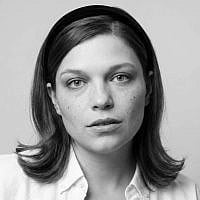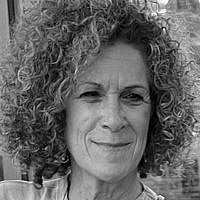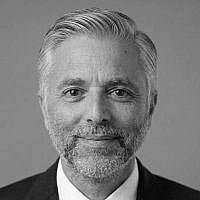
Endless Capacity for Reconciliation
The Gochin-Foti model, and the Lithuanian state that chose fraud
Jews do not believe in inherited guilt. A grandchild does not carry the crimes of a grandfather. Each person answers for what he himself does, and for nothing his blood did before him. No Lithuanian alive today murdered my family, and I have never asked one to atone as if he had. Responsibility belongs to the one who acted.
Reconciliation is a different matter. It does not rest on the absence of guilt. It rests on truth, and it is built for the generations not yet born. What a nation teaches its children about its past decides whether the next generation inherits an honest relationship or a lie dressed as one.
Watch how relations actually run between Jews and the Lithuanian state. Jews who know what happened on Lithuanian soil, and know what the state has done with that history since, keep their distance. Jews who do not know the facts, or do not care to learn them, or do not care about truth at all, get along with official Lithuania without friction. The rupture comes in between. A Jew who did not know, and then discovers how completely the state has lied, watches the goodwill collapse. A relationship built on a false account cannot survive the record. It falls apart like sand in the hand.
That is the exposure the Lithuanian state has chosen to carry. Every honest history, every opened archive, every descendant who finally reads the documents threatens a friendship the state secured by concealment.
There was always another way. One woman has already walked it.
Silvia is the granddaughter of Jonas Noreika. I descend from Jews murdered in the district he governed. That sentence should have closed the door for good and left only inherited hatred and silence. It did not, because Silvia broke the lie before it could harden into another generation of enmity.
I had written in The Times of Israel about my young cousin Liam, about his family and mine, and about his Aliyah to the Torah in Zurich. Silvia answered with an open letter to Liam. She wrote as the granddaughter of the man whose orders helped empty our family’s world of Jews. She named Jonas Noreika. She named Šiauliai and Papilė. She named Tsile Gochin, the murdered sister of Liam’s great-grandmother Sarah. She accepted that her grandfather bore responsibility for our dead.
That is where reconciliation begins. Not in ceremony, not in embassy language, not in another wreath laid while the state keeps honoring the men who made the wreath necessary. It begins in truth.
Silvia came from the perpetrator’s family and told the truth to the victim’s family. She asked us to excuse nothing and forget nothing. She did not ask a Jewish child to carry Lithuania’s shame in place of the state that earned it. She blessed him instead.
There is no capacity for anger at Silvia. The relationship between us could have been cold, or nonexistent, or warm. She bears no guilt for what her grandfather did. What she has done is remarkable in the history of the perpetrator class. She reached out, told the truth, and sought reconciliation. She is one of my closest friends now, and she is proof of what truth can still do.
The anger belongs to the Lithuanian state.
Neighbors for centuries.
Jonas Noreika was born in Šukioniai, in the Pakruojis district. My family lived in Papilė, in the Akmenė district. The same corner of northern Lithuania, a short stretch of road between them. Both families were rooted in that ground for hundreds of years, pulled toward the same markets and fairs and trading days. Noreikas and Gochins stood in the same market squares and bought and sold across the same stalls. Lithuanians and Jews lived beside one another there for longer than most modern nations have existed.
Then Silvia’s family murdered mine.
That is what the Lithuanian honors defend. Not a collision of strangers, but the destruction of Jewish Lithuanian neighbors by ethnic Lithuanian neighbors. The Jews of Papilė were the people those men had lived alongside for generations. Noreika did not govern a district of strangers. He governed ground where generations of his ancestors had coexisted with just as many generations of his victims.
Lithuania left reconciliation too late.
The surviving Jews of Lithuania are almost gone. The people who watched their neighbors loot, denounce, herd, guard, and shoot are dead or nearly so. Lithuania waited them out. It did not confess while they were alive, did not cleanse its honors, did not correct its fraud, and did not tell its own children that the destruction of Lithuanian Jewry was no foreign operation carried out while Lithuanians looked on helplessly from the roadside.
Nazi Germany built the occupation regime, the permission structure, and the machinery of mass murder. Without German power the Holocaust in Lithuania would not have taken the form it took. German power enabled Lithuanian murderers; it did not erase them. Germans were the masters of the occupation. Lithuanians supplied the rest: the local knowledge, the hatred and the ambition, the police and the battalions, the hands, the pits, the looting, the denunciations, and very often the bullets.
The United States Holocaust Memorial Museum records that Lithuanian auxiliaries took part with the German Einsatzgruppen in the killings, and that most Jews in rural Lithuania had been shot by the end of August 1941. By the calculation I use, 96.4 percent of Lithuanian Jews were murdered and only 3.6 percent survived. That is the highest victim rate in Europe, near-erasure with just enough witnesses left alive to remember the sound of it.
So no, Liam’s bar mitzvah was not a Jewish victory over Lithuania. A victory would have been Jewish children growing up in Papilė, Plungė, Šiauliai, Kovno, Vilnius, Šeduva, and the hundreds of towns where Jewish life had existed for centuries: full synagogues, open schools, intact families, scholars teaching and doctors healing. We should be thirty times our number in the world.
Lithuania did not only murder Jews. It murdered the Jewish future, its own future, and part of the world’s future. Among those never born were the doctors, teachers, musicians, and ordinary decent citizens whose lives would have enriched Lithuania and the world. Lithuania murdered possibility. Its one enduring response has been the lie.
The state knows.
Lithuania’s own historians now say aloud what the state still buries under honors, plaques, litigation, and diplomatic vocabulary. In a recent LRT interview, the historian Saulius Sužiedėlis said that Jews feel deep resentment because it was mostly Lithuanians who shot them at the pit, and that these were not a handful of outcasts or deviants. He described Plungė as the place where an entire Jewish community was destroyed with only a few German officers present and most of the killers Lithuanian.
He named the postwar national lie directly: that Lithuanians were forced, that it was only a few renegades, that the nation was innocent. History tells a different story. He confessed his shame that Lithuania is still unable to face its past honestly.
Lithuania knows. Its historians know, its archives hold the proof, and the pits keep it still. The state lies anyway. It has honored perpetrators, defended fraud, managed memory, turned evidence into innocence, and treated Jewish descendants as adversaries whenever we refused to bless the story. It preserved the reputation of Jonas Noreika more faithfully than the memory of the Jews his administration helped destroy. This is not ignorance, which can be corrected. It is state conduct.
In the same interview, Sužiedėlis noted that Lithuania’s own International Commission for the Evaluation of the Crimes of the Nazi and Soviet Occupation Regimes had spoken without ambiguity: it is unacceptable to honor a person who directly or indirectly took part in the Holocaust, whatever his other merits. Yet Noreika remains honored.
So what is there to reconcile with? A state cannot ask for reconciliation while defending the fraud that made reconciliation necessary. It cannot honor the perpetrator and expect tenderness from the descendants of his victims. It cannot wait for the survivors to die and then speak softly about complexity. That is evasion by obituary.
The Gochin-Foti model.
Silvia proved another path was always open. She needed no ministry, no commission, no court order. She needed courage.
She looked at the photograph of her own family gathered in Plungė two weeks after the town’s Jews had been murdered. She saw the smiling faces, her grandfather among them, her mother a small child. She saw a celebration held while the ground near the pits was still settling. Then she did the thing Lithuania has refused to do. She declined to lie about it.
In her letter she set Liam’s bar mitzvah against that photograph. Her family gathered after Jews had been murdered; ours gathers because Jews survived. Her family’s picture was held over death and called freedom. Liam’s celebration was held before the Torah and called covenant.
This is the Gochin-Foti reconciliation model, and it is not complicated. It is only rare. The descendant of the perpetrator tells the truth. The descendant of the victim does not demand inherited guilt from a person who has chosen truth. The crime is named, the dead are named, the responsibility is named. No one asks the victim’s family to dilute the evidence, and no one asks the perpetrator’s family to carry guilt in the blood. Truth clears the hatred out of the room, and then contact becomes possible.
That model can travel. It works wherever people inherit crimes they did not commit but feel pressed to defend because family or tribe or nation or church or state tells them to. Between families, between communities, between nations, the question is the same. Must the future stay chained to the crime? The answer is no, but only if truth comes first.
Silvia did not approach me with denial. She did not tell me her grandfather was complicated, that he fought the Soviets, that Lithuania suffered too, that the Germans made him do it, or that the archive was Soviet forgery. She did not ask me to weigh Jewish corpses against Lithuanian patriotism. She told the truth. Because she did, there is endless capacity for reconciliation between individual Lithuanians and Jews.
A Lithuanian who tells the truth is not my enemy. A Lithuanian who says, “My people did this, my state has lied about it, and I will not join the lie,” has crossed the only bridge that matters. Such a person is not responsible for the blood of 1941. He is responsible for what he does with the truth now.
Silvia chose truth. The Lithuanian state chose fraud. That distinction must never be blurred.
The state failed. The individual did not.
My anger is for official Lithuania: the Lithuania of honors and plaques, of court filings and state historians, of evasive commissions, prosecutorial intimidation, and diplomatic theater. There is no reconciliation with that Lithuania, not after this much fraud, and not after it spent the entire lifetime of the witnesses defending the reputations of the men who destroyed them.
Eventually Lithuanians will learn how much their government lied to them. They will learn that the Jewish accusation was not slander, that the archives were not Soviet poison, that the descendants were never enemies of Lithuania, and that the shame lay not in the exposure of the crime but in the state’s defense of the criminals. When that day comes, Lithuania may begin an internal reckoning. Do not call it reconciliation with the dead. The dead waited. Lithuania did not come.
Liam’s bar mitzvah was not a Jewish victory over Lithuania. It was Jewish survival in the shadow of Lithuania’s failure. Sarah survived. Tsile was murdered. Liam stood before the Torah in Zurich last weekend because the murderers did not get the last word. I stood with him because my grandfather stood with me. Silvia’s letter stood nearby, proof that truth can still cross the abyss between families.
There may never be more than that. It is enough for a beginning between people. It is not enough to absolve a state.
The state failed. The individual told the truth. The hatred ended where the truth began.
That is the Gochin-Foti model. That is endless capacity for reconciliation.
L’dor v’dor.
We are still here.