Family history, forgetting, and the American Dream
On April 23, 1908, my great-great-grandfather Meyer Glassenberg jumped out of his fourth-story window at 88 Delancey Street on the Lower East Side.
According to contemporary newspaper accounts, his death was witnessed by commuters crossing the Williamsburg Bridge on their way to work as well as by his wife and his children. He had only been in America for two years. Meyer was buried free of charge by the Hebrew Free Burial Association in a cemetery on Staten Island.
Although his suicide made the front page of the Yiddish newspaper Der Forverts and was syndicated in papers across the country, it took nearly 120 years for me to discover his story. What I learned about shame, remembering, and the American Jewish experience will stick with me for the rest of my life.
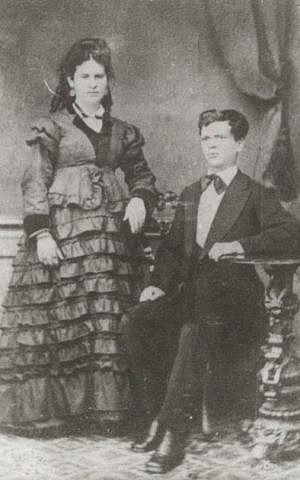
The narrative of Jewish immigrants from Eastern Europe in the United States is often viewed through rose-colored glasses, an idealized account of hard work, success, and the power of the American Dream. The ancestors of people like me stepped off the boat from the Old Country into the goldene medine, the golden land, and it was all upward from there. This was not the case for Meyer Glassenberg.
Similar to the rest of my Ashkenazi Jewish ancestors, I know next to nothing about his early life. What I do know is this: Meyer was from Minsk in what is today Belarus. In 1906, he boarded the S.S. Rotterdam with his wife, Rachel, and three of his children, and traveled to New York. He must have passed by the Statue of Liberty and made it through the notorious inspections on Ellis Island.
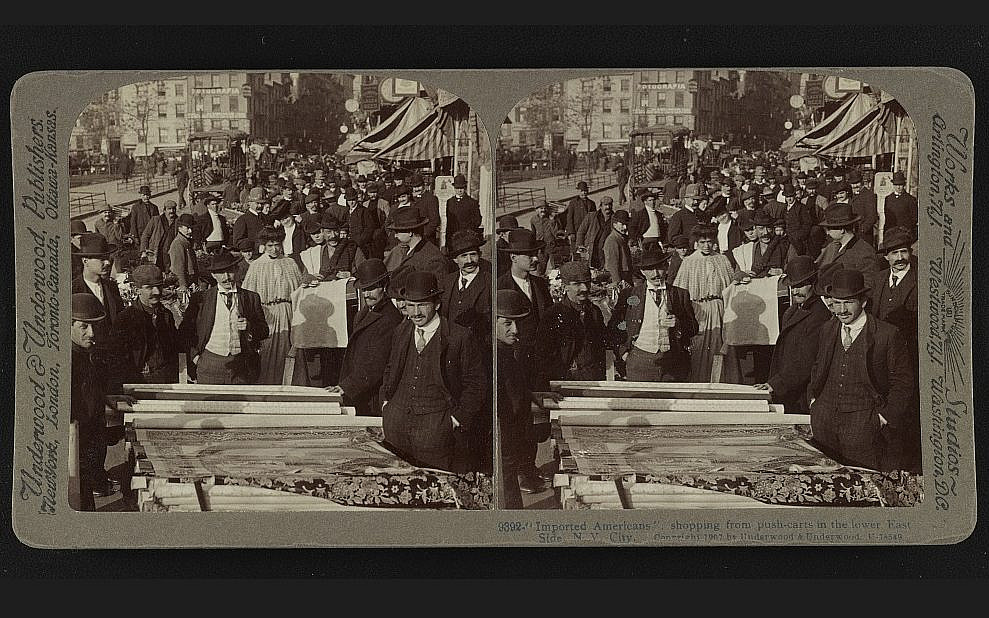
Meyer lived with his family in the heart of the Lower East Side, on those fabled crowded streets packed with pushcarts and draped in dangling laundry. Once he had settled in, Meyer became a bookkeeper for a dairy company. He had several children from several marriages, and his relationship with his wife was fraught. It was during an argument with Rachel that Meyer ended his own life and disappeared from my family story, and from memory.
To remember is a privilege, and sometimes there are things that we forget on purpose. It was once customary to bury Jews who had died by suicide on the edges of cemeteries. Today, we understand the realities of mental illness and are more compassionate towards those who take their own lives. But in 1908, among immigrant communities, this understanding did not prevail. These people were shameful to their families, and their lives were best forgotten. Weeds and ivy grow over their gravestones, often standing alone by busy roads or along teetering fences.
Meyer Glassenberg was not granted the privilege of a gravestone tucked away in a distant corner. Recently, I confirmed that his grave is completely unmarked and its precise location is not entirely certain. The form authorizing his interment by the Hebrew Free Burial Association was signed by Isaac Glassenberg, a man who claimed to be his son, but is unknown to me, and for whom almost no other historical records exist.
My ancestors were too ashamed, or too horrified by the circumstances of his death, or too traumatized in their loss to claim this man as their own. They did not want to spend their hard-earned money on commemorating with a gravestone a person whose manner of death had been, to them, a disgrace. They did not want to remember him at all and, as a result, I almost never discovered that he existed. No one in my family ever talked about my great-great-grandfather, and I only discovered his name and the circumstances of his death through careful research in family documents and online databases.
Long before I ever heard of Meyer Glassenberg, I was visiting the graves of his children and grandchildren. Many of his descendants are buried in a stately suburban family plot, well-landscaped and regularly cleaned. Every year, my dad and I visit the plot and leave behind the traditional memorial stones on the graves there. The origins of the memorial stone in Jewish tradition are obscure, but to me its meaning is perfectly clear. The stone says I was here. The stone says I remember. Meyer’s unmarked and unvisited grave represents a willful act of not remembering.
I set out to try to fix that and spent several years researching the forgotten story of Meyer Glassenberg as best as I could. I was determined to find out every last detail and shed some much-needed light on the life of my doomed and forgotten great-great-grandfather. Digging through newspaper archives in Yiddish and English and combing through digitized historical documents, I tried to do right by this man who had a hard life and a disturbing death. After all, it was thanks to him that my family arrived in America in the first place. Meyer was about 57 years old when he came over from Minsk, and his sons, including my great-grandfather, were 10, 11, and 18. He would have been the family’s patriarch.
One can only speculate on the reasons that the Glassenbergs left Minsk. The SS Rotterdam manifest says they had $250, impressive compared to many other passengers like Sarah Ratner and her four young daughters, listed above them as being fellow “Hebrews” from Russia, who had “nothing.” The Glassenbergs were not penniless, yet some pain, some distress, some peril drove them to leave. Meyer’s children went on to have families of their own, and his descendants, including my family, are scattered across a swath of the globe from New England to Florida to California and the western Pacific.
Remembrance is at the core of Jewish traditions, including those surrounding death. When someone dies, we often say, “May their memory be a blessing.” When someone is forgotten, it simply isn’t right. Meyer’s legacy did not end in 1908 with a jump from a window on Delancey Street. As his descendant, I continue to try to know his story and remember his name.