
From Truce to Transformation: The Promise of the Gaza Board of Peace
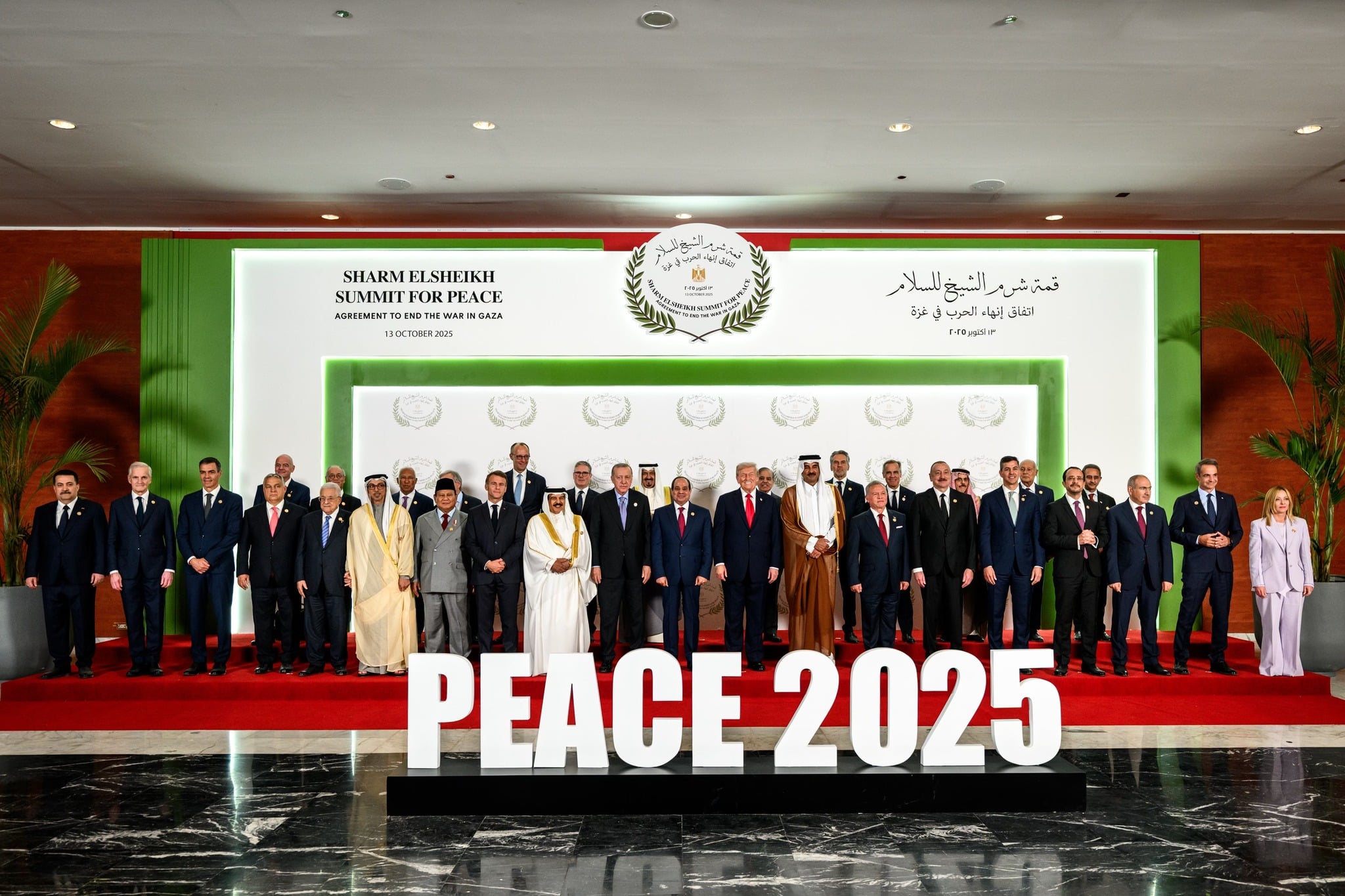
When President Donald Trump first proposed the idea of a Board of Peace back in October as part of a 20-step ceasefire plan for Gaza, it was met with a fair amount of skepticism. After all, the region has seen its fair share of initiatives that promised a lot but delivered very little. However, what sets this proposal apart—and why it now deserves genuine consideration—is how it has transformed from a mere political idea into a solid framework supported by the United Nations Security Council and welcomed by a wide range of countries.
The core strength of the Board of Peace lies in its attempt to address what previous initiatives have failed to do: connect an end to hostilities with a credible plan for what comes next. The proposal envisages a body that would oversee Gaza’s reconstruction, guide governance through internationally accepted standards, and manage funding in a transparent and accountable manner. Importantly, this framework is designed to work through a committee of Palestinian technocrats, placing administrative responsibility where it ultimately belongs—among Palestinians themselves—while ensuring international oversight and support.
What began as a proposal soon gained wider legitimacy. In November, the United Nations Security Council adopted a resolution welcoming the establishment of the Board of Peace and authorizing it to operate in Gaza until the end of 2027. This endorsement transformed the initiative from a unilateral idea into a multilateral mechanism anchored in international law. In a region where legitimacy is often contested, this UN backing is not a minor detail; it is the difference between a temporary arrangement and a serious attempt at long-term stabilization.
???? United Nations Security Council acknowledges and endorses President Trump's BOARD OF PEACE. pic.twitter.com/Qam0XpkLqx
— The White House (@WhiteHouse) November 17, 2025
As of January 22, 2026, over 25 countries have confirmed their participation, with invitations sent out to about 60 states and entities. The list of those who have accepted is impressive not just for its size but also for its diversity. Arab nations like Egypt, Saudi Arabia, Jordan, Qatar, the UAE, Kuwait, and Morocco are on board. Major Muslim-majority countries such as Pakistan, Turkey, and Indonesia have also joined in. From outside the region, countries as diverse as Argentina, Canada, Hungary, Vietnam, and Kazakhstan have signed up, with Russia indicating a conditional willingness to participate.
This wide-ranging support gives the Board of Peace a level of legitimacy that few initiatives regarding Gaza have ever achieved. It’s not just a narrow Western project or a purely regional effort. Instead, it showcases a blend of interests: the urgent need for humanitarian aid, the quest for regional stability, and the shared understanding that Gaza’s reconstruction can’t rely on random pledges and scattered oversight.
Countries That Have Accepted the Invitation
The following countries have publicly accepted or confirmed participation, including those newly reported since January 21, 2026. Details on announcement dates, membership type, and contributions are provided where available.
- Albania: Prime Minister Edi Rama confirmed as a founding member, emphasizing international recognition. No contribution details.
- Argentina: President Javier Milei accepted on January 17, 2026, as a founding member supporting anti-terrorism efforts.
- Armenia: Prime Minister Nikol Pashinyan accepted; no further details on contribution.
- Azerbaijan: Confirmed as a founding member.
- Bahrain: King Hamad accepted on January 21, 2026, via Foreign Ministry, supporting Trump’s 20-point Gaza plan.
- Belarus: President Alexander Lukashenko accepted early, aiming to reduce U.S. isolation.
- Canada: Prime Minister Mark Carney agreed in principle on January 21, 2026, opting out of the $1 billion permanent fee.
- Egypt: President Abdel Fattah el-Sisi accepted on January 21, 2026, via Foreign Ministry, pledging support for Gaza’s mission and legal procedures.
- Hungary: Prime Minister Viktor Orbán accepted on January 18, 2026, leveraging ties with Trump.
- Indonesia: Accepted via joint statement on January 21, 2026, with Muslim-majority nations, focusing on ceasefire and reconstruction.
- Israel: Prime Minister Benjamin Netanyahu accepted on January 21, 2026, despite initial objections and ICC concerns.
- Jordan: Accepted on January 21, 2026, in joint statement with Arab nations, committing to peace efforts.
- Kazakhstan: Accepted as a founding member.
- Kosovo: President Vjosa Osmani accepted on January 21, 2026.
- Kuwait: Foreign Ministry announced acceptance on January 21, 2026, following joint Arab statements.
- Morocco: King Mohammed VI accepted on January 19, 2026, as an early Arab participant.
- Pakistan: Foreign Office announced acceptance on January 22, 2026, hoping for ceasefire implementation; met with Trump in Davos.
- Paraguay: Confirmed participation as part of initial acceptances.
- Qatar: Accepted on January 21, 2026, in joint Arab statement.
- Russia: President Vladimir Putin announced on January 22, 2026, readiness to join and contribute $1 billion from frozen U.S. assets, conditional on fair Palestinian resolution.
- Saudi Arabia: Accepted on January 21, 2026, via joint statement, endorsing ceasefire and peace.
- Turkey: Foreign Minister accepted on January 21, 2026, in joint announcement; President Erdogan to be represented.
- United Arab Emirates (UAE): President Sheikh Mohammed bin Zayed accepted on January 20, 2026, supporting global dialogue.
- Uzbekistan: President Shavkat Mirziyoyev accepted as a founding member.
- Vietnam: Party General Secretary To Lam accepted on January 18, 2026, as a founding member.
I am deeply honored by President @realdonaldtrump’s personal invitation to represent the Republic of Kosovo as a founding member of the Board of Peace, standing shoulder to shoulder with the United States in the pursuit of a safer world. ????????????????
True leadership doesn’t just talk… pic.twitter.com/a5xf6vkVdF
— Vjosa Osmani (@VjosaOsmaniPRKS) January 21, 2026
Critics highlight the hesitance of some European nations—like France, the UK, and a few Nordic countries—as proof of division. However, hesitation doesn’t equate to rejection, and diplomacy is always evolving. More importantly, the lack of complete agreement doesn’t diminish the importance of the coalition that has already come together, especially the strong participation from Arab and Muslim countries, which is crucial for establishing credibility on the ground.
Pakistan’s decision to join the Board of Peace is particularly significant. Islamabad has framed its participation clearly within the parameters of the UN Security Council resolution, emphasizing three priorities: a permanent ceasefire, expanded humanitarian assistance, and the reconstruction of Gaza.
????PR No.2️⃣2️⃣/2️⃣0️⃣2️⃣6️⃣
Pakistan Accepts Invitation for Joining the Board of Peace BoP with the View to Achieving Lasting Peace in Gaza https://t.co/BX4ufJoPRW
????⬇️ pic.twitter.com/9JfOoyyfsC— Ministry of Foreign Affairs – Pakistan (@ForeignOfficePk) January 21, 2026
What really makes the Board of Peace stand out is its commitment to transition. It understands that while humanitarian aid is crucial, it’s just not enough on its own. Without reforms in governance, smart economic planning, and ongoing investment, rebuilding efforts can feel like an endless cycle of crisis instead of a journey toward dignity and self-sufficiency. By prioritizing modern, effective administration and accountability, the board aims to transform Gaza from a place synonymous with constant turmoil into a shining example of recovery after conflict.
The UN is now obsolete, because Trump is doing their job for them.
The UN does not carry out its intended function, so Trump unilaterally took over as the new UN.
Trump created the Board of Peace, brokered all the peace deals worldwide, and is shutting down threats to the… pic.twitter.com/5zoLmTztEC
— Clandestine (@WarClandestine) January 22, 2026
The Board of Peace will not solve every problem. Deep political divisions, security challenges, and regional rivalries will continue to test its resolve. However, dismissing it outright would be a mistake. For the first time in years, there is a framework that links a ceasefire to reconstruction, reconstruction to governance, and governance to a political horizon grounded in international legitimacy.
Shifting from a truce to real transformation is never straightforward. Yet for Gaza, where fleeting moments of peace have often concealed a lasting despair, the real promise of the Board of Peace lies in its goal to break that cycle. It offers a chance—one that has been denied for too long—that an end to hostilities can finally pave the way for a hopeful future