Journalist
Germany’s Cultural Elite Is Playing With Fire
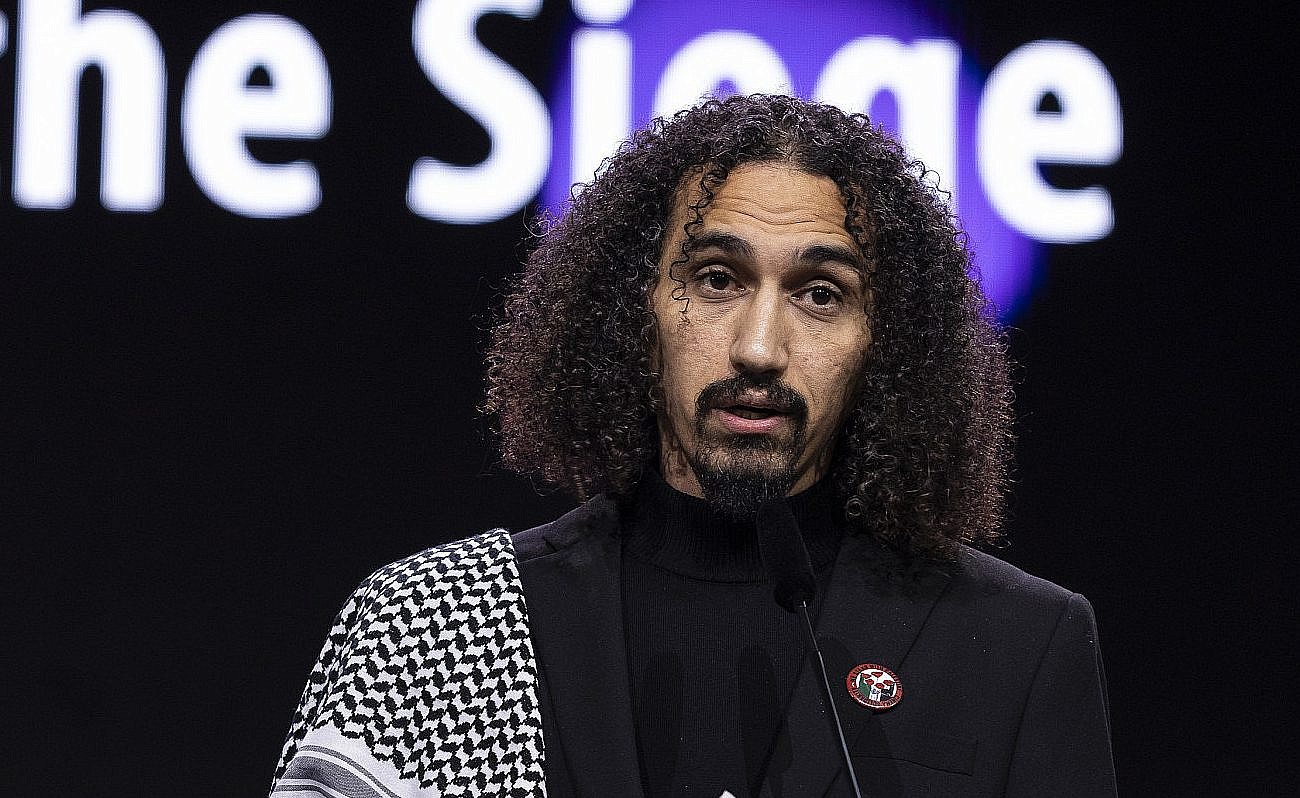
Abdallah Alkhatib, director of Chronicles From the Siege, accepts the GWFF Prize for Best First Feature at the 76th Berlin International Film Festival in Berlin, Germany, in 2026. Photo: Richard Hübner, Berlinale 2026
Words matter most when spoken from positions of power. At the Berlinale, one of Europe’s most prestigious, taxpayer-funded cultural stages, an accusation of genocide was delivered calmly, and rewarded with applause. What followed was not merely a controversial moment, but a revealing failure of moral and institutional judgment.
When Syrian-Palestinian filmmaker Abdallah Alkhatib accepted the Best Feature Film Debut award Saturday night at the 76th Berlinale for Chronicles From the Siege, he used the ceremony to accuse Israel of genocide and Germany of complicity. The charge was delivered calmly, confidently, and from one of Europe’s most prestigious, publicly funded cultural stages.
What followed mattered more than the speech itself. The audience applauded. The festival did not intervene. Only Carsten Schneider, Germany’s Federal Minister for the Environment, Climate Action, Nature Conservation, and Nuclear Safety, chose to leave the hall.
The Berlinale is not an activist gathering. It is Germany’s flagship film festival, financed substantially by federal and state funds and presented as a symbol of the country’s postwar moral seriousness. Statements made from its stage do not remain personal opinions. They acquire institutional legitimacy.
That is why Alkhatib’s accusation cannot be waved away as expressive outrage. “Genocide” is not a metaphor. It is a legal term defined by the Genocide Convention, requiring demonstrable intent to destroy a people as such. The charge of genocide leveled against Israel collapses under any serious, good-faith application of international law. The Convention requires specific intent to destroy a people as such, an intent Israel has neither expressed nor demonstrated, even as it fights a war forced upon it by Hamas’s Oct. 7 massacre. Israel’s war in Gaza, launched after that attack and directed at dismantling a terrorist organization embedded in dense urban terrain, is accompanied by evacuation warnings and civilian advisories that reflect Israel’s ongoing effort, rare among modern militaries facing comparable asymmetric threats, to distinguish between civilians and a terrorist enemy deliberately operating among them. Civilian suffering in war is horrific. It is also not evidence of genocidal intent.
Conflating the two is not moral clarity. It is a distortion of law.
In Europe’s cultural institutions, however, precision has become optional. The word “genocide” now functions less as a claim to be examined than as a signal to be displayed. Once invoked, it halts inquiry. Questioning it risks immediate moral suspicion. That dynamic is exactly what unfolded in Berlin.
Alkhatib’s warning that “we will remember who stood with us and who stood against us” revealed the logic at work. This was not the language of grief. It was the language of power, of future reputational sorting, of moral debt to be collected later. It presumed authority. It assumed consequences.
The audience reaction confirmed that such framing has become normalized. Across European cultural spaces, Israel is increasingly cast as a uniquely illegitimate actor rather than a sovereign state confronting adversaries committed to its destruction. Jewish history is acknowledged ceremonially; Jewish agency in the present is treated as suspect.

Israel exists precisely because Jews learned, at catastrophic cost, that moral permission to survive cannot be outsourced. To treat Jewish self-defense as a moral problem rather than a historical necessity is not enlightenment; it is amnesia.
The contradiction runs deep. Germany has built an extensive culture of remembrance centered on Jewish victimhood and European guilt. Yet when Jews act collectively to defend themselves through a state, that agency is increasingly portrayed as pathological. Trauma is universalized in museums and memorials; self-defense is delegitimized in politics and culture.
This inversion did not happen by accident. Cultural institutions have grown insulated from public accountability while remaining dependent on public funding. They prioritize moral signaling over argument, alignment over analysis. The result is an environment where extreme accusations can be made without challenge, provided they conform to the prevailing ideological posture.
Schneider’s decision to leave the hall was therefore neither theatrical nor courageous. It was procedural, the bare minimum response once a line had been crossed from expression into institutional accusation. Walking out acknowledged what applause tried to obscure: that something with historical gravity and political consequence had just been said under state sponsorship.
Germany’s postwar moral authority rests on restraint, precision, and responsibility. That authority erodes when taxpayer-funded platforms lend legitimacy to charges that empty words like “genocide” of their meaning and transform them into tools of political pressure against the world’s only Jewish state.
This is not about suppressing criticism of Israel. Criticism is legitimate and necessary in any democracy. It is about refusing to subsidize defamation masquerading as moral concern. When publicly financed institutions blur that distinction, they place the state itself on one side of a profoundly dangerous moral ledger.
The Bundestag should take note. If Germany’s cultural elite cannot distinguish between critique and blood libel, between lawful argument and legal falsehood, then federal funding of such platforms deserves serious review. Taxpayers are not obliged to underwrite ideological theater that trades historical responsibility for moral exhibitionism.
Israel does not require moral approval from Europe’s cultural institutions to defend its citizens. But when those institutions weaponize the language of genocide against the Jewish state, they inflict real damage, not only on historical truth, but on Jewish security in the present. Germany, of all nations, should understand where that road leads. If the cultural elite forgets that lesson, the consequences will not remain confined to festival stages.
Related Topics
Related Posts