
Russian-American-Israeli Palestinian. Palestine is Israel.
Hebrew Fun Holidays
Hebrew calendar complexity doesn’t obscure mathematical harmony — it transforms it into a sacred rhythm of months, moons, and postponements. Image © Ivan Bassov, 2025. Licensed under CC BY 4.0.
Canonical Days, Mathematical Constants, and the Rhythm of Time
In my previous articles — “Canonical Pi Day” and “Canonical e-Day” — I explored the idea of canonical days: dates anchored not to any fixed Gregorian calendar, but to the ordinal position of a day within the year.
There, I argued that the beginning of a year is a cultural convention. Different civilizations have developed their own temporal frameworks — Hebrew, Islamic, Ethiopian, Indian, Chinese, and others — each defining when the year begins and how it unfolds.
Thus, the canonical approach transcends these differences. The 314th day (the Canonical π-Day), or the 271st day (the Canonical e-Day), are not about privileging the Gregorian system, but about marking a universal position within a cycle — a rational point of reference meeting the irrational nature of mathematical constants.
Perhaps it is precisely this tension — between the precision of numbers and the fluidity of human calendars — that makes the idea of a Canonical Day meaningful.
The Hebrew Calendar: Order in Motion
The Hebrew (Jewish) calendar embodies this paradox beautifully. It is a lunisolar system — tied to both the Moon’s cycles and the solar year — and therefore far more intricate than the straightforward leap-year logic of the Gregorian calendar or that of any purely lunar calendar.
It has years of 12 or 13 months, depending on whether it’s a leap year. The start of the civil year, Rosh Hashanah, does not fall on a fixed Gregorian date. Its timing can vary over several weeks from year to year, governed by intricate postponement rules that ensure certain holidays never fall on specific weekdays.
Because of these adjustments, a Hebrew common year can have 353, 354, or 355 days, while a Hebrew leap year (which adds a 13th month, Adar I) can have 383, 384, or 385 days.
To find, say, the 314th day in a given Hebrew year — the Canonical Pi Day — you must:
- Determine if it’s a leap year.
The Hebrew calendar adds a 13th month seven times in each 19-year cycle — in years 3, 6, 8, 11, 14, 17, and 19. - Calculate the start of the year.
Rosh Hashanah (1 Tishrei) may be postponed according to complex halakhic and astronomical rules. - Count forward 314 days.
Because month lengths vary, the same canonical day may fall not only on different Gregorian dates each year, but even on different Hebrew dates.
Note that Hebrew New Year (Rosh Hashanah) begins on 1 Tishrei, but the month of Tishrei is actually the seventh month of the Hebrew calendar — the year’s “new beginning” is not its first month, which is Nisan.
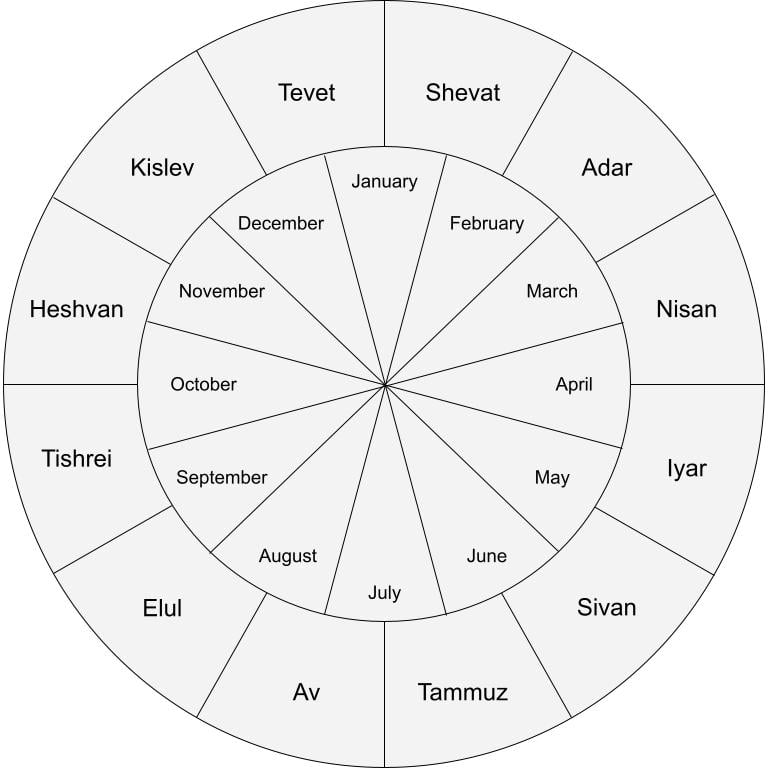
In short, the Hebrew calendar is a living, breathing system — an algorithm of faith and astronomy. In reality, there are many additional rules required to calculate Hebrew dates correctly, far too intricate to cover in this article. Just imagine the skill and patience of the Jewish sages who calculated these dates manually for millennia, long before the age of computers — of course, they were calculating the traditional holidays, not Canonical Pi Day, e-Day, or Programmer’s Day!
Fortunately, We Have Python
No one expects you to calculate or memorize these shifting “fun holidays.” Fortunately, libraries like Python’s pyluach can do the job for us.
Here’s a simple script that prints our canonical holidays for the next several Hebrew years:
- 1st day — Rosh Hashanah (Hebrew New Year)
- 161st day — Canonical Phi Day (explained in the next section)
- 256th day — Programmer’s Day
- 271st day — Canonical e-Day
- 314th day — Canonical Pi Day
(If you’re not into code, feel free to skip ahead — the output below shows the results.)
# hebrew-fun-holidays.py

from pyluach import dates


def date_from_rosh_hashana(day_number, hebrew_year=None):
    """
    Print the Hebrew and Gregorian date
    for a given day number from Rosh Hashana.
    """

    # Default to the current Hebrew year
    if hebrew_year is None:
        hebrew_year = dates.HebrewDate.today().year

    # Rosh Hashana = 1 Tishrei of that year
    rosh_hashana = dates.HebrewDate(hebrew_year, 7, 1)

    # Compute the target Hebrew date
    target_date = rosh_hashana + (day_number - 1)

    # Convert to Gregorian
    gregorian_date = target_date.to_greg()

    # Print formatted output
    print(
        f"Day {day_number} from Rosh Hashana {hebrew_year}: "
        f"{target_date.day} {target_date.month_name()} {target_date.year} "
        f"-> Gregorian: {gregorian_date:%Y-%m-%d}"
    )


# Print Hebrew fun holidays for several years
# starting from the current Hebrew year.
current_hebrew_year = dates.HebrewDate.today().year
number_of_years = 5

for y in range(current_hebrew_year, current_hebrew_year + number_of_years):
    date_from_rosh_hashana(1, y)    # Rosh Hashana itself
    date_from_rosh_hashana(161, y)  # Canonical Phi Day
    date_from_rosh_hashana(256, y)  # Programmer’s Day
    date_from_rosh_hashana(271, y)  # Canonical e-Day
    date_from_rosh_hashana(314, y)  # Canonical Pi Day
    print()
Output:
Day 1 from Rosh Hashana 5786: 1 Tishrei 5786 -> Gregorian: 2025-09-23
Day 161 from Rosh Hashana 5786: 13 Adar 5786 -> Gregorian: 2026-03-02
Day 256 from Rosh Hashana 5786: 20 Sivan 5786 -> Gregorian: 2026-06-05
Day 271 from Rosh Hashana 5786: 5 Tammuz 5786 -> Gregorian: 2026-06-20
Day 314 from Rosh Hashana 5786: 19 Av 5786 -> Gregorian: 2026-08-02

Day 1 from Rosh Hashana 5787: 1 Tishrei 5787 -> Gregorian: 2026-09-12
Day 161 from Rosh Hashana 5787: 12 Adar 1 5787 -> Gregorian: 2027-02-19
Day 256 from Rosh Hashana 5787: 18 Iyar 5787 -> Gregorian: 2027-05-25
Day 271 from Rosh Hashana 5787: 4 Sivan 5787 -> Gregorian: 2027-06-09
Day 314 from Rosh Hashana 5787: 17 Tammuz 5787 -> Gregorian: 2027-07-22

Day 1 from Rosh Hashana 5788: 1 Tishrei 5788 -> Gregorian: 2027-10-02
Day 161 from Rosh Hashana 5788: 12 Adar 5788 -> Gregorian: 2028-03-10
Day 256 from Rosh Hashana 5788: 19 Sivan 5788 -> Gregorian: 2028-06-13
Day 271 from Rosh Hashana 5788: 4 Tammuz 5788 -> Gregorian: 2028-06-28
Day 314 from Rosh Hashana 5788: 18 Av 5788 -> Gregorian: 2028-08-10

Day 1 from Rosh Hashana 5789: 1 Tishrei 5789 -> Gregorian: 2028-09-21
Day 161 from Rosh Hashana 5789: 13 Adar 5789 -> Gregorian: 2029-02-28
Day 256 from Rosh Hashana 5789: 20 Sivan 5789 -> Gregorian: 2029-06-03
Day 271 from Rosh Hashana 5789: 5 Tammuz 5789 -> Gregorian: 2029-06-18
Day 314 from Rosh Hashana 5789: 19 Av 5789 -> Gregorian: 2029-07-31

Day 1 from Rosh Hashana 5790: 1 Tishrei 5790 -> Gregorian: 2029-09-10
Day 161 from Rosh Hashana 5790: 14 Adar 1 5790 -> Gregorian: 2030-02-17
Day 256 from Rosh Hashana 5790: 20 Iyar 5790 -> Gregorian: 2030-05-23
Day 271 from Rosh Hashana 5790: 6 Sivan 5790 -> Gregorian: 2030-06-07
Day 314 from Rosh Hashana 5790: 19 Tammuz 5790 -> Gregorian: 2030-07-20
The Golden Ratio Day (Φ-Day)
Alongside π and e lies another mathematical constant of aesthetic fame — the Golden Ratio, φ = (1 + √5) / 2 ≈ 1.618.
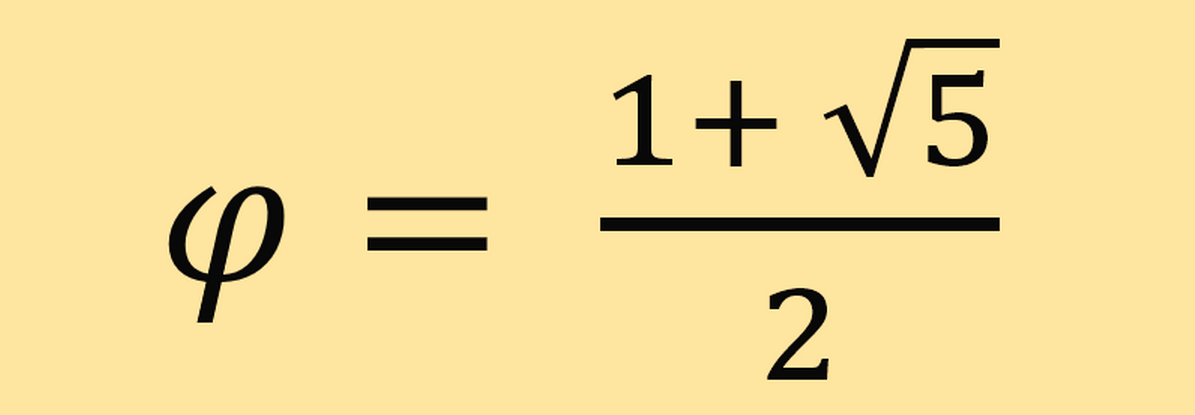
This remarkable number is everywhere — in mathematics, art, and nature — and stands for harmony, proportion, and the subtle balance of beauty. One of its most famous connections is with the Fibonacci sequence: 0, 1, 1, 2, 3, 5, 8, 13, …
The ratio of any two successive Fibonacci numbers F(n+1)/F(n) approaches φ as the numbers grow larger.
This convergence can be understood analytically using Binet’s formula, which expresses the n-th Fibonacci number in closed form:
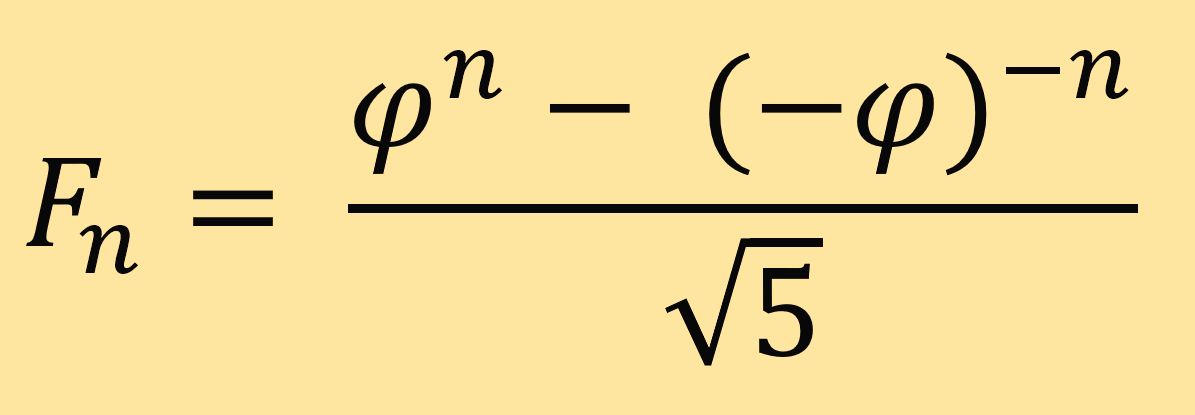
If we take its canonical analog, the 161st day from the start of the Hebrew year becomes Canonical Golden Ratio Day — or simply Canonical Phi Day.
If π expresses spatial geometry and e embodies growth, then φ represents the living harmony of proportion — the natural patterns that pervade both mathematics and the world around us.
So yes, Phi Day deserves a place among our Hebrew Fun Holidays.
Hi-Tech Nation, Meet Programmer’s Day
Given that Israel is widely known as the Hi-Tech Nation, the 256th day of the Hebrew calendar — Programmer’s Day — could be officially celebrated as Israel Hi-Tech Day.
In the binary world, 256 (2⁸) marks a natural boundary — the byte. In the symbolic world, it represents human ingenuity mapping logic onto creation.
When expressed in the fluid rhythm of the Hebrew calendar, it becomes a fusion of heritage and code — a perfect emblem for Israel’s technological culture.
Learning from pyluach
To explore the Hebrew calendar further, we can examine its structure using a simple Python script.
The pyluach library makes this possible — a powerful toolkit for Hebrew date calculations.
It can convert between Hebrew and Gregorian dates, find holidays and Parsha readings (weekly portions of the Torah), calculate differences between dates, and even generate full Hebrew calendars.
(Readers who prefer to skip the code can jump directly to the output below.)
# hebrew-year-length.py

from datetime import timedelta
from pyluach import dates, hebrewcal


def hebrew_year_length(year):
    """
    Print the length, classification,
    and Gregorian date range of a given Hebrew year.
    """

    # Start of the Hebrew year (1 Tishrei)
    start = dates.HebrewDate(year, 7, 1)

    # Start of the next Hebrew year (1 Tishrei of the following year)
    next_year = dates.HebrewDate(year + 1, 7, 1)

    # Number of days in this Hebrew year
    days = next_year - start

    # Leap year status
    leap = hebrewcal.Year(year).leap

    # Determine the year type
    if days in (353, 383):
        year_type = "deficient"
    elif days in (354, 384):
        year_type = "regular"
    elif days in (355, 385):
        year_type = "complete"
    else:
        year_type = "unknown"

    name = f"{'leap' if leap else 'common'} {year_type}"

    # Gregorian date range
    start_greg = start.to_greg()
    end_greg = next_year.to_greg().to_pydate() - timedelta(days=1)

    # Print formatted output
    print(
        f"Year {year}: {name} - {days} days "
        f"-> Gregorian: {start_greg:%Y-%m-%d} - {end_greg:%Y-%m-%d}"
    )


# Print Hebrew year length and description for several years
# starting from the current Hebrew year.
current_hebrew_year = dates.HebrewDate.today().year
number_of_years = 5

for y in range(current_hebrew_year, current_hebrew_year + number_of_years):
    hebrew_year_length(y)
Output:
Year 5786: common regular - 354 days -> Gregorian: 2025-09-23 - 2026-09-11
Year 5787: leap complete - 385 days -> Gregorian: 2026-09-12 - 2027-10-01
Year 5788: common complete - 355 days -> Gregorian: 2027-10-02 - 2028-09-20
Year 5789: common regular - 354 days -> Gregorian: 2028-09-21 - 2029-09-09
Year 5790: leap deficient - 383 days -> Gregorian: 2029-09-10 - 2030-09-27
This shows how elastic the Hebrew year is — flexing between 353 and 385 days, yet maintaining perfect internal logic.
Beyond Israel: Canonical Days in Local Calendars
The same method can be applied to any national or traditional calendar. Why should the 256th day be tied only to the Gregorian system?
Wouldn’t it be wonderful to celebrate, say, an Indian Programmers’ Day on the 256th day of the Indian National Calendar — or a Phi Day according to the Ethiopian calendar?
The canonical approach is not about replacing one system with another, but about recognizing mathematical constants as universal markers of meaning within each culture’s rhythm of time.
In short: the Hebrew calendar doesn’t resist canonicity — it enriches it.
Its complexity doesn’t obscure mathematical harmony — it translates it into a sacred rhythm of months, moons, and postponements.
That’s what makes Hebrew Fun Holidays truly fun: they remind us that even in the most ancient cycles, mathematics still dances with time.
Finally, a personal note on Pi Day: In the previous article, I noted that the 314th day of the year is my birthday, and the commonly celebrated Pi Day on March 14 is also personally significant — it is the day of my wedding. Moreover, March 14 is the birthday of Albert Einstein, which makes this date especially appealing to mathematicians, physicists, and lovers of science alike.
But here’s an even more amazing coincidence: the 314th day of the Hebrew calendar happened to be the day of my engagement. This makes all variations of Pi Day personally meaningful for me, in both the Gregorian and Hebrew calendars.
I’m sure that if you look deeper into various fun days in the Gregorian, Hebrew, or other calendars, you will also make surprising discoveries and find your own personal coincidences.
So, whether you’re counting days from Gregorian New Year, Rosh Hashanah, or just following the rhythm of the moons, may your calendars be full of joy, numbers, and a little mathematical magic.

Related Topics
Related Posts