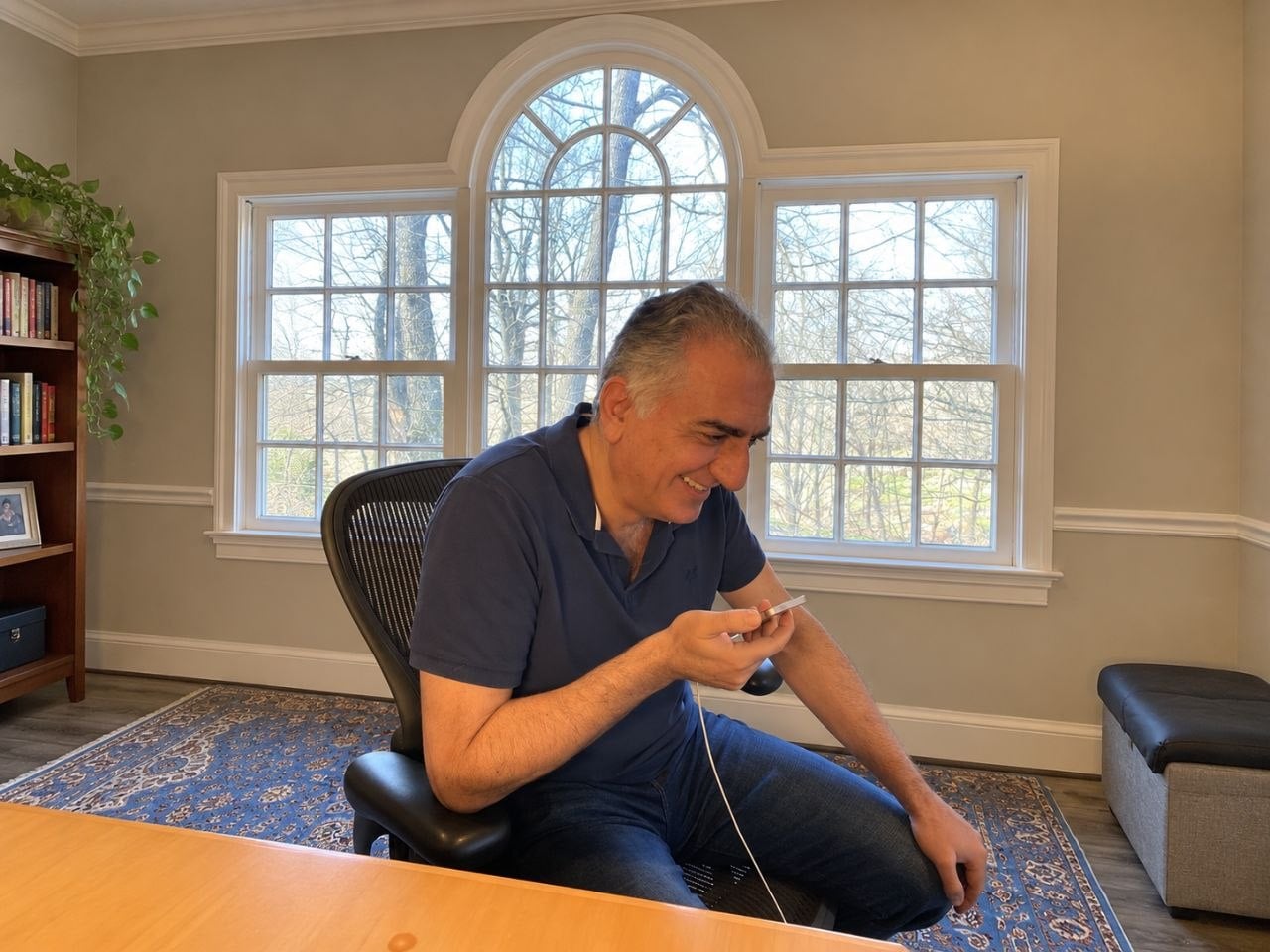
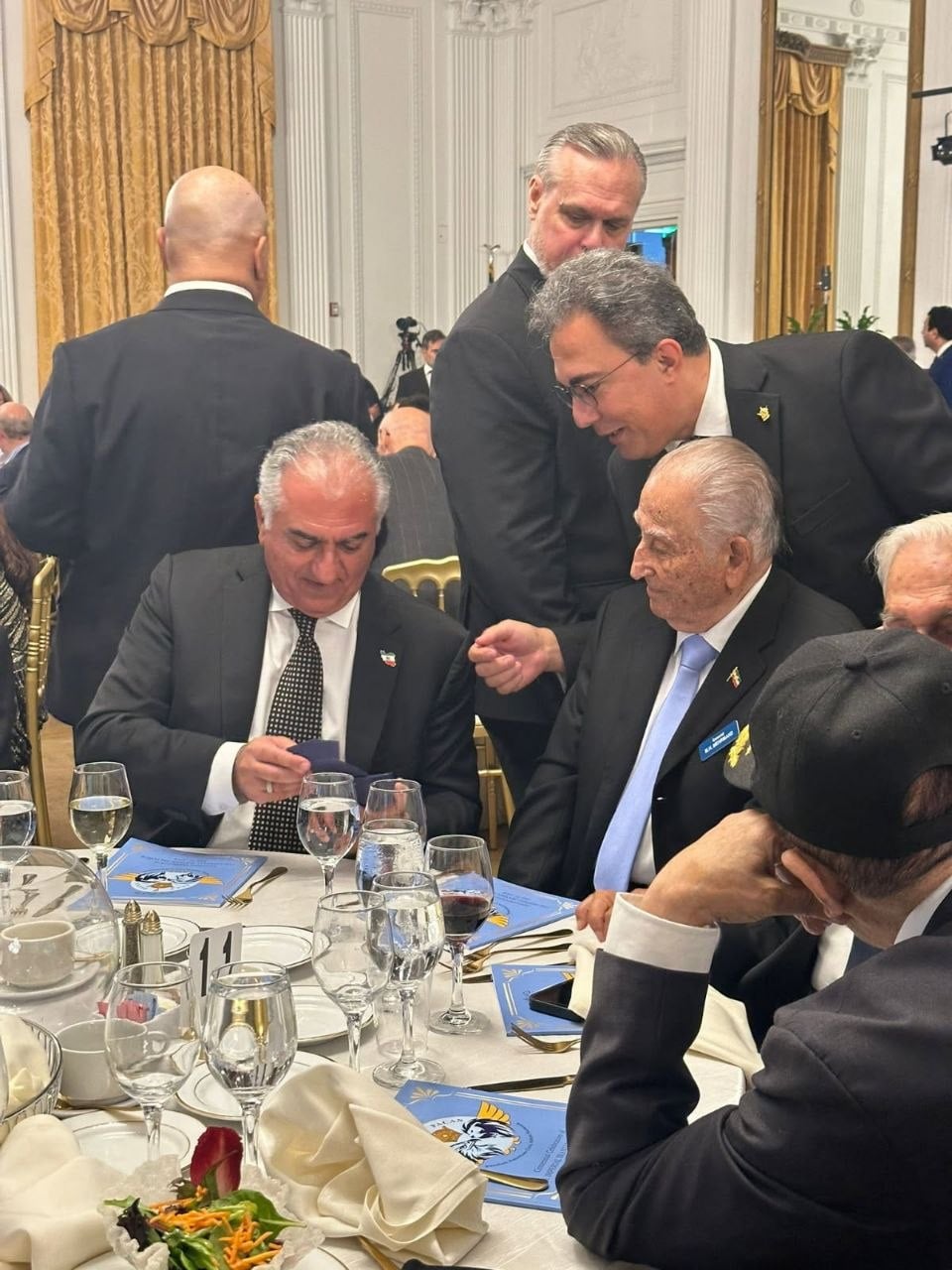
Crown Prince Reza Pahlavi turns 65 today. He is the only widely popular, influential, and accepted leader of Iran’s opposition and the Iranian people. Photo from the personal collection of Erfan Fard. / Free for all platforms
The Iranian king is the guardian and steward of the realm, of law, justice, equality, and the freedoms of every member of the nation. The Iranian sovereign possesses executive authority. In the Iranian monarchical system, the education and upbringing of the king have always been of profound importance. Iranian kings, descended from the lineage of Iran, do not govern through cruelty and bloodshed. The king has never been the law itself, nor the lawgiver; rather, he is the guardian of Iran and its ancient traditions, founded upon truthfulness and the rejection of falsehood.
Ferdowsi portrayed the true character of kingship with remarkable clarity. He reminds us that the duty of kings is to preserve the land of Iran and uphold justice and truth. He illuminates the monarch’s standing, love of homeland, separation of religion and state—the throne and the pulpit—equality, liberty, and human dignity.
The celebrated verse, “If Iran should cease to be, let my own life cease as well,” expresses this Iranian philosophy: an affirmation of Iran itself, rather than the king. Ferdowsi’s Shahnameh is an epic of justice that revived Iran’s history, literature, and culture.
Many have sought to destroy Iranian monarchy and the idea of kingship. Following the Arab invasion, Iranians rose across the country in the early third century and brought Arab rule to an end. Before the fourth century arrived, Iran had regained its independence. The Caliph’s name might still have been heard, but Iran never regained the grandeur and majesty it possessed before the Muslim Arab invasion.
The great Sasanian monarchy was never reestablished. The Seljuks and Mongols subsequently brought further destruction, yet could not eradicate the roots of monarchical governance. One cannot reject Iranian civilization while hypocritically claiming nationalism in hostility to monarchy. In 1979, the Shiite mullahs and their religious octopus attacked Iran, seeking to destroy its ancient culture and civilization. But they failed. Even today, old terrorists, communists, reformists, and separatists serving foreign masters occupy contemporary media organizations, attempting through reckless judgments to erase Iranian kingship. But what a vain illusion!
The language befitting a king reflects his civic understanding and thought. He is a child of his own time who invests in the awareness of future generations. Disciplined and tolerant, he engages neither in vindictiveness nor hypocritical shouting. The king advocates no particular ideology. He has the final word because he depends upon no particular group.
What we see in museums reveals that, in ancient Iran, the king was a vigilant and wise individual, possessing civilization and national identity, not a despot. Never mind that ignorant media clowns, with histories of separatism and terrorism, call him a fascist. They possess neither the knowledge to examine fascism nor an understanding of Iranian history. Their only talents are fraud, charlatanism, and reporting on the affairs of every arsehole and everything in the universe.
Noble-minded kings, possessing pride and civilized understanding, have guarded the continuity of civilization, which never dies. A wise king places his nation on the path of civilization. The cultivated king is no sultan; he embodies culture, not stupidity and insolence. The monarchical system possesses a civic discourse: it is human-centered, respects the law, strives for excellence, and remains open to reform. Through the advancement of civility and civil institutions, we must establish a society founded upon social justice.
This means strengthening cultural values and the rule of law, not personal rule, distorted thinking, or deception. Their command was to lay brick upon brick in building civilization. The king is a thoughtful servant and cultivator of culture, and the virtuous king stands close to civilization.
The Iranian king rejoices in the moral development of society. The responsibility for education and upbringing rests upon his shoulders. He seeks to cultivate culture and establish schools and cultural institutions. He understands Iran’s history and literature and guards its ancient values, preserving the accumulated experience of centuries. In the passage of civilization, respect for the will of the people and civic identity is essential. Cities throughout the Achaemenid Empire possessed libraries, theaters, performance halls, and music halls. The Seleucids, Parthians, and Sasanians had universities and schools and possessed a civic outlook.
The legacy of the Arab caliphs, the mullahs, and the religious octopus consisted of shrines, mosques, and religious seminaries, with an outlook directed toward the afterlife and ideology. The sultanate system, with its ideological identity, is incompatible with civilization. It represents surrender to ignorance and antiquated thinking, like the quagmire of the Safavid era. Iranians once recited the Shahnameh instead of mourning elegies, and Iran, under Darius and the Sasanian kings, possessed grandeur and majesty.
Iranian kingship is broader and more comprehensive, accompanied by a distinct philosophy of knowledge. Individuals trained in its traditions were considered, and the most suitable was chosen as king: a sovereign endowed with knowledge, competence, and the courage to govern and administer.
The successive rebirths of Iranian society, in antiquity and recent centuries, have depended upon understanding the principles of Iranian kingship. Iran’s survival has rested upon the continuity of its 2,500-year-old systems of government and its civilization of five or seven thousand years. This cohesive and advanced civilization developed its own system of kingship and governance, establishing enduring royal dynasties. The educational system within Iranian kingship has been the guarantor of democracy and society’s survival, while the king has served as guardian and executor of human justice.
Iranian kingship is, in truth, the very essence of Iranian civilization. Today, its living legacy, Iran’s living sovereign, is Crown Prince Reza Pahlavi. Time is running short, and history does not bestow such a figure upon us every day. As we approach his 65th birthday, our beloved Iran stands on the brink of complete destruction. What would you ask of Iran’s sovereign? What must we do to follow the rightful path and move beyond the ruinous deviation of 1979 and its club-wielding enforcers?
Monarchy is part of our national identity. Iran gave rise to Cyrus, a ruler of reconciliation and peace and founder of a great empire. Cyrus, one of the great figures of Iranian history and politics, endures not because his name means “sun,” but because this guiding genius was a man of tolerance and forbearance. He shaped the legacy of Iranian identity, preserved through kings bearing the title “the Great”: Darius, Shapur, Nader Shah, and Reza Shah.
This tradition served as a bulwark against foreign cultural incursions, preserving our society’s rich identity—creative, forward-thinking, and rooted in Iranian traditions. Within Iranian kingship, the king guards culture and ancestral heritage. Possessing civic understanding and wisdom, he is a civilized son of his age. Even today, the idea of monarchy represents renewed love for Iran and the determination to remain Iranian.
No one seeks despotic sultanism. It is “Iranian kingship,” and this desirable reality must be approached with political reason and rational judgment. We must return to our identity and history and restore pride to Iran’s name. For Iran is inseparable from its ancient civilization, and the philosophy of Iranian kingship cannot be erased: it is the very essence of Iranian civilization.
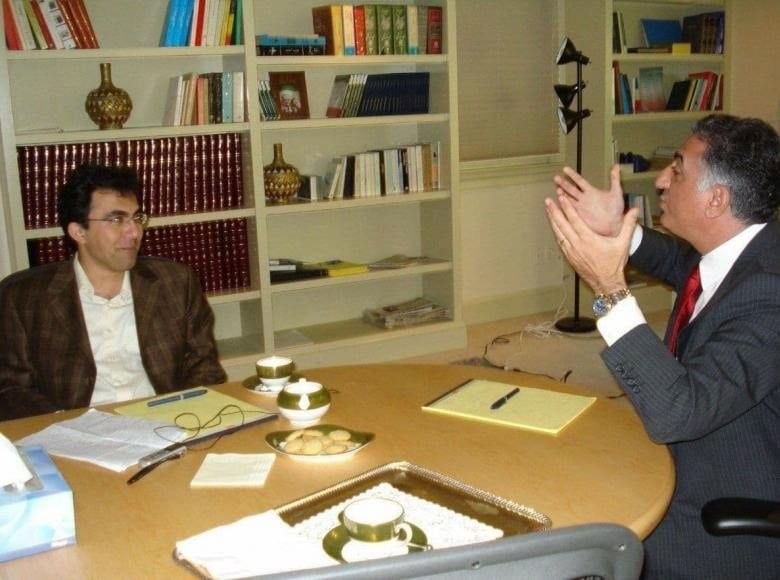
Erfan Fard and Crown Prince Reza Pahlavi — Washington, D.C., 2005. A conversation on Iranian history and the transition to democracy. / Photograph by Ms. Vafaei. From the personal photo collection of Erfan Fard.
Throughout Iranian history, sovereigns have been educated within a coherent system, with ethical, civic, and human principles ingrained in their thinking. Above all, they have been guardians of the realm and nation, attaining authority through merit and competence. Not everyone has been worthy of the title of sovereign, for the king possesses executive authority and safeguards law, morality, and justice, serving as the voice of the nation. This constitutes a distinct political ethos and philosophy of knowledge inherent in Iranian kingship.
Within this philosophy, nationalism shines forth as a commitment to the nation’s interests, awareness, and wisdom. The sovereign possesses convictions, ideals, and a historical identity that compel him to safeguard national welfare. He is the symbol of the nation, the living expression of society’s identity, and the guardian and standard-bearer of its national will.
Perhaps the question arises: Why do generations of Iranians who never experienced life under the Pahlavi monarchy speak so favorably of its achievements? Is their admiration driven solely by hatred of the Islamic Republic? No! It is a return to our own identity. Iran’s sovereign is alive and 65 years old, while the new generation seeks to escape the censorship and boycotts imposed by the generation of 1979, freeing itself from their delusions and destructive legacy. Yet the followers of 1979 are still shadowboxing, fighting the bear of SAVAK in their vain imaginations! Immersed in their absurdities, they obstruct a proud Iranian generation determined to reclaim its national identity.
They see Iran’s condition and want the Crown Prince—the living legacy of Iranian monarchy and kingship—to act. This is the historic opportunity and good fortune of this generation. In this land, all have been guests of history, and all have departed. The Islamic Republic, too, will depart, along with its lobbyists, agents, and supporters. There is no place for clerical cloaks, slippers, and turbans in Iran’s history.
Although some seek a second Islamic Republic or the preservation of its existing structure, this generation is determined to break with it and follow its own path. This national resurgence will reject destructive ideology. The fabricated accusations and vindictiveness of the followers of 1979 will lead nowhere.
What the new generation seeks is the restoration of national pride and Iranian identity. For them, the Crown Prince symbolizes constitutionalism and national thought. This intelligent generation cannot be driven backward with clubs or deceived by a mirage. A national discourse is possible. Against the intellectual wasteland of the religious octopus and the failed discourse of 1979, the growth of this national movement is attributable to Crown Prince Reza Pahlavi’s presence, as the slogans of the new generation demonstrate.
The Crown Prince’s activities in recent months have presented the world with a new image of a proud, civilized Iran. The culture of constitutionalism remains alive and continues to develop within the tradition of Iranian kingship.
We must gather around a constructive, reputable, influential, and trustworthy figure whose name the people have shouted in streets and neighborhoods. We have a national symbol standing above political factions, with whom every Iranian has the right to engage. He is also Iran’s sovereign. Without mincing words, the base of social power rests in one individual. This wealth of public trust can prove invaluable during collapse and transition, allowing political competition at the ballot box.
It was not Nader Shah who founded the terrorist Falaq Party! It was not Cyrus the Great who sought to poison Tehran’s water supply or blow up Shiraz’s electricity department! It was not Darius the Great who hijacked a passenger aircraft from Dubai to Tehran and diverted it to Iraq! And Reza Shah was not forever bending over backward to secure the release of a prime minister’s terrorist through a single-article legislative measure!
Rather than indulging in political hooliganism, commotion, and the rule of rabble-rousers, let us consider Iran’s future. Those competing at the ballot box must offer constructive ideas, not destructive ideologies. Not the remnants of 1979, nor the regime’s reformists, enamored of power, wealth, and radicalism.
An awakened monarchical government is the key to Iran’s survival. It is among the duties of patriots to acquire a deeper understanding of the thought, philosophy, principles, and foundations of this system, and of the role of the king—the Shah or Shahryar—within it.
On the glorious occasion of Crown Prince Reza Pahlavi’s 65th birthday, may this historic milestone herald the rebirth of a free, united, and prosperous Iran. May the Lion and Sun once again shine over our beloved homeland. Long live Iran! Long live Iranian kingship!
“May you all reign in your own time,
Guardians of the realm and guardians of the faith.” Ferdowsi
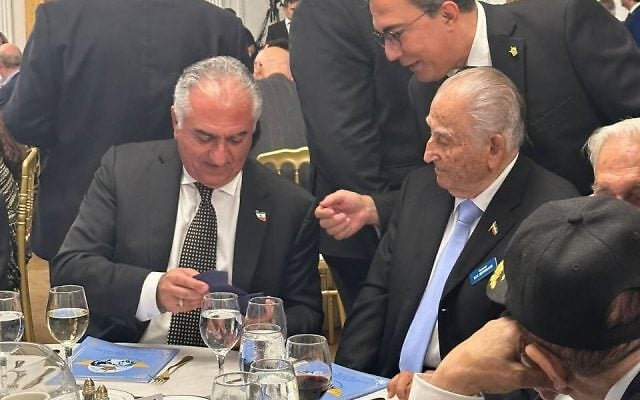
Crown Prince Reza Pahlavi & Lieutenant General Mohammad Hossein Mehrmand, IIAF GALA, CA 2024 / The Personal Archive of Erfan Fard / Free for all platforms
About the Author
Erfan Fard is a counter-terrorism analyst and Middle East Studies researcher based in Washington, DC. He is in Middle Eastern regional security affairs with a particular focus on Iran, Counter terrorism, IRGC, MOIS and Ethnic conflicts in MENA. \He graduated in International Security Studies (London M. University, UK), and in International Relations (CSU-LA), and is fluent in Persian, Kurdish, Arabic and English. Follow him in this twitter account @EQFARD