
Houthis’ Threats and Pakistan’s Resolve
The recent threats from Yemen’s Houthi movement towards Pakistan and Türkiye are hard to misinterpret. When Mohammed al-Bukhaiti, a key figure in Ansar Allah, warned that Pakistan would face an “iron fist” if it intervened on behalf of Saudi Arabia, he was making a serious statement. This reflects a growing truth in the region: Pakistan’s commitment to Saudi Arabia’s security is both real and steadfast.
Al-Bukhaiti’s statements came at a time when tensions between the Houthis and Saudi Arabia are on the rise, especially with the recent missile and drone strikes targeting the Kingdom. The conflict is now reaching beyond Yemen’s borders, sparking broader worries about regional stability, maritime safety, and the security of crucial economic corridors. The recent attacks on Saudi cities and important infrastructure have heightened fears that this conflict could escalate further across the Middle East.
"By God, if Turkey or Pakistan get involved, we will strike them with an iron fist. And just as we are disciplining Saudi Arabia today, we will discipline them as well."
—Mohammed al-Bukhaiti, a member of the political bureau of the Ansar Allah movement???????? pic.twitter.com/WV7zxD8qn5
— The Resonance (@Partisan_12) September 19, 2026
Against this backdrop, the warning directed at Pakistan is significant because it comes at a time when Islamabad, Riyadh and Ankara have strengthened their strategic cooperation through the recently signed Makkah Joint Defence Agreement. The pact reflects a growing belief among regional powers that security challenges can no longer be addressed in isolation. As instability spreads across the region, collective deterrence and mutual support have become central pillars of regional security thinking.
The Houthis appear to understand this reality. Their threats toward Pakistan and Türkiye are not random. They are a recognition that a stronger regional security framework complicates their ability to exert pressure through missile and drone attacks. Yet intimidation is unlikely to alter Pakistan’s position.
Pakistan has repeatedly condemned attacks on Saudi Arabia’s sovereignty and territorial integrity. Its support for the Kingdom is rooted in a strategic partnership that spans decades and includes defence cooperation, economic collaboration and close people-to-people ties. But there is another dimension that distinguishes Pakistan’s relationship with Saudi Arabia from many other international partnerships.
Deeply concerned at the Houthi drone attack on Taif, which claimed the life of a Yemeni resident, injured a Saudi citizen and a Pakistani national (reportedly in critical condition).
Pakistan strongly condemns this provocation, which endangered innocent lives and threatens…— Ishaq Dar (@MIshaqDar50) September 17, 2026
For millions of Pakistanis, Saudi Arabia is not merely a friendly country. It is home to Islam’s two holiest cities, Makkah and Madinah. Any threat directed at these sacred sites carries profound emotional and religious significance. This explains why recent attacks and threats have generated such strong reactions across Pakistan’s political, military and religious leadership.
Defence Minister Khawaja Asif captured this sentiment when he declared that the protection of Makkah and Madinah is not simply a matter of agreements between states but a religious obligation. His remarks reflected a view widely shared across Pakistan’s society: that the security of the Haramain Sharifain transcends ordinary geopolitical calculations.
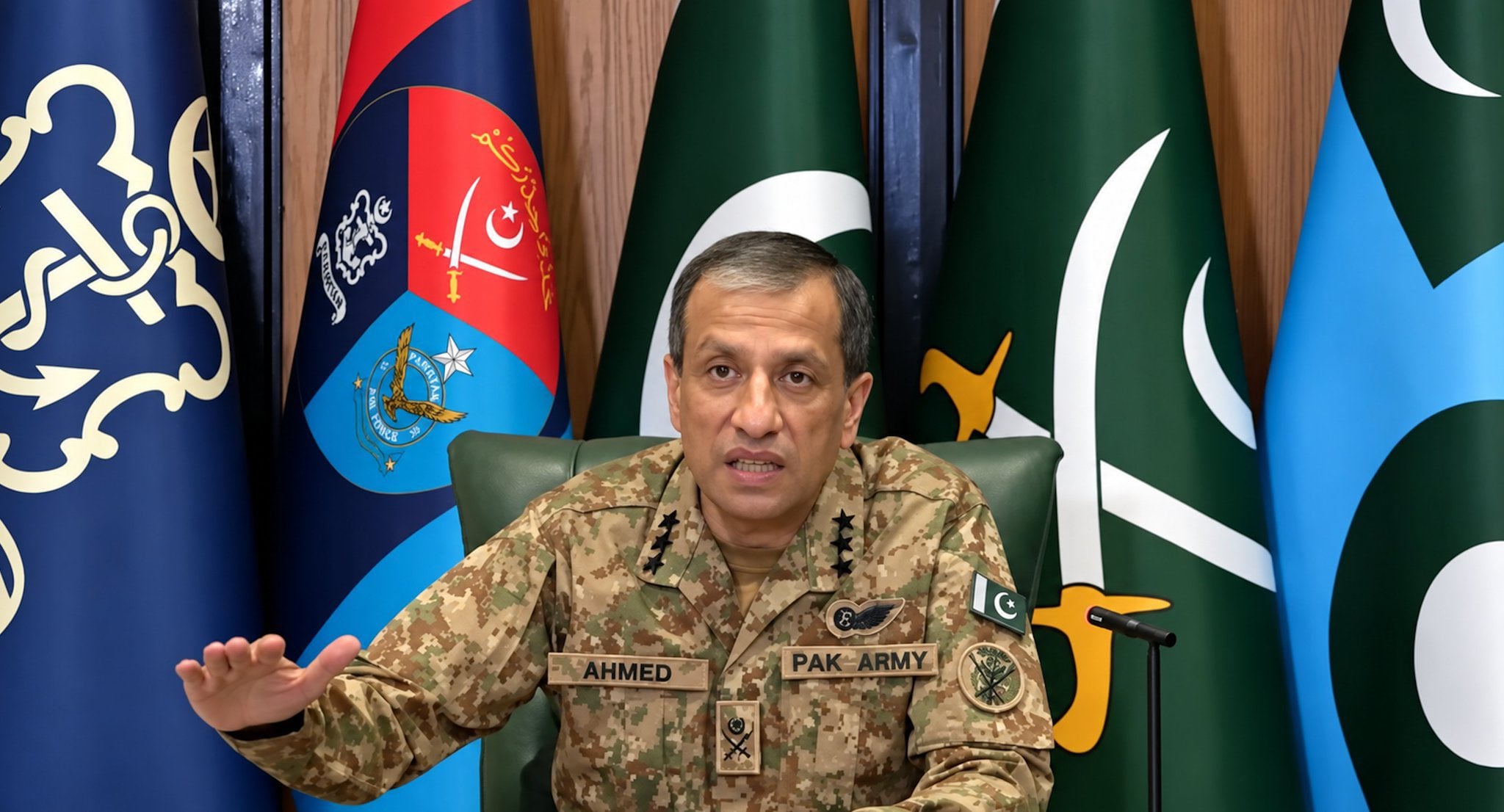
The message from Pakistan’s military leadership has been equally unambiguous. Inter-Services Public Relations Director General Lieutenant General Ahmed Sharif Chaudhry reaffirmed Pakistan’s “unconditional” commitment to Saudi Arabia’s security, stating that Pakistan would go to “any extent” required to defend the Kingdom and the Haramain Sharifain. Such statements reflect a clear strategic policy backed by both the civilian and military leadership.
DG ISPR Lieutenant General Ahmed Sharif Chaudhry reiterates
Pakistan will go “to any extent” to defend the Kingdom of Saudi Arabia from an attack.
Contingents of the Pakistan Armed Forces are already ‘on the ground’ (deployed) in the Kingdom of Saudi Arabia#Iran #India #Yemen… pic.twitter.com/WOMPEuZQm8
— Pakistan Armed Forces News ???????? (@PakistanFauj) September 18, 2026
What deserves equal attention, however, is Pakistan’s simultaneous commitment to diplomacy. While Islamabad has reiterated its readiness to stand with Saudi Arabia, it has also consistently supported efforts aimed at de-escalation and dialogue. Pakistan has engaged regional actors in search of a negotiated solution, recognizing that military confrontation alone cannot bring lasting stability to Yemen or the wider Middle East.
This balance between deterrence and diplomacy is often overlooked. Pakistan’s position is not one of seeking conflict; rather, it is one of preventing aggression while encouraging peaceful solutions. A credible commitment to collective defense can strengthen diplomacy by discouraging further escalation and creating incentives for dialogue.
The reaction from Pakistan’s religious leadership has reinforced this national consensus. Allama Muhammad Tahir Ashrafi strongly condemned threats against Saudi Arabia and warned against continued attacks targeting the Kingdom. His remarks reflected the deep concern felt by many Muslims who view attacks on areas surrounding Makkah and Madinah as an unacceptable provocation. Whether expressed by politicians, military leaders or religious scholars, the underlying message remains remarkably consistent.
ے حوثی باغیوں کے گروہ! جان لو کہ پاکستان الحمدللہ ایک مضبوط قوم اور طاقتور مسلح افواج کا ملک ہے۔ پاکستان، سعودی عرب اور ترکیہ کے درمیان مضبوط برادرانہ اور دفاعی تعلقات قائم ہیں۔
پاکستان، سعودی عرب اور ترکیہ کو دھمکیاں دینا بند کرو۔ ان ممالک یا ان کے دوستوں کی خودمختاری، سلامتی… pic.twitter.com/j9QqKe5i1L
— TahirMahmoodAshrafi حافظ محمد طاهراشرفى (@TahirAshrafi) September 20, 2026
He has also stressed that Pakistan’s relationship with Saudi Arabia goes beyond conventional diplomatic and strategic ties. In his view, the bond with the Kingdom is deeply connected to the religious and spiritual significance of Makkah and Madinah.
رئيس مجلس علماء باكستان الشيخ طاهر أشرفي : تهديد محمد البخيتي ( لتركيا وباكستان ) وكأنه يمثل مليشيا الحوثي الإرهابية الإنقلابية الفاشية ، ونقول للبخيتي ، حلف مكة الدفاعي تحالف ثلاثي قوي ، وعلاقتنا مع السعودية أكبر من خيالك وتفكيرك ، ونحن نحب السعودية وقيادتها ونحب من يحبهم ونعادي… pic.twitter.com/BNZ3zwxc5C
— TahirMahmoodAshrafi حافظ محمد طاهراشرفى (@TahirAshrafi) September 19, 2026
His message has also been directed at the Houthis, whom he has strongly condemned for attacks and threats involving Saudi Arabia. Ashrafi has questioned the religious justification for targeting Makkah and Madinah with missiles and drones, arguing that such actions cannot be reconciled with the sanctity attached to the two holy cities.
رئيس مجلس علماء باكستان الشيخ طاهر أشرفي : نقول لمفتي الحوثييين الجاهل ، تقولون نريد الإصلاح !! وتقتلون أبناء الشعب اليمني الشقيق ، وتهاجمون بصواريخكم ومسيراتكم جيزان ونجران وأبها وخميس مشيط وجدة وينبع والعلا ( ومكة والمدينة ) فهل أنتم عقلاء !! أم عملاء !! .. pic.twitter.com/xXzQvaoGqq
— TahirMahmoodAshrafi حافظ محمد طاهراشرفى (@TahirAshrafi) September 19, 2026
The broader lesson extends beyond the immediate crisis. The Middle East is entering a period of strategic realignment. Traditional assumptions about security are being challenged by non-state actors armed with increasingly sophisticated missile and drone capabilities. The Houthis have evolved from a local insurgent movement into a force capable of influencing regional security calculations and disrupting international trade routes. Their growing military reach has transformed the conflict in Yemen into an issue with implications far beyond the Arabian Peninsula.
رئيس مجلس علماء باكستان الشيخ طاهر أشرفي : الجميع يعلم بأن مليشيا الحوثي الإرهابية إمتداد لهوية لشقيقاتها العصابات المتطرفة في العراق ولبنان ، المنبع والمصدر والمرجعية والتدريب والتأهيل والتمويل والتخطيط والتعليمات ( دولة ثورية مارقة ) هدفها تفكيك وحدة الأمة العربية والإسلامية…
— TahirMahmoodAshrafi حافظ محمد طاهراشرفى (@TahirAshrafi) September 20, 2026
The Houthis may continue to issue warnings, but threats alone do not determine policy. Pakistan’s position has been clearly stated by its government, affirmed by its military leadership and supported by broad public sentiment. Islamabad seeks peace, advocates dialogue and prefers diplomatic solutions. Yet it has also made clear that its commitment to Saudi Arabia’s security is unwavering.
In that sense, the Houthis’ threats have achieved the opposite of what they may have intended. Rather than creating uncertainty, they have highlighted the clarity of Pakistan’s position. At a time when much of the region is defined by ambiguity, Pakistan’s resolve remains unmistakable.