How Do We Exercise Power Without Being Corrupted by It?
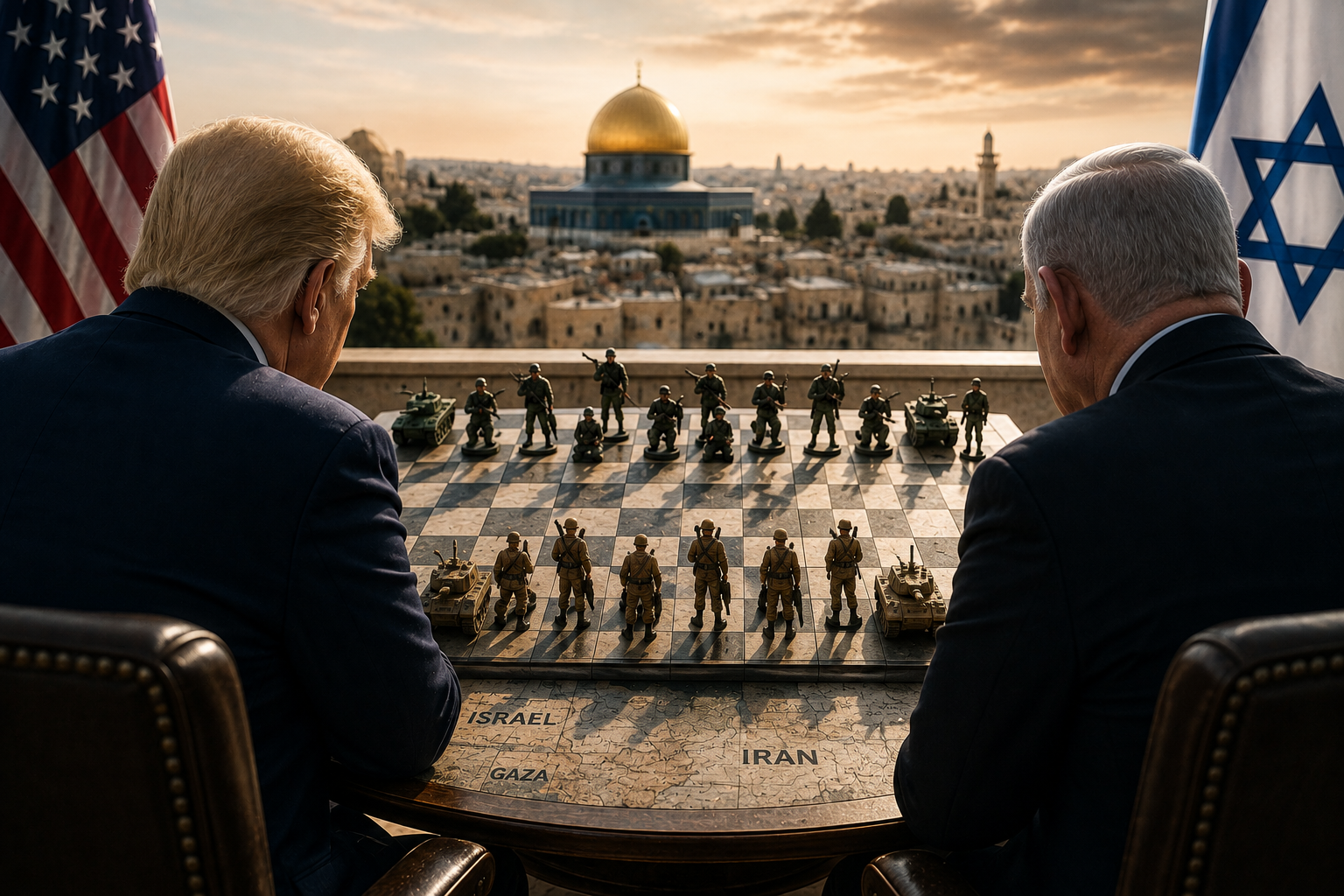
From the battlefield to the halls of government, Parashat Ki Tetzei offers an ancient warning for Israel and America today, one that Locke and Montesquieu would articulate centuries later: power may be necessary, but without limits, it can corrupt the very people and societies it was meant to protect
Parashat Ki Tetzei begins with war:
When you go out to war against your enemies…” (Deuteronomy 21:10).
Not if. When. The Torah knows that there are enemies who must be confronted and wars that must be fought. Yet while most theories of war ask how to win, the Torah asks a different question: How do we exercise power without being corrupted by it?
This question extends far beyond the battlefield. Armies need power to defend a country, governments need power to govern, and judges need power to enforce the law. The Torah’s concern is not power itself, but power without limits. And that concern feels strikingly contemporary at a moment when both Israel and the United States are wrestling, in very different circumstances, with the same fundamental question: Who limits those who hold power?
The Torah’s answer begins with the biblical king. It permits monarchy, but seems almost anxious about what monarchy can do to the person who occupies the throne. The king may not accumulate unlimited horses, wives, silver or gold, and he must keep the Torah beside him and read it throughout his life. Why?
So that his heart may not be lifted above his brothers.” (Deuteronomy 17:20)
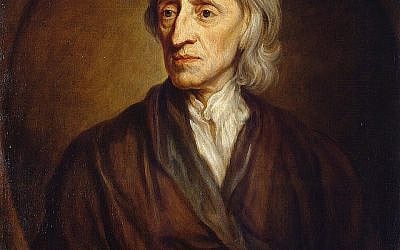
That may be one of the most radical political sentences in the Bible. Public authority does not elevate a leader above the people, and governing a country does not mean owning it. Even more strikingly, the Torah does not rely on the king’s good character. It restricts him in advance. Centuries later, John Locke would argue in his Second Treatise of Government that human beings possess natural rights and that government derives its legitimacy from the consent of the governed in order to protect those rights. Government therefore does not possess unlimited authority simply because it is government; its legitimacy depends upon the purpose for which power was entrusted to it. Montesquieu went one step further. He understood that hoping for virtuous rulers is not a political system. Power requires structural limits. Legislative, executive and judicial authority must remain sufficiently independent so that no single center of power can absorb them all. This is the deeper meaning of checks and balances: power must be capable of stopping power.
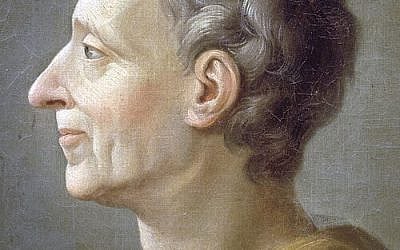
The Torah expresses the principle more simply: having the right to exercise power does not give you the right to exercise it without limits.
We are living in a political era, in Israel, in the United States and elsewhere, in which elected leaders increasingly speak as though winning an election gives them not merely a mandate to govern but a mandate to remove the obstacles to their governing. Courts become irritating when they overturn decisions. Legal advisers become troublesome when they say no. Independent institutions become “undemocratic” when they constrain the elected majority. Critics become enemies, and every limitation on executive authority can be portrayed as an illegitimate attempt to frustrate the will of the people.
But democracy was never meant to be a system in which whoever wins an election receives unlimited power until the next one. In fact, the Torah’s suspicion of concentrated power is even older than democracy. It assumes something uncomfortable but profoundly realistic: human beings do not become less human when they acquire authority. They remain vulnerable to ego, fear, greed, anger and self-justification. The more convinced a leader becomes that only he can save the nation, the more important it becomes that the nation have institutions capable of telling him no.
This is why the Torah limits not only kings and warriors but ordinary people exercising legitimate power over others. In Ki Tetzei, a creditor has every legal right to demand collateral from a debtor, yet the Torah tells him:
You shall not enter his house to take his pledge. You shall stand outside.” (Deuteronomy 24:10–11)
You shall stand outside. There may be no better metaphor for limited power. You may have a legitimate claim. You may possess legal authority. You may even be completely right. And still there is a door you may not cross.
Jewish tradition pushes this idea to an astonishing extreme in the Talmudic story of the Oven of Akhnai. When a heavenly voice attempts to settle a legal dispute, Rabbi Joshua refuses to accept even divine intervention and declares: “It is not in heaven.” The Talmud then imagines God smiling and saying:
My children have defeated Me; My children have defeated Me.” (Bava Metzia 59b)
What an audacious religious idea: God believes so deeply in the limitation of power that He models it Himself, accepting a boundary even on divine authority. The point is not that power is evil. Power is necessary. Armies need power to defend countries; governments need power to govern; courts need power to enforce law. A society incapable of exercising power cannot protect either its citizens or its values. The question Ki Tetzei forces upon us is harder: Can we remain faithful to those values precisely when we have enough power to violate them?
Perhaps that is the connection between the soldier on the battlefield and the leader in the prime minister’s office or the White House. Both can convince themselves that the magnitude of the threat justifies the expansion of their power. Both may even begin with a legitimate cause. And both therefore need boundaries that do not depend solely on their own judgment. Rabbi Jonathan Sacks: “In Judaism, power is not evil; but power that is not subject to morality is idolatry.” Idolatry begins when something created to serve us becomes something before which we bow. That can happen to money. It can happen to ideology. It can happen to religion. And it can happen to power. Ki Tetzei therefore offers us something more demanding than a theory of how to win a war. It asks how we protect the society that will remain when the war is over. It asks how leaders can govern without coming to believe that the state belongs to them, and how citizens can defend their country without surrendering the moral and democratic boundaries that made it worth defending in the first place. The enemy outside may require us to become stronger. The enemy within requires us to know where to stop.
May we have the courage to fight when we must, the wisdom to restrain our power when we can, and the humility to remember that no leader, no government, and no cause is ever above the moral boundaries we seek to defend.
Shabbat Shalom.