
In Israel, a missing soldier is everyone’s son

Forty-four years is a long time.
It is long enough for governments to rise and fall, wars to fade into history books, children to become grandparents and young soldiers to become names on memorial walls.
But apparently it is not long enough for Israel to forget one of its sons.
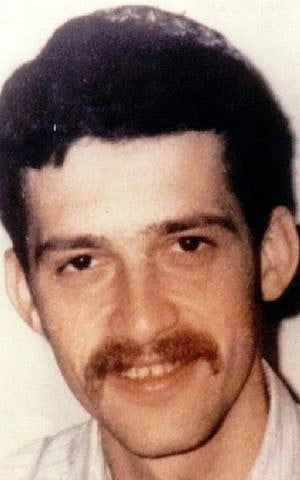
This week came word of a covert Israeli operation connected to Yehuda Katz, the IDF tank soldier who disappeared during the Battle of Sultan Yacoub in Lebanon on June 11, 1982. Early reports differed over precisely what was recovered — The Jerusalem Post reported that remains had been located, while The Times of Israel initially reported that personal belongings believed to be Katz’s had been found and were being examined.
That distinction is obviously of enormous importance to the Katz family (and The Times of Israel later confirmed that Katz’s remains were returned).
But there is another fact about which there was no uncertainty at all:
Israel was still looking for Yehuda Katz. After 44 years.
Think about that.
Katz disappeared together with Zachary Baumel and Zvi Feldman. Baumel’s remains were brought home in 2019. Feldman’s were recovered in 2025. And still Israel continued looking for Katz. Intelligence was gathered. Leads were pursued. Men and women in the IDF and Mossad devoted resources to a soldier who vanished before many of those searching for him were even born.
Why?
Because in Israel, a missing soldier never belongs only to his family.
He becomes everyone’s son.
That is one of the things about Israel that is sometimes difficult to explain to people who know it only from headlines about governments, elections, settlements, wars and diplomatic disputes.
Israel certainly has all of those things. Israelis argue about politics with a ferocity that makes American political debate sometimes look almost restrained.
But underneath those arguments is something deeper: the extraordinary sense that the young people sent to defend the country have been entrusted not simply to the army but to the nation.
When an Israeli soldier is killed, strangers attend his funeral. When a soldier is missing, people who never met him know his name. Families wait for decades, but in a very real sense the country waits with them.
The same instinct was visible throughout the hostage ordeal following October 7. The photographs in windows and on walls were not treated as photographs of somebody else’s children, parents or grandparents. They became part of the national family.
There is something profoundly Jewish about this.
Our tradition attaches enormous importance to kavod hamet, the dignity owed to the dead, and to bringing a person to proper burial. We speak of burial as chesed shel emet — the truest act of kindness — because it is kindness that can never be repaid.
And the idea goes back much further.
When the Israelites finally left Egypt, the Torah pauses amid the drama of the Exodus to tell us something seemingly small: Moses took Joseph’s bones with him.
Generations had passed since Joseph died. Egypt was collapsing around them. Pharaoh’s army would soon be in pursuit. Surely there were more urgent things to worry about.
Yet they did not leave Joseph behind.
Thousands of years later, that same instinct remains recognizable.
A Jewish soldier disappears in Lebanon in 1982, and in 2026 Israel is still searching.
This is not to suggest that other nations do not honor their missing soldiers. The United States, among others, has devoted enormous effort to accounting for those missing in action.
Nor should Israel’s determination be romanticized. Behind every operation and every announcement stands a family that has endured an agony most of us cannot imagine — decades of uncertainty, hope, disappointment and unanswered questions.
That is precisely why continuing the search matters.
A civilized society is measured not only by how it treats the powerful or the successful. It is measured by the promises it keeps when keeping them has become difficult, expensive or inconvenient.
Israel made an implicit promise to Yehuda Katz when it put him in uniform.
We will send you to defend us.
And if you do not come home, we will come looking for you.
Not for a year.
Not for ten years.
For as long as it takes.
There are days when being Jewish can feel like carrying the weight of several thousand years of history on our shoulders. There are days when Israel frustrates me, worries me and leaves me arguing with decisions made by people whose judgment I question.
And then there are days like this.
Days when Israelis risk themselves to search for a soldier who disappeared 44 years ago because somewhere along the way they inherited an ancient Jewish conviction:
We do not abandon our own.
Yehuda Katz is the son of his family.
But after Sultan Yacoub, he became something more.
He became one of ours.
And I cannot think of many things that make me prouder to call myself a Jew.