
Indiana Came to Israel Ready to Work
Indiana came to Israel in June with a question.
Not, What can Israel show us? Something more useful: What can Indiana and Israel actually build together?
That distinction shaped the trip.
A few weeks earlier, leaders from Indiana government, technology, cybersecurity, higher education and business had gathered at the Indiana Statehouse for a working session.
We worked. We looked at what Indiana could bring, what Israel could bring, where the institutions aligned and where the real opportunities might exist.
So when the delegation landed in Israel, we were not starting from zero. We were continuing a conversation.
Israelis Noticed
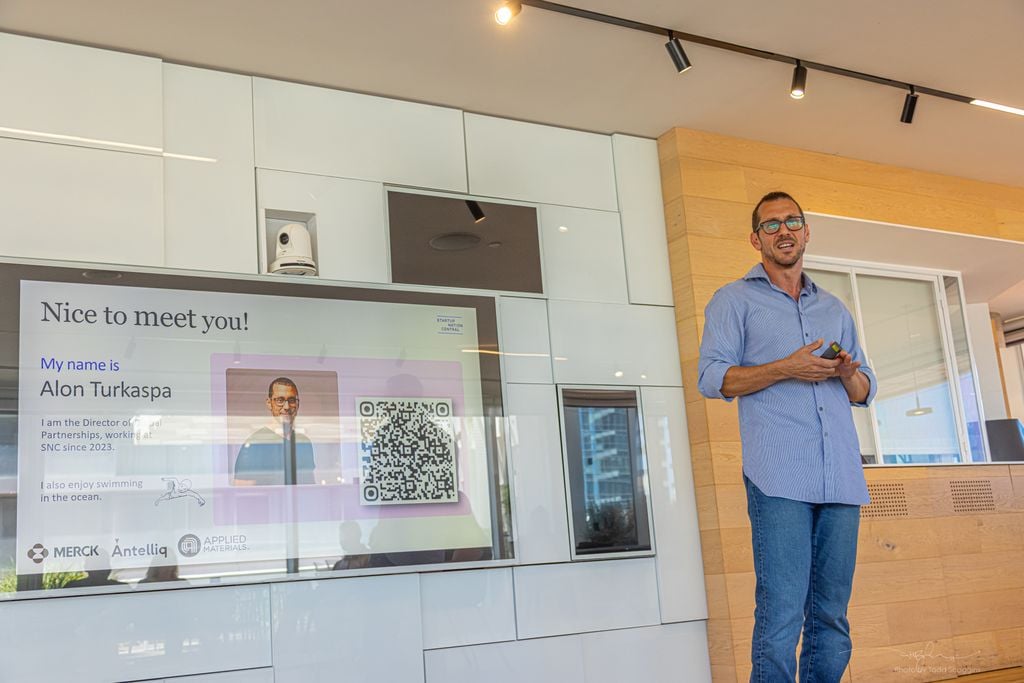
At Startup Nation Central, Alon Turkaspa immediately understood that this was not simply another visiting group.
Indiana Secretary of Business Affairs Mike Speedy was in the room. Around him were people responsible for technology, cybersecurity, universities, business and economic development. The delegation had interests. It had institutional reach. And people were asking practical questions.
Alon described the difference succinctly:
“The conversation is about mandates, not goodwill.
That is a very Israeli way of putting it. And it was exactly right. Goodwill opens doors. A mandate tells you what to do once they open.
Instead of asking broadly how Indiana and Israel might collaborate, the questions became more specific.
Where could this technology work in Indiana?
Who should meet this founder?
Which university should be involved?
Which company could help?
Who owns the next conversation?
That is when a delegation becomes useful.
We Started Looking Back Toward Indiana
At Sheba Medical Center, innovation was not theoretical.
We were standing inside a system where technology could move from development toward application.
The instinctive reaction was admiration. The more important reaction came next:
Who in Indiana needs to see this?
At the BIRD Foundation, U.S.-Israel collaboration became equally concrete. There were mechanisms through which companies in both countries could build together, commercialize technology and enter one another’s markets.
Again, the conversation turned toward Indiana.
Our universities.
Our manufacturers.
Our healthcare institutions.
Our infrastructure.
People we knew.
People who should know one another.
Then the People Became the Story
Chetrice Romero went to Israel expecting conversations about cybersecurity, artificial intelligence and innovation.
She came home writing about:
“People, leadership, resilience and hope.
That captured the trip better than an itinerary could. Because the formal meetings were only part of what happened.
There were meals.
Bus rides.
Jerusalem.
Conversations that continued after the agenda ended.
You begin to understand people differently when you travel with them.
You notice what they ask.
What they remember.
What excites them.
What they immediately connect back to home.
David Dungan of the Indiana Cyber Network later wrote:
“Partnerships are built on relationships. Innovation is accelerated through collaboration.
That sounds obvious. It is also the piece most frequently underestimated. Agreements do not move institutions. People do.
Indiana Had Something to Bring
The relationship was never meant to flow in one direction.
Israel has extraordinary innovation capacity. Indiana has extraordinary deployment capacity.
Manufacturing.
Research universities.
Life sciences.
Agriculture.
Cybersecurity.
Infrastructure.
Advanced industry.
American market access.
The more time we spent in Israel, the less the question became: What can Indiana learn? And the more it became: What can we build together?
That is the basis of a durable corridor. Not identical ecosystems. Complementary ones.
Then Everyone Came Home
This is the point where many international efforts lose momentum.
The flight lands. The photographs are posted. Everyone returns to their organization. And Israel slowly becomes another trip someone once took.
Alon Turkaspa gave us the more important warning:
“Most of the work happens after the visit.
That line may be the most consequential observation from the entire delegation.
Because access is not continuity. An introduction is not a relationship. And a relationship is not an outcome.
Someone still has to remember that an Israeli company encountered in June could fit a Purdue opportunity in September.
Someone has to recognize that two people who met briefly in Tel Aviv now have a reason to talk again.
Someone has to keep connecting the dots.
That is the work Heartland to Holyland was built to do.
The corridor does not depend on remembering one meeting. It depends on remembering thousands of relationships well enough to know when one suddenly matters to another.
What Israel Gave Us
Israel opened its doors. People shared their institutions, technology, ideas, time, meals and country with us. Indiana’s responsibility was to make sure that generosity did not become a collection of photographs and forgotten introductions.
The real test was never whether Indiana could get to Israel. It was what happened after we came home.
Author’s Note
This is Part II of a three-part series examining the development of the Indiana ⇄ Israel Corridor and the Resilience Tech Indiana Israel Initiative.
Part I, Before the MOU: Building the Partnership, examined the work that occurred before the delegation traveled to Israel.
Part III will follow what happened after the delegation returned to Indiana and how individual introductions began turning into sustained institutional relationships.