
Iran’s Hold on Hormuz Is the Solution and Not the Problem
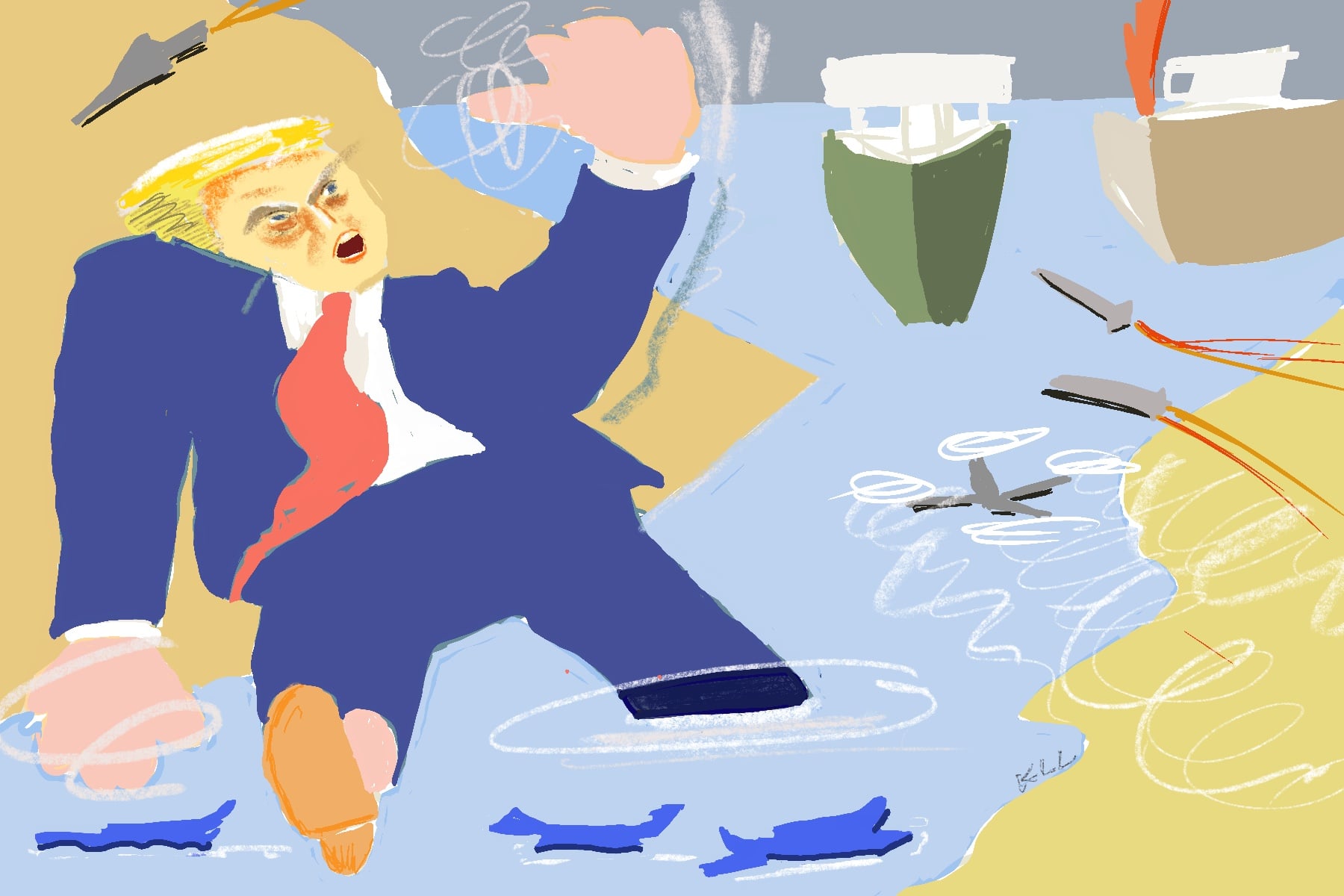
America can’t remove Iran from the Strait by force, and it’s unlikely to do so through negotiation. But this is unnecessary and hinders achieving some initial objectives, while opening the Strait
If the Trump administration can scramble to a new MOU, it should be a Memorandum of Understanding that Iran HOLDS the Strait of Hormuz as a lasting and all-powerful weapon. This is the opposite of before because the pre-war condition of the Persian Gulf cannot be recovered — at least not easily, or at an expense America is willing to pay.
Iran’s capture of the Strait is a god-sent opportunity that must be recognized and seized
Believing America can coerce the Strait open is now unhelpful. A physical undertaking would be enormously costly and risky, and have little public enthusiasm back in America. Even a negotiated attempt is fanciful given the stupendous prize Iran has landed and would wish to keep. Moreover, the focus on removing Iran from the Strait obscures an opportunity to ACTUALLY open the Strait.
An open Hormuz and Iran’s weaponization of it ARE compatible
With this understood, some common ground exists to restart negotiations and, with dedicated work, reach an agreement that results in a more secure region—including Israel.
Unappreciated and overlooked, Iran MUST have defensive capability for its own protection and for regional stability (President Trump alluded to this in an ad-lib-ridden address at a G7 press conference in France, Jun 17,2026). Denying this to any nation, even one with awful leadership, invites outside interference and attacks (examples of this have occurred in Lebanon, Syria, Iran, and others in the region). Hormuz gives Iran a powerful defensive weapon that can serve as a stabilizing force.
Importantly, Iran’s own restrictions on shipping through the Strait diminish the potency of its magnificent weapon (as would halving it with Oman, a proposal currently being entertained); Iran would be well advised to allow ships to sail freely. Counterintuitively, America should be siding with Iran to keep the Hormuz weapon robust and whole because it provides essential leverage for America to sway Iran from the more lethal and upsetting nuclear option. For Iran, Hormuz is a weapon in place, tested, inexpensive to maintain, and obliterator-proof. Iran may consider that its stupendous weapon, gifted in error, would render a nuclear bomb with all its complications superfluous. That an advisor to Iran’s supreme leader, Mohsen Rezaee, is reported to have said that Hormuz is more important than “dozens of atomic bombs” indicates no misunderstanding of its enormous power.
The revenues generated from tolls and fees are exaggerated, will diminish over time, and are likely relatively puny compared with gains from the Strait recognized as open and free. Iranian industrialist Ali Amiri discusses this in “Iran’s insistence on controlling Hormuz is penny smart, dollar foolish,” as a guest writer in The Economist, April 20, 2026. Iran’s weapon has already lost some of its effectiveness due to its implementation. Further use will weaken it more as international businesses find alternatives and workarounds. These expensive mitigation efforts can lose urgency, even necessity, if the Strait quickly regains its open status and confidence is restored.
Essentially, the Hormuz weapon can be traded for tempering Iran’s nuclear ambitions and its need for proxies
The existence and potency of the Hormuz weapon is in both Iranian and American interests. For Iran, it provides a formidable deterrent from outside attacks. And for America, it provides leverage in negotiations for Iran to temper its nuclear ambitions and even its need for proxies, as I discuss in “Who Needs a Nuke When Hormuz Works Just Fine?” The Times of Israel, May 10, 2026, Kerry Landon-Lane.
Donald Trump is floundering in the Gulf. He has returned to sanctions which are unlikely to yield better results than applied previously. Nate Swanson, who served as Director for Iran at the National Security Council from 2022 to 2025, discusses this in “Maximum Pressure on Iran Will Fail,” Foreign Affairs, August 25, 2026. Unfortunately, the consequences may be further erosion of American credibility, which is essential for negotiations to restart in earnest. Iran has stated it sees little point in discussions with America until President Trump ends his term in office. Its posture may not be set in concrete, as drifting situations are dangerous — even for Iran.
Assembling a negotiating team with specific talent and expertise essential for the demanding, lengthy negotiations ahead may signal to Iran that America is committed to finding a solution. Serious negotiations are the only credible path forward.
The Trump Administration is ramming the front door when a side door is open.
“Six Months In, Iran’s Regime Stands, U.S. Goals Remain Unmet” by Steven Erlanger, Foreign policy reporter for The New York Times, August 28, 2026, asks, “Where are we now, and how does it end?”