Israel and the Arab World’s Uncomfortable Mirror
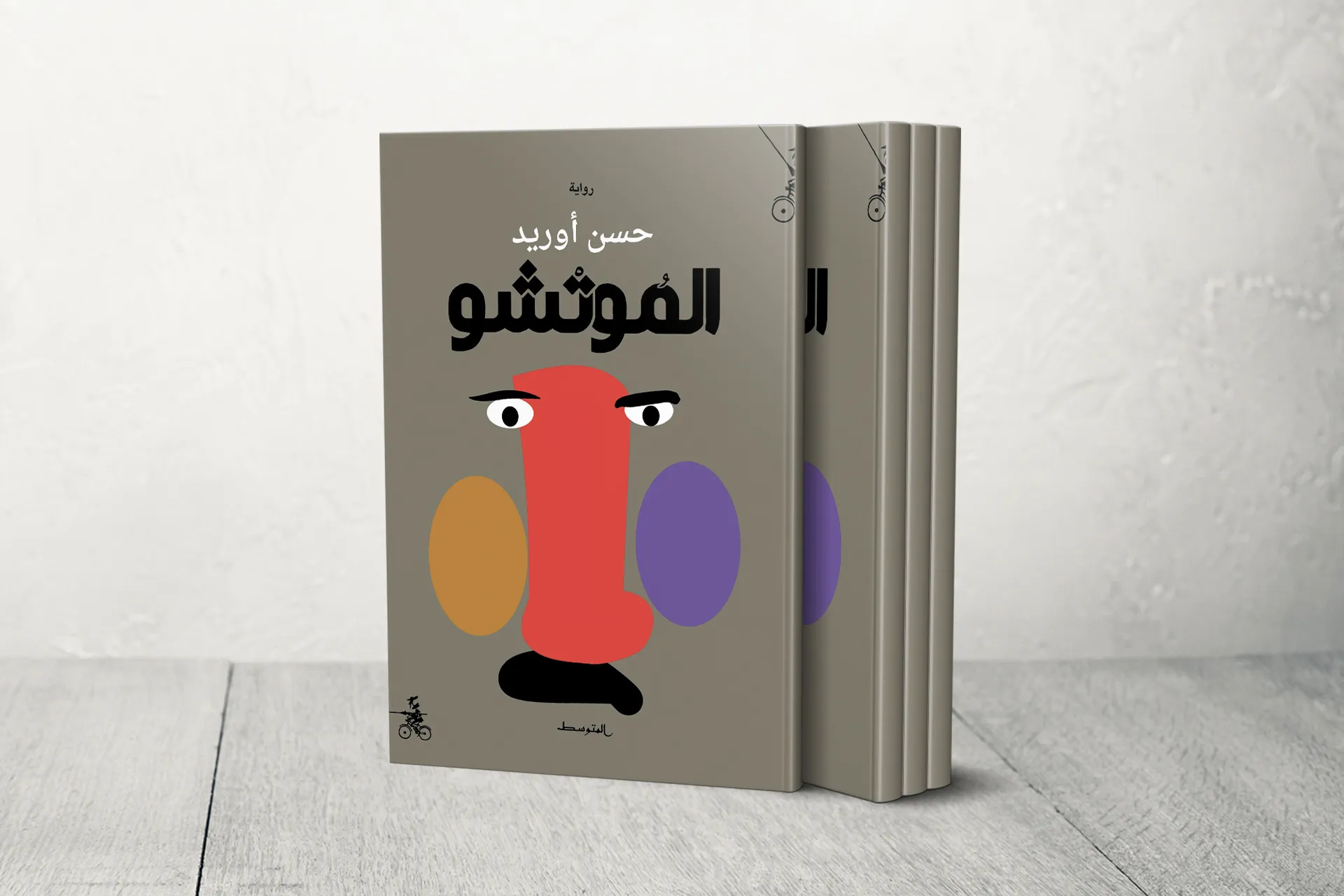
There are novels that tell the story of a society, and there are novels that put an entire civilization on trial. Hassan Aourid’s Al-Moutcho (الموتشو) belongs to the latter category. Behind the streets of Casablanca, the personal tragedies of its characters, their intellectual confrontations and their complicated identities lies a much larger question: What happened to the Arab world? How did a civilization that once contributed so profoundly to human knowledge become imprisoned within its own historical narratives, ideological obsessions and political contradictions? And why has Israel become so central to the Arab world’s understanding of itself, its defeats and even its aspirations?
For Israeli readers, this novel deserves particular attention. Its significance lies not in whether its author is sympathetic or hostile to Israel, but in the intellectual space he creates for questioning the foundations upon which much of the modern Arab discourse about Israel has been constructed. Israel becomes more than a geopolitical entity. It becomes a mirror in which the Arab world is forced to confront its own image, an image distorted over decades by nationalism, religious fundamentalism, authoritarianism and the refusal to assume responsibility for its failures.
Hassan Aourid: An intellectual who knows the machinery of power
To understand Al-Moutcho, one must first understand the man who wrote it. Hassan Aourid is not a novelist who discovered politics through literature. He is a political scientist, historian, former diplomat, former spokesman for the Moroccan royal palace and former historian of the Kingdom. Educated at the Royal College alongside Morocco’s present king, Mohammed VI, Aourid has experienced political power from within its institutions and examined it from the intellectual distance of academia. His doctoral research on Islamic and Amazigh protest movements is particularly relevant to understanding the competing identities that inhabit his novels. His earlier literary works, including The Morisco, Spring of Cordoba and Sintra, reveal a sustained fascination with historical memory, religious coexistence and the intertwined destinies of Muslims and Jews. Al-Moutcho extends that intellectual journey into the political and moral crisis of the contemporary Arab world. Aourid understands not only how power operates but also how political narratives are manufactured, institutionalized and eventually mistaken for historical truth.
An Arab world that has lost its memory One of the novel’s most powerful literary devices is the character of Bennis, an elderly intellectual and witness to the major political transformations of the Arab world, who loses his memory following a traffic accident. His condition is not merely a medical tragedy. It can be read as the diagnosis of an entire
civilization.
Through Bennis, Aourid presents a world that has lived through successive promises of liberation, national unity, independence, socialism, revolution and religious revival, only to find itself unable to reconcile those promises with their consequences. The Arab world remembers its victories selectively, explains away its defeats and often refuses to examine the circumstances that produced them.
The tragedy is not that Arabs have forgotten their history. It is that too often they have remembered a politically convenient version of it. This selective memory is particularly visible in the Arab relationship with Israel. Generations were educated to understand the Jewish state principally through the language of confrontation. Israel became the explanation for failures that frequently had their origins in Arab political institutions themselves.
Military defeats, economic underdevelopment, authoritarianism, corruption and the absence of democratic institutions could all be incorporated into a narrative in which the primary source of suffering existed beyond national borders.
Israel did not create Arab dictatorships. Israel did not prevent Arab governments from educating their children, building independent judicial systems, protecting minorities or establishing accountable political institutions. Yet the conflict with Israel has repeatedly been exploited to postpone precisely these responsibilities.
Bennis’s loss of memory invites us to examine the cost of this historical evasion. A society incapable of honestly remembering its past is incapable of intelligently constructing its future.
Amin El Cohen: The contradictions of Arab intellectual life The central character, Amin El Cohen, known as Al-Moutcho, embodies the contradictions of the contemporary Arab intellectual. A man shaped by leftist thought and the democratic aspirations of Morocco’s February 20 Movement, he nevertheless works for a newspaper with an Islamist orientation.
This apparent contradiction is one of the novel’s most revealing political observations. Arab leftists, Islamists and nationalists have historically disagreed about almost everything: religion, economics, individual liberty, the organization of society and the nature of political authority. Yet their opposition to Israel has frequently offered them a common ideological language. Movements that could not agree on the rights of their own citizens could agree on the identity of their external enemy. Amin inhabits this uncomfortable intersection. His intellectual formation equips him to question established truths, yet his professional and political environment exposes him to institutions that frequently depend upon those truths remaining unquestioned.
Even his surname, Cohen, carries considerable symbolic weight. It unsettles the boundaries between Jewishness, Arabness, Moroccan identity and religious belonging. It serves as a reminder that the categories through which contemporary political discourse divides human beings are considerably less stable than ideologues would like them to be.
Amin represents a generation that demanded freedom during the Arab Spring but inherited the intellectual structures of previous generations. Its political rebellion was not necessarily accompanied by an equally profound rebellion against inherited prejudices.
And there lies one of the great tragedies of the Arab Spring: one can overthrow a political regime without overthrowing the intellectual culture that made authoritarianism possible.
Esther Cohen: When Israel acquires a human voice For Israeli readers, the most significant character in Al-Moutcho is undoubtedly Esther Cohen, a Moroccan Jewish woman who has lived in Israel and whose political outlook is informed by Zionism and her relationship with the Jewish state. Esther is not simply introduced as a Jewish character to celebrate Morocco’s heritage of religious coexistence. Her presence serves a far more consequential purpose. She represents an intellectual and political challenge to the Arab understanding of Israel.
Through her confrontations with Amin, Aourid transforms Israel from an abstract object of Arab political discourse into a subject capable of speaking, arguing, remembering and defending its understanding of history. This distinction is fundamental.
For decades, much of the Arab world has spoken about Israel without speaking to Israelis. It has interpreted Jewish history without seriously engaging Jewish historical consciousness. It has defined Zionism without necessarily listening to those for whom Zionism represents the recovery of national sovereignty after centuries of persecution, displacement and statelessness.
Esther interrupts this intellectual monologue. Her presence obliges the reader to encounter an Israeli-oriented narrative not merely as something to condemn but as something to understand. Her engagement with Jewish historical suffering, the Holocaust and Israel’s historical legitimacy introduces questions that traditional Arab political discourse has often struggled to accommodate. What does Jewish national sovereignty mean to a people that experienced centuries of persecution?
Can Jewish historical attachment to the Land of Israel be acknowledged without denying Palestinian attachment to the same land? Can Arabs recognize the legitimacy of Jewish national aspirations without believing that they have betrayed their own identity?
These are questions that must be confronted if peace is ever to become something more substantial than a diplomatic arrangement. However, Esther should not be mistaken for an uncomplicated expression of Aourid’s own political convictions. Her arguments encounter resistance from Amin, and their disagreements are central to the novel’s intellectual architecture. The significance of her character is precisely that she is permitted to articulate a worldview that the Arab reader is accustomed to encountering through the interpretations of its adversaries.
As a Moroccan who has devoted a considerable part of his intellectual and public life to Arab- Jewish reconciliation, I consider this one of the novel’s most important achievements. Before people can recognize one another politically, they must recognize one another intellectually and historically.
The Jewish Moroccan and the Israeli Jew: A manufactured distinction There is another dimension to Esther’s character that deserves particular attention, especially within Moroccan society. In Morocco, we often speak with pride about our Jewish heritage. We celebrate our synagogues, Jewish cemeteries, religious traditions, historic Jewish neighborhoods and the contributions of Jews to Moroccan civilization. Yet this celebration sometimes conceals a profound contradiction.
There are those who love the Moroccan Jew of yesterday but reject the Israeli Jew of today. They celebrate Jewish history while regarding Jewish national sovereignty as an unacceptable political development. They embrace the memory of Jews who lived among us but struggle to embrace the descendants of those same Jews who now live in Israel.
What kind of coexistence is this if it depends upon Jews accepting the political identity that we find convenient for them?
Esther’s Moroccan and Israeli experiences challenge this artificial division. Her identities are not necessarily mutually exclusive. Her attachment to Israel does not erase her Moroccan origins, just as her Moroccan origins do not invalidate her attachment to Israel.
Hundreds of thousands of Israelis descend from Moroccan Jews. Their grandparents spoke our languages, ate our food, celebrated their religious festivals in our cities and participated in the construction of our civilization.
Their history cannot be divided into a Moroccan chapter worthy of celebration and an Israeli chapter worthy only of condemnation. If we genuinely believe that Moroccan Jews constitute an inseparable component of our national history, then we must also recognize their right to determine their own political and national destiny. Otherwise, our celebration of Jewish heritage risks becoming little more than an exercise in nostalgia, a love for the memory of Jews that does not necessarily extend to living Jews when they exercise political agency.
Political Islam and the appropriation of the Palestinian cause
Amin’s association with an Islamist newspaper opens another important dimension of the novel: the relationship between political Islam and Arab attitudes toward Israel. The transformation of the Israeli-Palestinian conflict from a territorial and national dispute into a religious confrontation has been one of the most destructive developments in modern Middle Eastern history.
Arab nationalism initially framed the conflict principally in terms of territory, sovereignty and national liberation. Islamist movements increasingly introduced a theological dimension, presenting the confrontation not merely as a conflict between two national movements but as a struggle possessing religious significance. The political consequences of this transformation are immense.
Territorial disputes can be negotiated. Political disagreements can be resolved. Borders can be established through agreements. But when political hostility becomes a religious obligation, compromise risks being interpreted as a betrayal of faith.
As a Muslim, I reject the proposition that my religious identity requires me to deny Jewish national existence. I equally reject the appropriation of Palestinian suffering by political and religious movements that use it to acquire legitimacy, mobilize supporters or distract populations from domestic failures.
The Palestinian people deserve freedom, dignity, security and political self-determination. Their suffering should not become the ideological property of any political movement.
One of the valuable possibilities opened by Aourid’s novel is the separation of solidarity with Palestinians from the rejection of Israel’s existence. These are not inherently identical political positions, despite decades of discourse presenting them as such.
Naima Belhaj: Identity beyond ideological classifications
The character of Naima Belhaj, the veiled physician responsible for Bennis’s treatment, introduces a different dimension into the novel’s examination of identity. Her religious appearance, professional identity and complex family background resist the simplistic classifications through which people are frequently understood.
Naima has a Muslim father and a mother of Jewish origin. Her family history complicates the assumption that Muslim and Jewish identities necessarily belong to separate and opposing human worlds. Her character is particularly important because she represents the human consequences of histories that political ideologies attempt to divide into rigid categories. Within her family, the histories of Muslims and Jews are not competing chapters. They are part of the same story.
Her role as a physician also acquires symbolic significance. While the novel’s intellectuals argue over political history, ideological legitimacy and national identity, her profession is concerned with preserving life and restoring health. Bennis suffers from the loss of memory. Naima participates in the effort to heal him. Read allegorically, the encounter raises a fascinating question: could the recovery of the Arab world’s pluralistic identity constitute part of the treatment for its historical and political illness?
Moroccan identity was never exclusively Arab, exclusively Amazigh, exclusively Muslim or exclusively Jewish. It developed through centuries of cultural interaction, migration, confrontation, accommodation and coexistence. Naima embodies the complexity that ideological purity seeks to destroy.
The Amazigh question and the limitations of Arab nationalism
The appearance of Mohand Amzian, an Amazigh intellectual, expands the novel’s critique beyond the Israeli-Palestinian conflict. His exchanges with Amin introduce the question of cultural marginalization and the relationship between Arab nationalism and non-Arab identities. For Israeli readers, this dimension of the novel is particularly important because it demonstrates that the Arab world’s crisis of identity cannot be explained exclusively through its relationship with Israel.
Long before contemporary normalization agreements, North African societies were engaged in profound debates concerning language, indigenous identity, cultural recognition and historical representation. The construction of an exclusively Arab national identity often marginalized Amazigh history and cultural expression. A political ideology that proclaimed liberation from European domination could simultaneously reproduce mechanisms of cultural domination within its own societies.
The irony is considerable. Political movements that insisted upon the recognition of Palestinian identity could be reluctant to acknowledge the full cultural and linguistic rights of Amazigh populations. Intellectuals who condemned exclusion abroad were not always equally attentive to exclusion at home. This does not mean that the Amazigh question and the Palestinian question are historically identical. They are not. But their juxtaposition exposes inconsistencies in the application of principles such as justice, recognition and collective dignity.
The novel’s treatment of Mohand also challenges those who interpret every intellectual engagement with Israel as a consequence of Western interference or hostility toward Arabs. Sometimes, such engagement emerges from internal experiences of cultural marginalization and dissatisfaction with dominant ideological narratives. The Arab world cannot demand that others recognize its complexity while refusing to recognize the complexity within itself.
Israel as an uncomfortable political comparison
One of the novel’s most provocative intellectual encounters concerns the comparison between Israel and Arab political systems. Through the disagreements between Amin and Mohand, Aourid introduces opposing interpretations of Israeli democracy, the treatment of different populations and the political achievements of the Jewish state.
The novel does not offer an uncomplicated endorsement of Israel. Amin challenges the idealization of Israeli democracy and raises fundamental objections concerning equality and Palestinian rights. These objections should not be ignored. Israel, like every state, must remain open to legitimate criticism. Its policies, political leadership, military decisions and treatment of Palestinians deserve rigorous examination. But the same principle must apply to Arab societies. Why has the Arab intellectual tradition invested so much energy in examining the imperfections of Israeli democracy while frequently failing to confront the absence of meaningful democracy in many Arab countries?
Why have political elites mobilized populations against Israeli policies while restricting freedom of expression, imprisoning dissidents and denying their own citizens opportunities to participate in political decision-making? Why has the Arab world’s relationship with Israel so often been constructed around confrontation rather than a serious examination of what can be learned from its scientific institutions, technological achievements, universities, economic development and political structures? Recognizing Israel’s achievements does not require accepting every Israeli policy. Criticizing Israel does not require denying its achievements.
Intellectual maturity begins when these two positions can coexist without contradiction.
The real danger for Arab societies is not that Israel has succeeded in certain areas. It is that ideological hostility may prevent them from understanding the mechanisms behind that success.
Why Israelis should read Hassan Aourid
Israeli readers should engage with Hassan Aourid not because he necessarily confirms their understanding of the Middle East, but because he offers access to an Arab intellectual conversation that is often insufficiently understood in Israel. There is a tendency within Israeli society to encounter the Arab world predominantly through military threats, diplomatic developments, political speeches and security analysis. These sources reveal important realities, but they cannot fully explain the intellectual anxieties, historical disappointments and cultural struggles shaping Arab societies. Aourid offers another window.
He belongs to an intellectual tradition struggling to reconcile historical inheritance with modern political reality, religious identity with individual freedom, national belonging with cultural plurality, and solidarity with Palestinians with an acknowledgment of Jewish national existence.
Israeli readers will encounter arguments in his work with which they profoundly disagree. They should welcome that disagreement. Reconciliation does not require intellectual uniformity, and genuine dialogue does not demand that one side abandon its historical consciousness to accommodate the other. I would welcome a Hebrew translation of Al-Moutcho, accompanied by serious discussions bringing Moroccan and Israeli intellectuals together. The novel deserves to be studied in Israeli universities, literary institutions and forums concerned with the future of Arab-Israeli relations.
Conclusion: The courage to confront ourselves
The deepest question raised by Al-Moutcho is not whether the Arab world is capable of defeating Israel, accepting Israel or establishing relations with Israel. It is whether the Arab world is capable of confronting itself. For too long, influential currents within Arab political thought have constructed an understanding of collective identity around opposition. They have defined what it means to be Arab through what one must resist, whom one must condemn and which historical narratives one must never question. But a civilization cannot construct its future entirely through opposition to another civilization.
Arabs deserve to inherit an identity richer than hostility toward Israel. Palestinian children deserve a future beyond their instrumentalization by political movements. Israeli children deserve to live without their national existence being treated as a temporary historical accident awaiting correction.
Hassan Aourid’s novel doesn’t resolve these questions. Its merit is that it creates a literary space in which they can be asked. The Arab world will not recover its dignity by denying Jewish dignity. It will not recover its historical consciousness by denying Jewish history. Nor will it achieve justice for Palestinians by refusing to understand Israelis.