
Israel’s Ancient Startup Spirit Lives On
From King David’s bronze workshops to today’s AI labs, innovation has always been Israel’s birthright
Every once in a while, archaeology reminds us of something profound: Israel’s story did not begin in 1948, or even in 1882, but thousands of years earlier, rooted in the dust and brilliance of an ancient people already shaping the future.
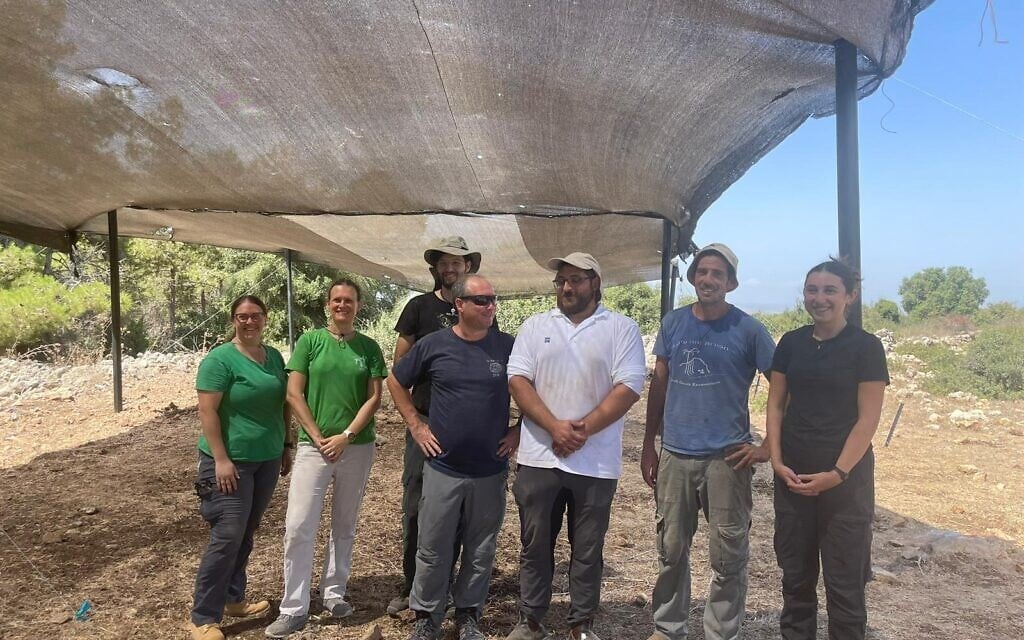
When I first read about the University of Haifa’s discovery of 3,000-year-old bronze production in the Southern Levant, I had to pause and smile. They have found evidence of early, large-scale innovation – a network sophisticated enough to import copper from the Arava, process it into bronze, and possibly export finished products. It was all happening during the biblical era of King David and Solomon.
So when the world calls Israel the “Startup Nation,” perhaps it is not only about Tel Aviv’s AI labs, cybersecurity hubs, or fintech unicorns. Perhaps it is in the DNA – a legacy of innovation stretching back to the Israelites themselves, born to create, born to innovate, then and now.
3,000 years ago, in a settlement called el-Ahwat, Israelite craftsmen were experimenting, smelting, and producing bronze, one of the most important materials in the ancient world.
Until now, scholars believed that early Israelite communities were relatively simple: small tribes living modestly, perhaps even technologically behind their neighbours. But this discovery rewrites that story. Microscopic and chemical analyses reveal that the ancestors of today’s Israelis were not only using bronze, they were also producing it. And they were not doing it in isolation, but as part of a sophisticated network of trade, innovation, and skill.
Bronze production demanded strategy, coordination, and vision. It meant importing copper from Timna and Faynan in the Arava, sourcing tin from distant lands, and managing skilled labour in centralized workshops. This was no accident. It was deliberate. It was planned. Not to put too fine a point on it, it was Israelite innovation at scale.
And it was not only metallurgy. Alongside the bronze, archaeologists uncovered fabrics dyed in the royal “argaman” purple described in the Bible as a pigment so rare and precious that it symbolized elite status and sacred power. These were not scattered desert camps; these were thriving hubs of creativity, trade, and technological progress.
If this sound familiar, it should. Tel Aviv’s tech hubs are not inventing Israel’s story. They are continuing it.
I like to imagine the scene: young David, a Shepard, not yet a king, standing in the heart of a bustling Israelite workshop. Craftsmen hammering, fires blazing, traders bartering over tin and copper. From these early forges came weapons, tools, and a spirit of possibility – the same spirit that drives Haifa’s AI researchers, Jerusalem’s biotech pioneers, and Be’er Sheva’s cybersecurity labs today.
The ancestors of today’s Israelis forged tools that reshaped the geopolitics of their time. Israel’s innovations continue to shape the world today.
The Timna Valley, where some of this copper came from, has long been associated with King Solomon’s legendary mines. And now we know that these were not poetic metaphors: Israelites were pioneering technologies that changed economies and reshaped power balances. Bronze tools enabled better farming, better weapons, better trade. Bronze was innovation, and Israel was at the heart of it.
3,000 years later, the tools have changed. Instead of bronze smelters, we have quantum processors. Instead of trade caravans, we have satellite-linked logistics. Instead of local workshops, we have global innovation hubs.
The DNA has not changed one bit.
Of course, no discovery about Israel’s ancient brilliance comes without context. The early Israelites were not living in peaceful suburbs. This was a volatile, complex, high-stakes neighbourhood, then as now.
From the Philistines (no, not Palestinians) along the coast to the Egyptians in the south, and from Edomite copper traders to Moabite raiders, the central hill country was a true crossroads of civilizations. To endure, Israel had to adapt – and adaptation, after all, is where innovation is born.
Bronze production was more than a technological achievement; it was an act of strategic resilience. It forged tools and trade, cemented alliances, and helped transform early Israel from a loose confederation of tribes into a rising regional power.
Fast-forward 3,000 years, and Israel’s story has not changed all that much. Different enemies, different challenges, different technologies, but the same ingenuity. Today, as missiles rain down from Gaza or Hezbollah threatens the north, Israelis are busy doing what they have always done: building the future anyway.
That is resilience and renewal. It is the Startup Nation spirit, ancient edition.
And yet, even as these discoveries rewrite history, they leave us with tantalizing mysteries. Where did the tin come from? Was it Anatolia? Central Asia? Britain? Nobody knows for sure.
I find that poetic – because it reminds us that even in ancient times, Israel was deeply connected to global networks. Goods, ideas, and technologies flowed through this tiny strip of land long before anyone imagined fiber optics or AI-driven supply chains.
El-Ahwat’s artisans make bronze; they made possibility. They stitched Israel into an international conversation, one that continues today in the world’s scientific conferences, innovation expos, and cybersecurity summits.
And somehow, standing in the ruins of a 10th-century BCE workshop, you can feel that same pulse of creative restlessness that drives Israelis now.
Tel Aviv’s skyline glitters with glass towers housing startups working on quantum computing, deep learning, clean energy, and medical breakthroughs. But if you trace the story back far enough, you find that Israel’s identity as a hub of human ingenuity is ancient.
From the desert forges of Timna to the AI labs of Haifa, from King David’s Jerusalem to modern Tel Aviv, from royal purple dye to synthetic biology, the throughline is unbroken.
This discovery rewrite textbooks. It reminds us of who Israelis have always been: A people who build, even when others destroy; a people who innovate, even in the wilderness; a people who believe the future can always be better, and who prove it, again and again.
Some might say it is coincidence that modern Israel became the world’s startup capital, with more tech unicorns per capita than anywhere else. But after this discovery? I’m not so sure.
The same curiosity that drove an Israelite metallurgist to mix tin and copper in a desert forge drives an Israeli engineer today to push the boundaries of AI. The same vision that transformed Timna’s copper into global trade networks powers Israel’s dominance in cybersecurity, robotics, and space tech.
And as this discovery proves, the startup nation did not begin in the 21st century. It began 3,000 years ago; and it has not stopped since.
The University of Haifa’s discovery does not just give us a new glimpse into ancient Israelite life. It affirms something Israelis have always known in their hearts: that the land of Israel has always been a cradle of ingenuity, vision, and renewal.