Solicitor & foreign policy adviser
Israel’s Somaliland move: Masterclass in strategy
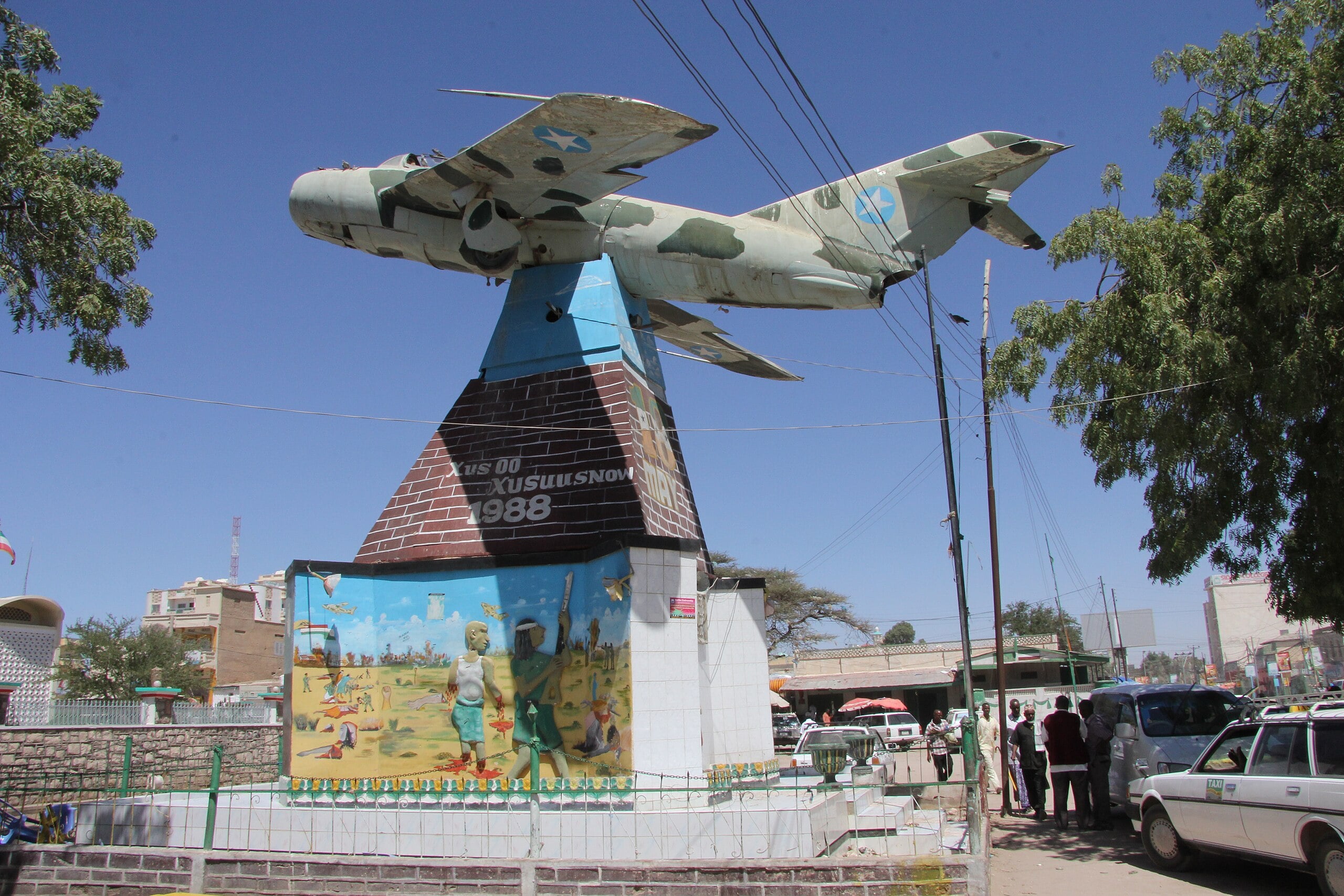
MiG monument in Hargeisa commemorating Somaliland's breakaway from the rest of Somalia in 1991. (Wikipedia Commons)
When the Arab League, the African Union, and the Organization of Islamic Cooperation all denounce you in unison, you know you’ve done something right. On December 26, Israel became the first UN member state to recognize Somaliland as an independent nation, and the chorus of outrage was as predictable as it was instructive.
The Recognition
Prime Minister Benjamin Netanyahu and Foreign Minister Gideon Sa’ar signed a joint declaration with Somaliland President Abdirahman Mohamed Abdullahi, establishing full diplomatic relations and inviting the African leader for a state visit to Jerusalem. Netanyahu framed the move as “in the spirit of the Abraham Accords,” thanking Mossad chief David Barnea for years of quiet cultivation. Abdullahi pledged his country would join the Accords framework, presenting the partnership as a platform for regional stability rather than a departure from Somaliland’s identity as a Sunni Muslim society.
A State That Earned Its Stripes
Somaliland’s path to this moment is a story the international community has willfully ignored for over three decades. The territory was a British Protectorate until June 26, 1960, when it achieved independence and received recognition from 35 countries, Israel among them. Five days later, it voluntarily merged with Italian Somaliland to form the Somali Republic. That union proved catastrophic. Under Siad Barre’s dictatorship, the north endured what many historians characterize as genocidal violence. When Somalia disintegrated into warlordism and chaos in 1991, Somaliland reclaimed its sovereignty and has governed itself ever since.
The contrast with its southern neighbor could not be starker. While Somalia has lurched from famine to al-Shabaab terrorism to piracy to famine again, Somaliland has built functioning institutions, held multiple peaceful elections, managed democratic transitions of power, and kept extremist groups at bay. It issues its own currency, maintains its own parliament, and operates a coast guard that has suppressed piracy along its waters. The African Union’s insistence on respecting post-colonial borders has frozen Somaliland in diplomatic purgatory, rewarding dysfunction in Mogadishu while punishing competence in Hargeisa.
The Strategic Calculus
Geography explains everything. Somaliland’s 460-mile Gulf of Aden coastline sits less than 300 kilometers from Yemen and commands the approach to the Bab el-Mandeb Strait, through which roughly 12 percent of global trade passes. Since October 2023, Iran’s Houthi proxies have terrorized Red Sea shipping, forcing vessels to reroute around the Cape of Good Hope at enormous cost. Israel needs eyes and options near that chokepoint.
The Berbera port, upgraded through a $442 million UAE investment via DP World, offers precisely that. Reports suggest Israel already operates surveillance facilities in the Eritrean Dahlak Archipelago; Somaliland provides an additional platform for monitoring Houthi military buildup, supporting interdiction operations, and projecting force if necessary. This is Ben-Gurion’s periphery doctrine updated for the twenty-first century: partnering with non-Arab or non-hostile actors to break strategic encirclement. In the 1950s, that meant Iran and Ethiopia. Today, it means the Red Sea and the Horn of Africa.
The Incoherence of Outrage
The condemnations arrived with metronomic regularity. Egypt called it a “violation of international law.” Turkey denounced it as an attack on Somalia’s sovereignty. The OIC issued a joint statement with 21 countries—including Iran, Qatar, and, of course, “Palestine”—rejecting Israel’s “expansionist” policy. Al-Shabaab, the Somali jihadist franchise, vowed retaliation.
The hypocrisy is breathtaking. These same actors who lecture Israel about territorial integrity have spent decades championing Palestinian statehood, a cause predicated on the principle that a people who govern themselves, maintain distinct institutions, and seek self-determination deserve international recognition. Somaliland meets every criterion of the Montevideo Convention: settled population, defined territory, functioning government, capacity to enter foreign relations. It has been peaceful and democratic for 34 years. Palestine, by contrast, remains divided between a geriatric kleptocracy in Ramallah and an Iranian-backed death cult in Gaza. Yet one merits global solidarity while the other is dismissed as illegitimate secessionism.
The UAE’s conspicuous silence deserves notice. Abu Dhabi operates a military base at Berbera, has invested hundreds of millions in its infrastructure, and shares Israel’s interest in containing the Houthis. That the only Abraham Accords signatory to refrain from condemnation is the one with skin in the game tells you everything about the hollowness of the criticism.
Washington’s Turn
The United States has signaled more interest than President Trump’s initial skepticism suggested. General Dagvin Anderson, commander of U.S. Africa Command, visited Somaliland in late November, meeting President Abdullahi and touring the Berbera port. In June, Republican Congressman Scott Perry introduced the Somaliland Independence Act, with cosponsors including Representatives Andy Ogles, Pat Harrigan, and Tom Tiffany. Senator Ted Cruz, who chairs the Senate Foreign Relations Subcommittee on Africa, called for U.S. recognition in August, describing Somaliland as “a critical security and diplomatic partner” in the Red Sea corridor.
Trump told the New York Post he would “study the issue,” but the institutional groundwork is being laid. Israel’s recognition lowers the cost for Washington to follow. Once the world’s superpower moves, the argument ends.
Related Topics
Related Posts